
All Bacteria articles – Page 51
-
 News
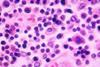
NewsTyphoid conjugate vaccine demonstrates strong safety and immunogenicity: Results from Phase 3 study
PATH and EuBiologics Co., LTD have announced Phase 3 results from a clinical trial of a typhoid conjugate vaccine (TCV), EuTYPH-C Inj.® Multi-dose. EuTYPH-C Inj.® Source: CDC/ Armed Forces Institute of Pathology, Charles N. Farmer This photomicrograph reveals some of the histopathology exhibited in a lymph node tissue ...
-
 Careers
Summer studentship: Jonas investigates how metals influence bacterial ecosystems
Jonas Flohr from Portsmouth reports back on his AMI-sponsored summer studentship at Durham University investigating how metals influence bacterial ecosystems.
-
 News
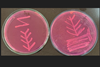
NewsStudy finds high rates of antibiotic-resistant bacteria in raw milk
Raw cow and sheep milk is frequently contaminated with antibiotic-resistant bacteria that could pose a threat to human and animal health, reports a new study.
-
 News
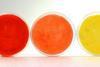
NewsBacteria spin and dye rainbow-colored, sustainable textiles
Researchers demonstrate that bacteria can both create fabric and dye it in every color of the rainbow—all in one pot. The approach offers a sustainable alternative to the chemical-heavy practices used in today’s textile industry.
-
 News
NewsBacterial spores offer promise of sustainable smart materials
By embedding Bacillus spores within engineered living materials, researchers have created living materials that not only endure harsh environments but can also be programmed to perform specific tasks. These materials may be a sustainable replacement for fossil-based materials.
-
 News
NewsEgypt becomes the seventh country in the Eastern Mediterranean Region to eliminate trachoma as a public health problem
The World Health Organization (WHO) today announced that Egypt has successfully eliminated trachoma as a public health problem, marking a historic public health milestone for the country and WHO’s Eastern Mediterranean Region (WHO EMR).
-
 News
NewsRepurposed antibiotic shows promise against Central Nervous System Tuberculosis
Researchers at the Yong Loo Lin School of Medicine, National University of Singapore (NUS Medicine), have demonstrated that doxycycline, a commonly available and inexpensive antibiotic, can improve survival rates and neurological outcomes in Central Nervous System Tuberculosis (CNS-TB) in a preclinical non-human study. Published in the Journal of Neuroinflammation, the ...
-
 News
NewsBlood-based immunological signatures for extrapulmonary tuberculosis decoded
Scientists have deciphered the immunological properties of extrapulmonary tuberculosis (EPTB) in the blood of affected patients. The results may help to develop new targeted treatments and tests for this important disease.
-
 News
NewsScientists reveal how cyanobacteria use ’sunscreen’ to adapt to climate
Using single particle spectroscopy, researchers revealed insights into how different types of photosynthetic bacteria can use a shared mechanism to protect themselves from too much sunlight.
-
 News
NewsHow life first got moving: nature’s motor from billions of years ago
Research has cast light on the evolutionary origins of one of nature’s first motors, which developed 3.5 billion to 4 billion years ago to propel bacteria. Scientists have created the most comprehensive picture yet of the evolution of bacterial stators.
-
 News
NewsPhages with fully-synthetic DNA can be edited gene by gene
Scientists have developed a method to construct bacteriophages with entirely synthetic genetic material, allowing researchers to add and subtract genes at will.
-
 News
NewsNew drug target identified in fight against resistant infections
Researchers have identified new drug targets within a special repair system possessed by certain bacteria, known as Rtc, which enables them to counteract the effects of these antibiotics.
-
 News
NewsHow are metabolism and cell growth connected? — A mystery over 180 years old
A research team has identified a novel principle in biology that mathematically explains why the growth of organisms slows as nutrients become more abundant—a phenomenon known as “the law of diminishing returns.”
-
 News
NewsResearchers reveal novel mechanisms for decoding bacterial frequency modulation in signal processing
A study reveals the fundamental physical principles underlying bacterial FM signal processing, and demonstrated that FM decoding mechanisms enable bacteria to increase information entropy by approximately 2 bits compared to traditional AM in three-gene regulatory systems.
-
 News
NewsSecrets of microbial motion: How bacteria swash, glide and shift gears to survive
Two new studies reveal surprising ways microbes move, with implications for human health and disease. The first shows that salmonella and E. coli can ’swash’ across moist surfaces even when their flagella are disabled, while the second probes the T9SS gearbox in flavobacteria.
-
 News
NewsHeatproof microbes reveal molecular secrets of nature’s hottest recycling system
This study reveals how thermophilic bacterial communities withstand temperatures of up to 87°C by remodeling their molecular machinery. Scientists uncovered a heat-defense network centered on heat shock proteins that refold damaged enzymes and preserve protein structure.
-
 News
NewsFirst detection of zoonotic Rickettsia species in dog ticks from Malawi reveals potential public health risk
An international research team has reported the first molecular detection of Rickettsia bacteria in ticks collected from domestic dogs in Malawi, addressing a significant knowledge gap in understanding tick-borne disease risks in southeastern Africa.
-
 News
NewsNew study shows invasive Group A Streptococcus outcomes shaped by treatment strategies, not species lineage
Researchers highlight the role of early clindamycin prescription in improving the recovery rate of patients with invasive Group A Streptococcus infections in a study that examined the evolving epidemiology of such infections.
-
 News
NewsEvolving antibiotic resistance under pressure may lead to personalized treatment
A new study demonstrates the use of an experimental evolution approach to map genetic mutations in Acinetobacter baumannii treated with one of two uncommon antibiotics.
-
 News
NewsLow-dose cannabis compound reduces side effects of HIV treatment
Long-term, low doses of THC mitigate many harmful side effects and inflammation caused by HIV and antiretroviral therapy (ART). Benefits included increased production of serotonin, while inflammation, cholesterol and harmful secondary bile acids were all reduced.