
All Bacteria articles – Page 54
-
 News
NewsDNA from Napoleon’s 1812 army identifies the pathogens likely responsible for the army’s demise during their retreat from Russia
Microbial paleogenomicists extracted DNA from the teeth of soldiers from Napoleon’s ill-fated invasion of the Russian Empire and found no trace of typhus. Instead, they identified two pathogens known to cause enteric fever and relapsing fever.
-
 News
NewsStudy links multiple sclerosis with distinct oral microbiome
Researchers have produced the most comprehensive genetic and metabolic analysis to date of the oral microbiome associated with multiple sclerosis (MS). They found that people with MS have a distinct oral microbiome compared to healthy individuals.
-
 News
NewsFeeding off spent battery waste, a novel bacterium signals a new method for self-sufficient battery recycling
A unique bacterium that thrives in highly acidic environments feeds on spent battery “waste”, making it a promising new method for self-sufficient battery recycling. Acidithiobacillus ferrooxidans (Atf) has a natural metabolic cycle that produces protons capable of leaching electrode materials from spent batteries.
-
 News
NewsBay Area Lyme Foundation opens applications for 2026 Emerging Leader Awards and research grants
Bay Area Lyme Foundation, a leading sponsor of Lyme disease research in the US, has announced its call for applicants from academia and the private sector for the 2026 Emerging Leader Awards (ELA).
-
 News
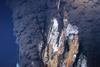
NewsUnderwater thermal vents may have given rise to the first molecular precursors of life
A new study shows that, without the presence of enzymes, natural gradients of pH, redox potential, and temperature present in underwater hydrothermal vents could have promoted the reduction of carbon dioxide to formic acid and the subsequent formation of acetic acid.
-
 News
NewsDangerous E. coli strain blocks gut’s defense mechanism to spread infection
When harmful bacteria invade through the digestive tract, gut cells usually fight back by pushing infected cells out of the body to stop the infection from spreading. Scientists have discovered that a dangerous strain of E. coli can block gut this defense, allowing the bacteria to spread more easily.
-
 News
NewsDusty air is rewriting your lung microbiome
Dust from California’s drying Salton Sea doesn’t just smell bad. Scientists found that inhalation of airborne dust collected close to the shallow, landlocked lake alters both the microbial landscape and immune responses in mice that were otherwise healthy.
-
 News
NewsHow a pyrite-oxidizing microbe helps preserve atmospheric oxygen in sulfate
Research shows that O₂ in sulfate deposits, coupled with geochemical clues, could help identify microbial activity in Earth’s rock record and even in Martian sediments.
-
 News
NewsBacteria deliver synthetic, animal-free way to grow organoids in 3D
Researchers have developed a completely animal-free gel to grow organoids, miniature three dimensional versions of organs. By combining the bacterial protein invasin with a synthetic gel, they created an environment in which organoids can grow and expand long-term.
-
 News
NewsCommon source, common food vehicle: investigations of recurring Salmonella Strathcona outbreaks in Europe since 2011
Across 17 countries and over a time span of 14 years, 662 cases of the rare Salmonella type have been identified – and linked to small tomatoes from Sicily.
-
 News
NewsArtificial ocean carbon recycling system converts seawater CO2 into valuable chemicals
Researchers have developed an artificial ocean carbon recycling system that captures CO2 from seawater and uses microbes to directly convert it into succinic acid.
-
 News
NewsScientists develop a way to track donor bacteria after fecal microbiota transplants
Researchers have developed a new technology to track beneficial bacteria for up to 5 years after fecal microbiota transplants (FMT). The method allows scientists to distinguish even closely related bacterial strains and identify each one’s unique genetic “fingerprint.”
-
 News
NewsDoes floral scent affect insect visitors and bacterial strains on flowers?
A new study reveals that high floral scent chemodiversity is associated with increased pollinator richness but reduced bacterial richness on flowers. The findings led the scientists to propose the ’Filthy Pollinator Hypothesis’.
-
 News
NewsMicrobes at Red Sea vents show how life and geology shape each other
A new study led by King Abdullah University of Science and Technology (KAUST; Saudi Arabia) Professor Alexandre Rosado has revealed an unusual microbial world in the Hatiba Mons hydrothermal vent fields of the central Red Sea, a site first discovered by one of his co-authors and colleagues, Assistant Professor Froukje ...
-
 News
NewsNew role of gut bacteria provides hope for a novel IBS treatment
Research clarifies the complex interaction between gut bacteria and IBS, identifying two bacteria that together can produce serotonin: Limosilactobacillus mucosae and Ligilactobacillus ruminis.
-
 News
NewsUS funding cuts could result in nearly 9 million child tuberculosis cases, 1.5 million child deaths
A new study projects that US funding cuts to global health aid will have a catastrophic effect on pediatric TB, with children in Sub-Saharan Africa and Southeast Asia likely to experience a spike in preventable cases and deaths over the next decade.
-
 News
NewsCofactor engineering with phosphite dehydrogenase enables flexible regulation of lactate-based copolymer biosynthesis in E. coli
A new breakthrough enables higher yields of poly(3-hydroxybutyrate-co-lactate) [P(3HB-co-LA)] without disrupting bacterial growth, paving the way for more sustainable bioplastic manufacturing.
-
 News
NewsBruker announces FDA Clearance of Claims 7 and 8 for the MALDI Biotyper® CA System
Bruker has announced FDA clearance of Claim 7 and Claim 8 for its MALDI Biotyper® CA System, marking a significant advancement in clinical microbial identification capabilities.
-
 News
NewsAre there living microbes on Mars? Check the ice, researchers say
By recreating Mars-like conditions in the lab, researchers demonstrated that fragments of the molecules that make up proteins in E. coli bacteria, if present in Mars’ permafrost and ice caps, could remain intact for over 50 million years.
-
 News
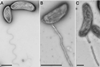
NewsSurprising bacteria discovery links Hawaiʻi’s groundwater to the ocean
A new species of bacteria has been discovered off the coast of Oʻahu, shedding light on how unseen microbial life connects Hawaiʻi’s land and sea ecosystems.