
All Bacteria articles – Page 57
-
 News
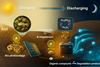
NewsSoil bacteria and minerals form a natural ‘battery’ that breaks down antibiotics in the dark
Researchers have unveiled a surprising new way that soil microbes can use sunlight energy. The team developed a “bio-photovoltage soil-microbe battery” that can capture, store, and release solar energy to power the breakdown of antibiotic pollutants in the dark.
-
 News
NewsMicrobiome and nanoparticle discoveries hold promise for treating gut pain
In an effort to develop targeted treatments for gut pain, scientists have discovered a new enzyme in gut bacteria and are using nanoparticles to deliver drugs inside cells. PAR2, a receptor involved in pain signaling, is activated by certain enzymes called proteases.
-
 News
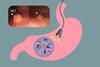
NewsChanges in gut microbiota influence which patients get AIG-related neuroendocrine tumors
Researchers have discovered how the balance of bacteria in the stomach affects the growth of neuroendocrine tumors (NETs). By identifying the specific bacteria involved and the biochemical reactions that cause tumor growth, they hope to detect which patients are most likely to develop cancer.
-
 News
NewsNew vaccine shows promise against typhoid and invasive salmonella in first human trial
Researchers have completed a successful Phase 1 clinical trial of a novel vaccine designed to protect against both typhoid fever and invasive non-typhoidal Salmonella–two major causes of illness and death among children in sub-Saharan Africa.
-
 News
NewsCould slime mold microbes be a source of potent antimicrobials?
The cellular slime mold Dictyostelium discoideum is a soil microbe that produces diverse natural products with potential antibiotic activity. In this study, researchers optimized lab culture conditions of Dictyostelium cells to boost the levels of low-abundance chlorinated compounds and to characterize their antimicrobial properties.
-
 News
NewsTrailblazing Young Scientists honored with $250,000 prizes at Blavatnik National Awards Gala
Three of America’s most promising young scientists were awarded top honors at the 2025 Blavatnik National Awards for Young Scientists, one of the country’s most significant prizes for early-career researchers. The Life Sciences Laureate was Philip J. Kranzusch, Harvard Medical School (Microbiology).
-
 News
News‘Good’ gut bacteria boost placenta for healthier pregnancy
Research has found the first clear evidence that the ‘good’ gut bacteria Bifidobacterium breve in pregnant mothers regulates the placenta’s production of hormones critical for a healthy pregnancy. Pregnant mice without Bifidobacterium breve in their gut had a higher rate of complications, and increased fetal loss.
-
 News
NewsGolden spruce trees: Gold forms nanoparticles in the needles – bacteria show the way
A new study has, for the first time, uncovered a connection between bacteria living in Norway spruce needles and gold nanoparticles. This discovery could pave the way for environmentally friendly gold exploration methods, while examining similar processes in mosses may also help remove metals from mining-impacted waters.
-
 News
NewsExperimental mapping of bacterial growth reveals evolutionary and ecological patterns
A research team has proposed a new approach to reveal ecological niches (positions within ecosystems) and evolutionary relationships in nature through large-scale growth analysis of bacteria in strictly regulated laboratory settings.
-
 News
NewsMap of bacterial gene interactions reveals potential drug targets
Researchers have developed a new technique called Dual transposon sequencing (Dual Tn-seq), which allows for rapid identification of genetic interactions. It maps how bacterial genes work together, revealing vulnerabilities that could be targeted by future antibiotics.
-
 News
NewsRocket test proves bacteria survive space launch and re-entry unharmed
A world-first study has proven microbes essential for human health can survive the extreme forces of space launch. The study found the spores of Bacilus subtilis, a bacterium essential for human health, can survive rapid acceleration, short-duration microgravity and rapid deceleration.
-
 News
NewsViruses help cut farm greenhouse gas emissions by targeting soil microbes
A new study reveals that soil viruses can reduce nitrous oxide (N2O) emissions by selectively infecting the microbes responsible for producing this potent greenhouse gas.
-
 News
NewsLong-term biochar use boosts soil health and soybean yields, study finds
A decade-long field study has revealed that biochar can significantly improve soil quality and boost soybean production in continuous cropping systems. The findings provide new evidence that biochar could be a powerful tool for making agriculture more sustainable.
-
 News
NewsSummer studentship: Shen explores how a novel peptide can destabilise the outer membrane of E. coli
Li Shen reports back on his AMI-sponsored summer studentship which investigated a novel antibiotic adjuvant at the Centre for Bacterial Resistance Biology, Imperial College London.
-
 News
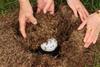
NewsScientists revive almost forgotten Balkan yoghurt recipe that deploys bacteria, acids - and ants
Researchers recreated a nearly forgotten yogurt recipe that was once was once common across the Balkans and Turkey—using ants. The team shows that bacteria, acids, and enzymes in ants can kickstart the fermentation process that turns milk into yogurt.
-
 News
NewsNew antibiotic targets IBD — and AI predicted how it would work before scientists could prove it
The new antibiotic, enterololin, attacks and kills only a specific group of disease-causing bugs, which includes the type of E. coli that drives Crohn’s disease. It is a promising new treatment option for people affected by Crohn’s and other IBD-related conditions.
-
 News
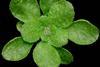
NewsPlant microbiota: War and peace under the surface
Scientists unveil the subtle alliances and rivalries that unfold between bacteria and roots, hidden beneath the soil. A new study probed how and when root exudates are released at the microscale relevant to microorganisms.
-
 News
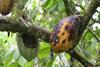
NewsGene editing, traditional crossbreeding produce disease-resistant cacao plants
Researchers reported that they edited the gene TcNPR3 in cacao plants, ultimately resulting in disease-resistant cacao plants that had 42% smaller disease lesions when infected with phytophthora, compared to non-edited plants.
-
 News
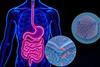
NewsNew insights into how pathogens build protein machinery for survival in the gut
New research reveals how pathogenic bacteria construct tiny protein-based compartments, known as Eut microcompartments, which enable them to digest ethanolamine - a nutrient commonly found in the gut.
-
 News
NewsScientists uncover molecular mechanisms for bacterial lipid transport
Researchers have successfully applied cryo-electron microscopy (cryo-EM) to unveil the molecular structures of critical protein machines that transport lipids and maintain the outer membrane (OM) barrier of Gram-negative bacteria.