
All Bacteria articles – Page 62
-
 News
NewsStudy shows how diet and gut microbiota can counter the baby blues
Microbiome diversity and relative abundance of butyrate-producing bacteria were associated with high levels of depressive mood. But a diet rich in fermented foods, soy products, mushrooms, and seaweed may help regulate the gut environment and contribute to preventing depression.
-
 News
NewsCoral-inspired pill offers a new window into the hidden world of the gut
Marine corals have evolved intricate, porous structures that shelter diverse microbial communities. Researchers have borrowed this biological blueprint to create an ingestible pill that can sample bacteria from one of the most inaccessible regions of the human body: the small intestine.
-
 News
NewsPeanut shell biochar composite shows promise for removing antibiotic-resistant bacteria from aquaculture wastewater
Researchers have developed a novel, low-cost catalyst that efficiently removes antibiotic-resistant bacteria (ARB) from aquaculture wastewater, offering a potential new solution to one of today’s most pressing environmental and public health challenges.
-
 News
NewsDe-mystifying common misconception about the prevalence of Legionella bacteria
There is a common misconception that Legionella is only found in air conditioners and water towers - however, a new study has found people are likely exposed to the bacteria through other sources, including through soil.
-
 News
NewsNew antibiotic to fight superbug C. diff proves effective in clinical trial
As the effectiveness of antibiotics meant to fight the deadly superbug Clostridioides difficile wanes, a research team is seeing positive results of a new antibiotic on the scene – ibezapolstat – which is proving successful in fighting these infectious bacteria in clinical trials.
-
 News
NewsRoutine Helicobacter pylori screening does not significantly reduce upper gastrointestinal bleeding in patients after a heart attack
Routine Helicobacter pylori screening did not significantly reduce the risk of upper gastrointestinal bleeding in patients hospitalised for myocardial infarction (MI), according to new research.
-
 News
NewsHeme-based sulfide sensing in bacteria: a new target for antibiotics
Heme binding to a bacterial transcription factor is critical for hydrogen sulfide (H₂S) signaling, a new study reveals. Heme binding promotes the reaction of H₂S with the transcription factor, leading to structural changes that can regulate stress tolerance in bacteria.
-
 News
NewsGame-changing biotech for engineering pathogen-resistant crops
Researchers have identified an ancient protein that has the potential to help defend plants against tens of thousands of different bacteria and other pathogens. Dubbed “SCORE”, this receptor detects cold-shock protein—variations of which are found in more than 85% of known bacteria, as well as fungi and insects.
-
 Careers
Meet the Advisory Groups: Our Q&A with Karin Goodburn
The Microbiologist chats with AMI’s Food Security Advisory Group member Karin Goodburn, Director General of the Chilled Food Association in the UK.
-
 News
NewsBiodegradable PET alternative bioproduced at unprecedented levels
The PET-alternative PDCA is biodegradable and has superior physical properties. A team of bioengineers has engineered E. coli bacteria to produce the compound from glucose at unprecedented levels and without byproducts — and opened up a realm of possibilities for the future of bioengineering.
-
 News
NewsOne dose of antibiotic treats early syphilis as well as three doses
Researchers have found that a single injection of the antibiotic benzathine penicillin G (BPG) successfully treated early syphilis just as well as the three-injection regimen used by many clinicians. These findings from a late-stage clinical trial suggest the second and third doses of conventional BPG therapy do not provide a health benefit.
-
 News
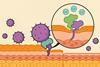
NewsThe cling of doom: How staph bacteria latch onto human skin
Scientists have discovered the strongest natural protein bond ever recorded, explaining how Staphylococcus aureus clings so tightly to human skin and pointing to new ways to fight antibiotic resistance.
-
 News
NewsCARB-X to support lower respiratory tract infection diagnostic by Zeteo
CARB-X has awarded Zeteo Tech, Inc. US$1M to execute a workplan for its noninvasive diagnostic platform that aims to evaluate whether exhaled breath can diagnose lower respiratory tract infections (LRTIs) in high-risk populations within critical care environments.
-
 News
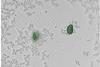
NewsBacteria that ‘shine a light’ on microplastic pollution
Researchers have developed a living sensor that attaches to plastic and produces green fluorescence. In an initial test on real-world water samples, the biosensor could easily detect environmentally relevant levels of microplastics.
-
 News
NewsResearch team on quest to engineer computing systems from living cells
A research team has received a $1.99 million grant to lead research on engineered bacterial consortia that could form the basis of biological computing systems. They aim to integrate microbial sensing and communication with electronic networks, paving the way for computing systems constructed from living cells instead of traditional silicon-based hardware.
-
 News
NewsBacteria rewire digestive systems to turn plant waste into power
A new study shows that Pseudomonas putida, a common soil bacterium, completely reorganizes its metabolism to thrive on complex carbons from lignin. By slowing down some metabolic pathways while accelerating others, the bacterium manages to extract energy from lignin without exhausting itself.
-
 News
NewsZoo poo might hold the secrets to new medical treatments
Scientists are hoping the collection of poo from tigers, elephants, giraffes and other exotic animals, could contain the secret to finding new medical treatments. Although a waste product to the animals, hidden amongst it are thousands of phages which are potentially capable of fighting bacterial infections.
-
 News
NewsUnlocking how bacteria bounce back after antibiotics
A groundbreaking study has uncovered how Escherichia coli (E. coli) persister bacteria survive antibiotics by protecting their genetic instructions. The work offers new hope for tackling chronic, recurring infections.
-
 News
NewsLess is more: Gene loss drives adaptive evolution of a pandemic bacterium
A study reveals a surprising evolutionary insight: sometimes, losing genes rather than gaining them can help bacterial pathogens survive and thrive. The research focused on Vibrio parahaemolyticus, a bacterium behind many of the seafood-related infections worldwide.
-
 News
NewsAncient mammoth remains yield the world’s oldest host-associated bacterial DNA
An international team has uncovered microbial DNA preserved in woolly and steppe mammoth remains dating back more than one million years. The analyses reveal some of the world’s oldest microbial DNA ever recovered, as well as the identification of bacteria that possibly caused disease in mammoths.