
All contamination articles
-
 News
NewsSmoky off-flavors in cocoa aren’t caused solely by smoke - overfermentation can be the cause
Researchers have shown that overfermentation of cocoa beans can cause smoky, leathery, and cheesy off-flavors. Smoky flavors, therefore, are not necessarily attributable to smoke contamination.
-
 News
NewsRecycling food waste would bring huge benefits, but microplastics a challenge
A first nationwide look shows diversion of U.S. food waste from landfills could reduce related climate impacts by 89% and nutrient pollution by 50%, researchers say.
-
 News
NewsHuman activities compromise coral health and resilience
Researchers discovered that 25 contaminants from agricultural, industrial, and pharmaceutical sources accumulated in the soft tissues of coral around Maui, Hawai‘i.
-
 News
NewsScientists receive DOW funding for fungal biotechnology research
Scientists have been awarded funding to develop new tools permitting high-throughput analysis of fungal genes. The grant focuses on species of Candida, which can contaminate and sometimes cause operational issues in DOW systems like aircraft fuel systems, vehicles, and electronics.
-
 News
NewsBiochar could help make tea farming cleaner, safer, and more climate resilient
A new review examines how biochar, a carbon-rich material produced by heating biomass under limited oxygen, could become a practical tool for more sustainable tea cultivation. It focuses on five connected areas: soil properties, microbial communities, nutrient cycling, tea productivity and quality, and heavy metal detoxification.
-
 News
NewsNew research offers practical biosecurity tools to limit poultry disease spread
New research could help producers better protect poultry flocks from disease outbreaks while reducing costs. By identifying where contamination occurs and how to interrupt those pathways, the research helps move biosecurity from theory to action, offering tools that can protect animal health and support a more stable food supply.
-
 News
NewsFood scientists develop new antimicrobial for cleaning and sanitizing dry-food processing equipment
New research describes a novel chemical mixture for sanitation in low-moisture environments. Scientists found that a formulation containing cyclomethicone combined with vinegar-based acetic acid was the most effective against Salmonella and Cronobacter bacteria.
-
 News
NewsNew AI model improves accuracy of food contamination detection
Researchers have significantly enhanced an artificial intelligence tool used to rapidly detect bacterial contamination in food by eliminating misclassifications of food debris that looks like bacteria. Current methods often require specialized expertise and are time consuming — taking several days to a week.
-
 News
NewsCommercial water dispenser machines may contain more contamination than tap water
Water dispenser machines in commercial spaces may contain higher levels of microbial contamination if they aren’t cleaned regularly compared to the tap water sources supplying them that contain residual chlorine, according to a new study.
-
 News
NewsNew method means contaminated bathing water easier to detect
A new method can provide both faster and more complete answers on whether the water is safe for swimming or not. The innovation has been successfully tested in Helsingborg, where the response time has been reduced from several days to just a few hours.
-
 News
NewsEveryday levels of antibiotics in the environment may accelerate the global spread of resistance, new study finds
A new study shows that even very small amounts of antibiotics that commonly appear in soil, rivers, wastewater, and agricultural runoff may significantly accelerate the spread of antibiotic resistance genes among bacteria.
-
 News
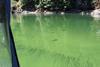
NewsMystery toxic algae regime change in Salem’s drinking water source
A long-term analysis shows that a major Oregon reservoir abruptly swapped one type of toxic algae for another midway through the 12-year study period, absent any obvious cause.
-
 News
NewsHow a pyrite-oxidizing microbe helps preserve atmospheric oxygen in sulfate
Research shows that O₂ in sulfate deposits, coupled with geochemical clues, could help identify microbial activity in Earth’s rock record and even in Martian sediments.
-
 News
NewsTiny soil microbes turn detective to uncover the timeline of oil spill contamination
Scientists in Belfast and Nigeria have developed a diagnostic tool that deploys microbes to uncover the timeline of crude oil contamination in soils.
-
 News
NewsTheory for aerosol droplets from contaminated bubbles bursting gives insight into spread of pollution and infectious disease
Researchers have conducted a systematic study to investigate bubble bursting jets – aerosol particles sprayed when bubble surfaces rupture – when surface contaminants are present.
-
 News
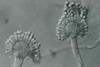
NewsUrgent need to quantify role of fungal toxins in rising liver cancer rates in Ghana
There’s an urgent need to quantify the role of aflatoxins, found on agricultural crops, such as maize and peanuts, in the escalating rates of liver cancer in Ghana, as well as elsewhere in Africa and Asia, concludes a commentary.
-
 News
NewsMicrobes in Brooklyn Superfund site teach lessons on fighting industrial pollution
Researchers discover unprecedented pollution-fighting genetic adaptations in tiny organisms inhabiting Brooklyn’s highly contaminated Gowanus Canal, revealing a potential new approach for cleaning contaminated waters and recovering valuable resources.
-
 News
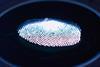
NewsResearchers develop UV and machine learning-aided method to detect microbial contamination in cell cultures
This is the first novel technology that utilises machine learning to analyse unique ultraviolet light “fingerprints” on cell cultures to quickly identify the presence of contamination.
-
 News
NewsE. coli strain in Egyptian dairy products also found in Japan school outbreak
Researchers found E. coli prevalent in over 25% of popular milk and dairy products in Egypt. One of the E. coli strains they isolated from the samples collected in 2018 in Egypt had the same characteristics as the E. coli that caused food poisoning in Japan in 2021.
-
 News
NewsScientists engineer substrates hostile to bacteria but friendly to cells
Researchers have created nanostructured alumina surfaces which are strongly antibacterial but can be used to culture cells.