
Fungi are extremely important in our daily lives, helping create the medicines we use, the food we produce, and the materials we manufacture. They can also cause diseases, spoil food, and degrade important objects.
Nonetheless, fungal genetics are surprisingly poorly understood. Scientists know the function of less than half of the genes in only the most-investigated fungi—knowledge that has trickled in over the last few decades through laborious assessments of one or two genes at a time.
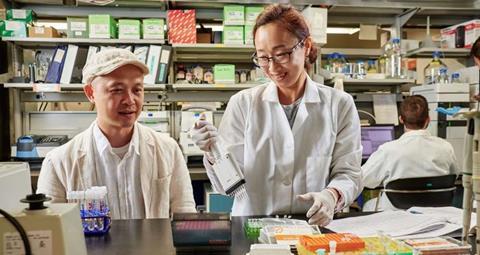
This spring, the United States Department of War (DOW, formerly the Department of Defense) funded a research proposal by University of Tennessee, Knoxville Ferguson Faculty Fellow in Chemical Engineering Cong Trinh and his co-principal investigator, Research Assistant Professor Seunghyun Ryu, to develop new tools permitting high-throughput (very efficient) analysis of fungal genes.
MICROBIOLOGY NEWS: Register with The Microbiologist for more free articles
The grant focuses on fungal species in the genus Candida, which can contaminate and sometimes cause operational issues in DOW systems like aircraft fuel systems, vehicles, and electronics.
“Receiving this federal support is both humbling and exciting,” said Trinh, a professor in the Department of Chemical and Biomolecular Engineering. “This award will enable us to close critical knowledge gaps in fungal genetics, biology, biotechnology, and biomanufacturing.”
Reducing damage to army equipment
Fungi are an important part of the life cycle, degrading many materials that other organisms can’t break down. Unfortunately, that also creates an expensive problem for the U.S. Army, since fungi can also colonize and degrade materials used in the electronics, vehicles, fuel systems, coatings, and other materials that the DOW relies on.
Thanks to the high genetic variation in fungi—some of which can have several versions of each gene, which is known as polyploidy—they are very stress-tolerant and adapt quickly to fungicides and other control methods.
MICROBIOLOGY ON TAP: Get full access to all The Microbiologist articles from just £2.17 a month
Under the DOW grant, Trinh and Ryu will develop synthetic biology tools to rapidly characterize large numbers of fungal genes. They will specifically target genes that have a role in mitochondrial function; as a cell’s source of energy, mitochondria are critical for stress regulation and resistance to new chemicals.
“We are excited to pursue this project because it combines fungal biology with real-world impact,” Trinh said. “We hope that the insights we gain into the relationships between genetic variation and fungal stress resistance will lead to new approaches for mitigating fungal contamination in Army-relevant environments and provide broadly useful tools that advance fungal biology, biotechnology, and biomanufacturing.”


No comments yet