
This summer, Letters in Applied Microbiology sponsored the Cortona Prokaryotes congress in Italy, organised by the Italian Society of General Microbiology and Microbial Biotechnology (SIMGBM). Loredana Baccigalupi, Professor of Microbiology at the University of Naples, reports back.
Cortona Prokaryotes congress is a longstanding scientific tradition of the Italian community of microbiologists started in 1984. Since that time, it has been held in the same venue, Cortona (Italy), initially every year and more recently every two years.
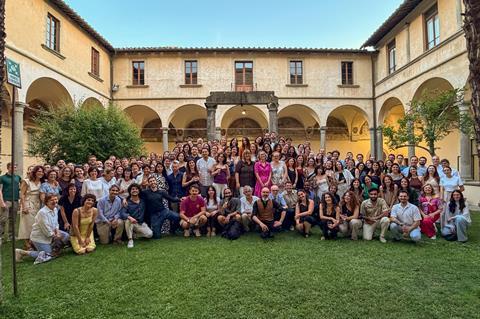
The main mission of Cortona Prokaryotes is to provide young scientists with an opportunity to present their research discuss their results with the scientific community and receive constructive feedback in an informal and friendly environment.
We expect this approach will foster the development of a researcher identity, encompassing attributes such as confidence in one’s scientific voice, the ability to formulate research questions, design and conduct experiments, critically interpret results, and actively pursue and succeed in authentic research.
Beyond these practical competencies, researcher identity also includes an intellectual dimension, well captured by John Dewey’s concept of scientific habits of mind where knowledge is generated through the interaction between individuals and their environment; and Cortona has been, since 1984, the perfect place.
Launch pad for early career researchers
Most, if not all, current Italian microbiologists, including myself, gave the first talk of their career at Cortona Prokaryotes. In this sense, Cortona Prokaryotes has become a genuine launch pad for early-career researchers aiming to engage in larger scientific networks.
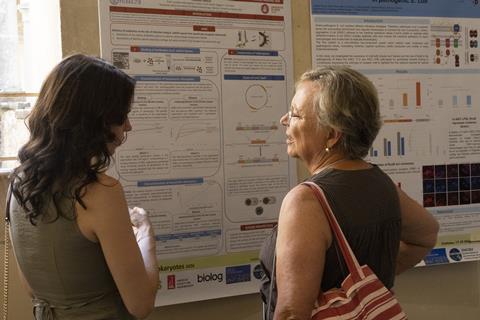
An entire day (PhD day) is dedicated to presentations by 3rd-year PhD students and the other days feature presentations by early-career scientists and two outstanding scientists.
MICROBIOLOGY NEWS: Register with The Microbiologist for more free articles
The lectures given by the invited speakers, together with their presence throughout the meeting, are intended to expose young microbiologists to an international scientific environment.
Among the invited speakers, we select at least one young and outstanding researcher who trained in our laboratories, has secured a permanent position abroad, and has established an independent research group. Their participation provides a particularly inspiring example for younger researchers, offering personal insights into their career trajectory and valuable advice on achieving scientific independence.
Based on abstracts
To give all young participants the opportunity to present their work, either as an oral presentation or as a poster, the programme of the meeting is built on the base of the submitted abstracts that are organized into thematic sessions by the organizing committee. Usually, topics include genetics of microorganisms, molecular microbiology, environmental microbiology, host-microbe interactions, applied and computational microbiology.
Despite the meeting name, which has been retained for historical reasons, the programme is not limited to Prokaryotes and contributions on viruses and eukaryotic microorganisms are welcome and usually included in the programme.
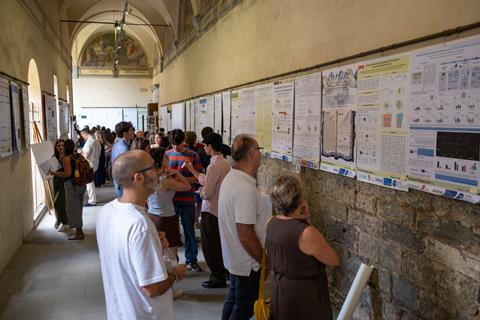
Thanks to the support of our sponsors and scientific societies, Cortona Prokaryotes remains a low-cost meeting, making it financially accessible to students and enabling the participation of young researchers regardless of their economic background. No registration fee is charged, and the expenses are limited to the costs of the lecture room and travel/living expenses of the invited speakers (usually from Europe) that are in part supported by the Italian Society of General Microbiology and Microbial Biotechnology (SIMGBM).
This approach makes it possible for many students and young researchers to participate. In this context, financial support from external sponsors is essential as it enables us to maintain free registration while enhancing the scientific quality and overall organization of the meeting.
Young scientists
The most recent edition of Cortona Prokaryotes Conference was held from June 17th to 19th 2026 and brought together 194 participants, including around 150 young scientists. Among them, 48 gave short talks and 50 presented posters.
Thanks to the financial support of AMI we organized, for the first time, a nice reception welcome on the first day of the meeting, during the main poster session.
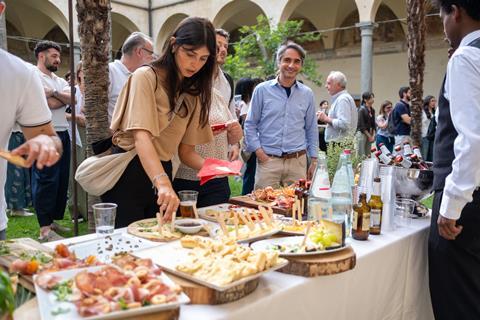
The reception was greatly appreciated by the participants, providing an excellent opportunity for networking, informal discussions, and interactions among young scientists and senior researchers in a friendly and relaxed atmosphere!
A lot of science, a lot of prizes, a lot of fun!
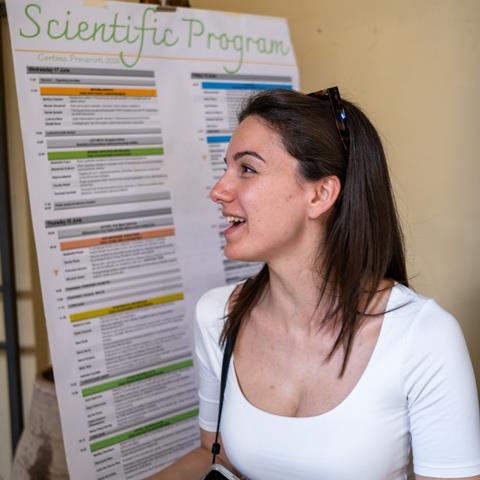
The scientific programme contained different sessions that highlighted the diversity of microbiological research, with topics ranging from fundamental research to applied science.
The meeting opened with two sessions on Microbial Genetics and Microbial Infections and Virulence. The scientific exchange continued during the Welcome Reception, where participants had the opportunity to network and look the posters, while enjoying local food, wine and beer in a relaxed and friendly atmosphere. The second day featured three thematic sessions dedicated to Host–Microbiome Interactions, Environmental Microbiology and Applied Microbiology.
To enrich the scientific program, we invited two outstanding speakers representing different stages of scientific careers. Our senior invited speaker, Prof. Miguel Gueimonde (from Oviedo, Spain), an internationally recognized expert in host–microbe interactions, delivered the opening keynote lecture titled “Bifidobacterium: From Tissier’s Bacillus bifidus to Infant Nutrigenomics”. His presentation offered an overview of decades of research on bifidobacteria, highlighting their role as a component of early-life microbiota and their impact on human health.
Bacteriophage defense
As a junior scientist, Dr. Giuseppina Mariano (University of Surrey, UK), a young researcher trained in our laboratories who now leads her own research group in the United Kingdom, presented her research on the molecular mechanisms of bacteriophage defense across diverse bacterial species. Her international success represented an example of how young scientists trained within the Italian microbiology community can built their career.
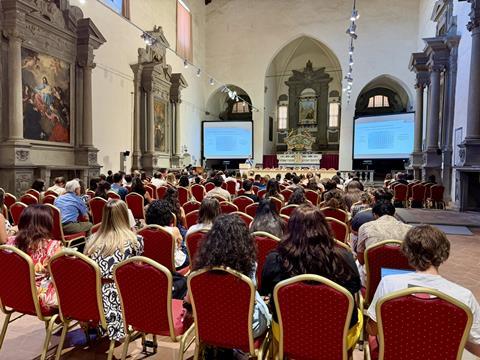
The meeting concluded with the traditional PhD Day, where fifteen third-year PhD students presented their research demonstrating the high scientific quality of their work and their confidence and enthusiasm in presenting their projects.
MICROBIOLOGY ON TAP: Get full access to all The Microbiologist articles from just £2.17 a month
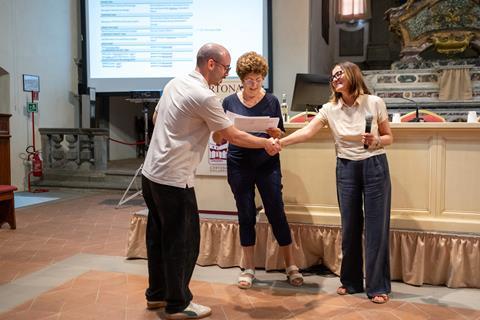
Among the speakers were recipients of the SIMGBM Awards for the Best PhD Thesis in General Microbiology, the Best PhD Thesis in Microbial Biotechnologies, the Best Paper in General Microbiology, and the GenProbio Award for the Best PhD Thesis in Microbiota studies.
Stimulating environment
The poster sessions provided a stimulating environment for scientific exchange. Early-career researchers had a central role in discussing their work with colleagues and senior scientists. During the congress, two Poster Award Committees carefully evaluated all contributions, selecting the four best posters based on their scientific content, visual presentation, clarity of data, and the quality of the discussion with the presenting authors.
Combining scientific excellence, enthusiasm, and international perspectives, the meeting once again demonstrated the strength of the Italian microbiology community in supporting early-career researchers and promoting their growth, visibility, and collaboration opportunities.
Find out more about publishing your work in Letters in Applied Microbiology.

No comments yet