
All Ecology & Evolution articles – Page 20
-
 News
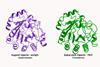
NewsNext time you beat a virus, thank your microbial ancestors
When you get infected with a virus, some of the first weapons your body deploys to fight it were passed down to us from our microbial ancestors. Two key elements of our innate immune system came from a group of microbes called Asgard archaea.
-
 News
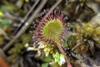
NewsFungal discovery changes the way we understand Charles Darwin’s most beloved plant – the sundew
A new study has uncovered a symbiotic relationship that has evolved between Darwin’s favourite carnivorous plant and a specific type of fungus which lives inside it and helps it digest its prey.
-
 News
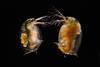
NewsRed Queen arms race over millions of years preserves genetic diversity in water flea
Host/parasite arms races can occur without interruption over many millions of years, a much longer period than previously thought, according to scientists who compared the genetic material of millimeter-sized water fleas infected by a parasitic bacterium.
-
 News
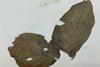
NewsStudy analyzes potato-pathogen ‘arms race’ after Irish famine
In an examination of the genetic material found in historic potato leaves, researchers reveal more about the tit-for-tat evolutionary changes occurring in both potato plants and the pathogen that caused the 1840s Irish potato famine.
-
 News
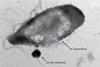
NewsAncient Antarctic microorganisms are aggressive predators
Antarctic dwelling single-celled microorganisms called archaea can behave like parasites, new research shows.
-
 News
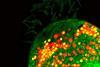
NewsWarming stops tiny organisms working together
The single-celled organism Paramecium bursaria can absorb and host algae (Chlorella spp), providing benefits for both, but when scientists made the water 5°C warmer, the partnership stopped working – and the algae may even become parasitic.
-
 News
NewsShared geographic origin of TB strain and human host could boost risk of infection
For some forms of tuberculosis, the chances that an exposed person will get infected depend on whether the individual and the bacteria share a hometown, according to a study comparing how different strains move through mixed populations in cities.
-
 News
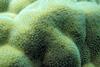
News3D models provide unprecedented look at corals’ response to bleaching events
A new study provides a first-of-its-kind glimpse into coral ‘bleaching’ responses to stress, using imaging technology to pinpoint coral survival rates following multiple bleaching events off the island of Maui.
-
 News
NewsApplied Microbiology International expert recognized for exceptional scientific leadership
AMI member Jizhong (Joe) Zhou, director of the OU Institute for Environmental Genomics, has been presented with the Distinguished Scientist Award from the Southeastern Universities Research Association at its annual meeting.
-
 News
NewsResearchers find new way to turn bacteria into cellulose-producing mini-factories
A new approach to turning microorganisms into living mini-factories has been developed, allowing scientists to produce tens of thousands of variants of the bacterium very quickly.
-
 News
NewsScientists untangle interactions between the Earth’s early life forms and the environment over 500 million years
A new perspective explores the intricate feedbacks among ancient life forms, including algae, plants and animals, and the chemical environment in the current Phanerozoic Eon, which began approximately 540 million years ago.
-
 News
NewsResearchers identify structural characteristics of newly emerged SARS-CoV-2 variants
A new study has revealed the spike (S) protein structures of the recently emerged BA.2.86, JN.1, EG.5, EG.5.1 and HV.1 subvariants of SARS-CoV-2, and conducted systematic comparative analysis on these subvariants.
-
 News
NewsHow evolution tamed a deadly virus and why we should still worry
The story of the rise and fall of western equine encephalitis as a lethal disease offers essential lessons about how a pathogen can gain or lose its ability to jump from animals to humans.
-
 News
NewsInter-variant recombination, genomic perspectives and pathogenicity of emerging sub-variants of Omicron
A review highlights recent updates on newly identified Omicron sub-variants, focusing on their genomic alterations, infectivity patterns, and pathogenic manifestations.
-
 News
NewsRhythm led by plants is crucial for symbiosis with nutrient-providing bacteria
Recent research on Lotus japonicus has unveiled that the interaction between legume roots and rhizobia is characterized by periodic gene expression with a six-hour rhythm, maintained with the help of the plant hormone cytokinin.
-
 News
NewsWastewater could yield thousands of novel viruses, study reveals
Deep metagenomic sequencing of wastewater in Berlin over 17 months shows this technique could help forecast disease outbreaks and monitor the spread of human pathogens. It can also reveal thousands of novel viruses, a new study reveals.
-
 News
NewsAncient microbes offer clues to how complex life evolved
A single-celled organism, a close relative of animals, harbors the remnants of ancient giant viruses woven into its own genetic code, shedding light on how complex organisms may have acquired some of their genes.
-
 News
NewsScientists build roadmap to bioengineer plants that produce their own nitrogen fertilizer
Nitrogen fertilizers make it possible to feed the world’s growing population, but they are also costly, harm ecosystems and require a lot of energy to manufacture. However, a few plants have evolved the ability to make their own nitrogen with the help of bacteria. A new study helps explain how ...
-
 News
NewsHibernation status matters when white-nose syndrome pathogen infects bats
The fungal pathogen that causes white-nose syndrome (WNS) in bats uses different cell entry strategies depending on the host’s hibernation status – cold and inactive, or warm and active.
-
 News
NewsThe plague may have caused the downfall of the Stone Age farmers
Ancient DNA from bones and teeth hints at a role of the plague in Stone Age population collapse. Contrary to previous beliefs, the plague may have diminished Europe’s populations long before the major plague outbreaks of the Middle Ages.