
All Ecology & Evolution articles – Page 16
-
 News
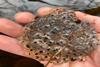
NewsTadpoles try to flee dangerous virus in their pond by growing much faster than normal
A new study shows that larvae of wood frogs respond to the presence of a deadly ranavirus by growing and maturing precociously. In response to ranavirus, tadpoles change their growth, development, and resource allocation, which may help them tolerate the energetic demands of infection or escape risky environments to avoid infection.
-
 News
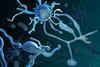
NewsOrigin of life: How microbes laid the foundation for complex cells
Researchers examining links between Asgard archaea and eukaryotes have shown that Asgard tubulins form similar microtubules, albeit smaller than those in their eukaryotic relatives. Unlike actin, these tubulin proteins appear in very few species of Asgard archaea.
-
 News
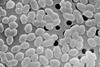
NewsDeadly bacteria developed the ability to produce antimicrobials and wiped-out competitors
A drug-resistant type of bacteria that has adapted to health care settings evolved in the past several years to weaponize an antimicrobial genetic tool, eliminating its cousins and replacing them as the dominant strain.
-
 News
NewsHidden threat: The evolving fungus that spreads through cats and humans
Researchers have developed a better understanding about the molecular basis of the Sporothrix species in virulence and evolution, amid the largest sporotrichosis epidemic in Brazil. The identification of the genetic markers helps to enhance fungal surveillance and strengthen disease control.
-
 News
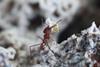
NewsLeafcutter ants recognize and fight pathogen with social immunity
Various characteristics of social immune memory were observed in colonies of Atta sexdens (lemon leafcutter ants) exposed to different pathogenic fungi. Such information is useful for future development of appropriate pest control.
-
 News
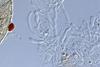
NewsNew ‘shy’ fungus found in old-growth forest
Although fungi of the genus Piloderma are common, scientists have now discovered five previously unknown species. One of these is one of the most widely distributed species in Northern Europe, while another is found only in old-growth forests.
-
 News
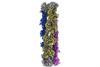
NewsNewly identified bacterial protein helps design cancer drug delivery system
Researchers have identified a previously unknown bacterial protein, the unique structure of which acts as an actin homolog that can be used to design protein nanoparticles for the targeted delivery of anticancer drugs to tumors.
-
 News
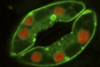
NewsScientists explain energy transfer mechanism in chloroplasts and its evolution
A recent study by Chinese scientists has revealed the intricate molecular machinery driving energy exchange within chloroplasts, shedding light on a key event in the evolution of plant life.
-
 News
NewsResearchers pinpoint shared stress response network between long diverged algae and plants
A research team has compared algae and plants that span 600 million years of independent evolution and pinpointed a shared stress response network using advanced bioinformatic methods.
-
 News
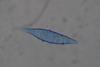
NewsDermatophytes adaptation to the human host exemplified by Microsporum canis
Through comparative genomic analyses, researchers investigated the evolutionary mechanisms that underpin gene expansions to enable dermatophytes, such as Microsporum canis to transition from animal to human hosts.
-
 News
NewsAdaptation to extreme conditions: thermal water biofilm studies could help understand ancient ecosystems
Researchers have discovered unique bacterial communities in thermal waters that may help unravel the development of stromatolites, one of Earth’s oldest rock formations.
-
 News
NewsProactively exposing ecosystems to mild environmental stressors appears to offer protection
Mild, proactive exposure to environmental stress can help biological communities resist severe disturbances and maintain genetic diversity, a recent study has found.
-
 News
NewsResearcher measures microplastics’ massive changes in microbes
A new ecological research is underway to investigate the impact of microplastics on aquatic microbial communities in the Virginia Tech Duck Pond.
-
 News
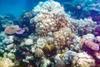
NewsHeat-stressed reefs may benefit from coral-dwelling crabs
A species of branching coral is able to recover from heat stress and wounds due to its mutualistic relationship with crabs in the Great Barrier Reef Corals, a new study shows. This evolutionary partnership will inspire coral reef restoration strategies in the future.
-
 News
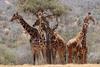
NewsUnexpected species-specific patterns in study of giraffe gut flora
The gut bacteria of giraffes are not primarily determined by what they eat, but by the species they belong to., according to a new study analysing the link between diet and gut flora in three giraffe species in Kenya. The study also provides new knowledge that can help secure the food supply of endangered giraffe species.
-
 News
NewsLaser-powered device tested on Earth could help us detect microbial fossils on Mars
Scientists hoping to identify fossil evidence of ancient Martian microbial life have now found a way to test their hypothesis, proving they can detect the fossils of microbes in gypsum samples that are a close analogy to sulfate rocks on Mars.
-
 News
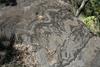
NewsStromatolite study provides new detail on the impact of volcanic activity on early marine life
Analysis of fossilised rocks known as stromatolites - layered rock formations created by ancient microorganisms, such as bacteria - from more than two-and-a-half billion years ago has provided new insights into the conditions on Earth before the evolution of oxygen.
-
 News
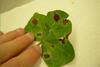
NewsBlocking plant immune responses gives colonizing bacteria a competitive advantage
Similar to pathogens, commensal bacteria of plant microbiota were found to possess the mechanism to suppress plant immunity that allows their competitive advantage over non-immunosuppressive bacteria amongst the root-associated bacterial community.
-
 News
NewsStudy reveals how anemonefish avoid stings from their sea anemone hosts - bacteria could be involved
Researchers have made a breakthrough in understanding how anemonefish can live safely among sea anemones without being stung by their venomous tentacles, solving a century-long mystery.
-
 News
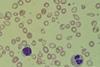
NewsEvolutionary tradeoffs: Research explores the role of iron levels in COVID-19 infections
Iron has been found to be essential to both human physiology and pathogen replication. The richer the iron availability, the more likely to be susceptible to infections, such as COVID-19. A balance of iron levels is thus critical for homeostasis and preventing pathogenic infections.