
All Ecology & Evolution articles – Page 11
-
 News
NewsLichens and drones reveal dinosaur bones
Scientists have found that certain lichen species preferentially colonise exposed dinosaur bones, creating distinctive spectral signatures that can be detected from 30 metres above ground using drones.
-
 News
NewsUnprecedented decline in marine viruses in the western Mediterranean linked to climate change revealed
Researchers have described a sustained and unprecedented decrease in the abundance of marine viruses in the northwestern Mediterranean over the last two decades. The findingis based on the longest-known time series data on marine viruses to date.
-
 News
NewsResearchers to investigate moisture-driven Antarctic ice sheet growth during past warm climates
Investigating how increased moisture transport to Antarctica, and under what temperatures and sea ice conditions moisture transport occurs, is required to understand the mechanisms that can lead to increased ice accumulation.
-
 News
NewsNew study explores ‘legacy effects’ of soil microbes on plants across Kansas
A new study analyzes soils sampled across the state of Kansas to determine the importance of “legacy effects” — or how soils from a specific location are influenced by microbes that have evolved in response to the specific climate at that site for many years.
-
 News
NewsDNA from Napoleon’s 1812 army identifies the pathogens likely responsible for the army’s demise during their retreat from Russia
Microbial paleogenomicists extracted DNA from the teeth of soldiers from Napoleon’s ill-fated invasion of the Russian Empire and found no trace of typhus. Instead, they identified two pathogens known to cause enteric fever and relapsing fever.
-
 News
NewsProtection against winter vomiting bug spread with arrival of agriculture
Norovirus clears up after a couple of days, but the protection it provides is short-lived, meaning that the same person can fall repeatedly sick in a short space of time. But some people cannot succumb to the virus, thanks to a particular gene variant whose historical spread has now been traced.
-
 News
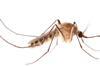
NewsStudy uncovers origins of urban human-biting mosquito, shedding light on uptick in West Nile virus spillover from birds to humans
The research disproves the theory that the mosquito evolved in the London underground by dating the mosquito’s origin back over 1,000 years and identifies the genetic links between bird-biting and human-biting mosquitoes, key to West Nile transmission.
-
 News
NewsFungi paved the way for life on land hundreds of millions of years earlier than previously thought
After reviewing the evolutionary timeline of fungi, scientists have determined that their origin dates back to between 900 million and 1.4 billion years ago. This means that fungi had already been living on Earth hundreds of millions of years before plants took root on our planet.
-
 News
NewsDoes floral scent affect insect visitors and bacterial strains on flowers?
A new study reveals that high floral scent chemodiversity is associated with increased pollinator richness but reduced bacterial richness on flowers. The findings led the scientists to propose the ’Filthy Pollinator Hypothesis’.
-
 News
NewsDual feeding strategy helps Mediterranean coral thrive in rising sea temperatures
An exceptional “dual feeding” strategy underlies a Mediterranean coral’s resilience to rising sea temperatures, according to a study. The stony coral Oculina patagonica is known to feed itself with or without algae.
-
 News
NewsStinkbug leg organ contains symbiotic fungi to shield eggs from parasitic wasps
What looked like a hearing organ on a tiny stinkbug’s leg turned out to be something far stranger: a fungal nursery that mother bugs use to coat their newly laid eggs in protective symbiotic hyphae, shielding their offspring from parasitic wasps.
-
 News
NewsSped-up evolution may help bacteria take hold in gut microbiome
A genetic mechanism inserts mutations into key DNA hotspots that enable bacteria to adapt to new environments, a new study finds.
-
 News
NewsClimate change may increase the spread of neurotoxin in the oceans
Climate-driven oxygen loss in the Black Sea thousands of years ago triggered the expansion of microorganisms capable of producing the potent neurotoxin methylmercury. That is shown in a new study which suggests that similar processes could occur in today’s warming oceans.
-
 News
NewsEarth’s oxygen boom: a fresh perspective for a billion-year-old problem
A new study examines nickel and urea in early microbial habitats, showing how ancient cyanobacteria adapted to their chemical surroundings. By recreating Archean conditions in the lab, researchers uncovered clues about the delicate balances that shaped early cyanobacterial life.
-
 News
NewsResearchers uncover hidden plant–microbe strategy that boosts crop growth under nutrient stress
Scientists discovered that when soil microbes compete with each other in the rhizosphere, they release a well-known compound called glutathione. This compound enhances plant growth under sulphur-deficient conditions.
-
 News
NewsRare bacterium ‘plays dead’ to evade detection in NASA clean rooms
A rare novel bacterium found in an unexpected environment may be evading detection by “playing dead”. Discovered in NASA spacecraft assembly clean rooms, Tersicoccus phoenicis could have major implications for planetary protection and clean room sterilization practices.
-
 News
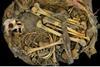
News1,000-year-old gut microbiome revealed for young man who lived in pre-Hispanic Mexico
Analysis of preserved feces and intestinal tissue has revealed specific types of bacteria that were present in the microbiome of a young adult man who lived in Mexico about 1,000 years ago, prior to Spanish colonization.
-
 News
NewsDeadwood-decomposing fungi feed germinating orchids
Deadwood-decomposing fungi feed germinating orchids, providing the carbon their tiny seeds don’t have. The finding not only closes a gap in our understanding of wild orchid ecology but also uncovers an important carbon flux in the ecosystem.
-
 News
NewsExperimental mapping of bacterial growth reveals evolutionary and ecological patterns
A research team has proposed a new approach to reveal ecological niches (positions within ecosystems) and evolutionary relationships in nature through large-scale growth analysis of bacteria in strictly regulated laboratory settings.
-
 News
NewsResearchers wake up microbes trapped in permafrost for thousands of years
In a new study, a team of geologists and biologists resurrected ancient microbes that had been trapped in ice—in some cases for around 40,000 years.