
All Ecology & Evolution articles – Page 14
-
 News
NewsScientists strive to place tens of thousands of previously unknown fungi in the evolution tree
Scientists have received a grant to systematise and describe members of the 95% majority of previously unclassified microscopic fungi, and other eukaryotic organisms not yet included in the current tree of life system.
-
 News
NewsEvolutionary model for antibiotic resistance reveals dose timing critical to care
The study that uses a “fitness seascape” to incorporate a patient’s dosage schedule into models that predict whether an infection will develop antibiotic resistance has found that inconsistent timing and missing early doses can lead to treatment failure.
-
 News
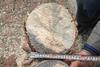
NewsScientists report well-preserved fossil blue-stain fungus from the Jurassic
A research team has found well-preserved fossil fungal hyphae preserved within a Jurassic petrified wood from northeastern China, dating back 160 million years.
-
 News
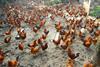
NewsResearchers uncover genetic keys to the increasing threat of H9N2 avian influenza
A new study has uncovered significant genetic and antigenic diversity among H9N2 avian influenza viruses (AIVs) circulating in poultry across China, highlighting the growing public health risk posed by H9N2 AIVs.
-
 News
NewsStudy resolves diatom tree of life - and could offer clues to Earth’s puzzle
A new study finds that diatoms evolved slowly for the first 100 million years of their existence. Then, 170 million years ago, they reached an inflection point characterized by a burst of rapid speciation orders of magnitude faster than anything that had preceded it.
-
 News
NewsRock record reveals oxygenation of ocean may have happened earlier than we thought
Researchers uncover evidence that oxygenation in the ocean—crucial for life as we know it—may have occurred earlier than previously thought, offering new insights into the evolution of our planet.
-
 News
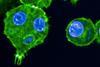
NewsHow the plague bacillus became less virulent, prolonging the duration of two major pandemics
Scientists have discovered that the evolution of a gene in the bacterium that causes bubonic plague, Yersinia pestis, may have prolonged the duration of two major pandemics. Modifying the copy number of a specific virulence gene increases the length of infection.
-
 News
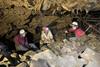
NewsAncient remains reveal how a pathogen began to use lice – not ticks – to infect humans
Researchers have analysed ancient DNA from Borrelia recurrentis, a type of bacteria that causes relapsing fever, pinpointing when it evolved to spread through lice rather than ticks, and how it gained and lost genes in the process.
-
 News
NewsYeast reveals how species adapt to a warmer climate
Researchers harnessed the power of experimental evolution with the microbial model system yeast (Saccharomyces spp.) to measure the evolutionary potential of populations to adapt to future warming, in real time and across the entire species tree.
-
 News
NewsBiodiversity in Antarctic soils may be greatly underestimated after surprising discovery
Researchers have shown that previously unknown apparent mutualisms allow biodiversity to flourish to an unexpected degree in an extreme habitat: weathered debris in front of a glacier in Antarctica.
-
 News
NewsResearch team traces evolutionary history of bacterial circadian clock on ancient Earth
To better understand the circadian clock in modern-day cyanobacteria, researchers studied ancient timekeeping systems. They examined the oscillation of the clock proteins in modern cyanobacteria, comparing it to the function of ancestral Kai proteins.
-
 News
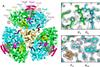
NewsLight-to-electricity nanodevice reveals how Earth’s oldest surviving cyanobacteria worked
An international team of scientists have unlocked a key piece of Earth’s evolutionary puzzle by decoding the structure of a light-harvesting “nanodevice” in one of the planet’s most ancient lineages of cyanobacteria.
-
 News
NewsDual associations with two fungi improve tree fitness
Many tree species have formed a concurrent symbiosis with two different groups of mycorrhizal fungi. Those trees cope better with water and nutrient scarcity, which is an important trait for forestry in the face of climate warming.
-
 News
NewsFamily of parasite proteins presents new potential malaria treatment target
Researchers from the Francis Crick Institute and the Gulbenkian Institute for Molecular Medicine (GIMM) have shown that the evolution of a family of exported proteins in the malaria-causing parasite Plasmodium falciparum enabled it to infect humans. Source: Ernst Hempelmann Ring stage of Plasmodium falciparum in human red blood ...
-
 News
NewsClimate change is turning coastal lagoons into ‘salty soup’
The impacts of human activity and climate change are coalescing to make coastal lagoons saltier, changing the microbial life they support and the function they play in their ecosystems, according to new research.
-
 News
NewsChimpanzees use medicinal leaves to clean and treat their wounds
Scientists studying chimpanzees in Budongo Forest, Uganda, have observed that these primates don’t just treat their own injuries, but care for others, too — information which could shed light on how our ancestors first began treating wounds and using medicines.
-
 News
NewsStudy uncovers why so many microbes fail to grow in the lab
Many microorganisms die when attempts are made to cultivate them. A new study suggests that that their survival does not depend solely on the needs of individual microbes but on a hidden web of relationships that can be caused to collapse by even small structural changes.
-
 News
NewsActivating ‘jumping genes’ speeds up bacterial evolution from decades to weeks
Scientists have developed a system to control and accelerate the evolution of changes in the bacterial genome structure, targeting small ‘jumping genes’, or DNA sequences known as insertion sequences.
-
 News
NewsPredictive AI model can help build vaccines for future versions of a virus
Researchers have created an AI tool called EVE-Vax that can predict and design viral proteins likely to emerge in the future. For SARS-CoV-2, panels of these “designer” proteins triggered similar immune responses as real-life viral proteins that emerged during the pandemic.
-
 News
NewsBat virus evolution suggests wildlife trade sparked COVID-19 virus emergence in humans
The ancestor of the virus that causes COVID-19 left its point of origin in Western China or Northern Laos just several years before the disease first emerged in humans up to 2,700 kilometers away in Central China, suggesting the wildlife trade played a role.