
All Editorial articles – Page 171
-
 News
NewsFecal samples from bowhead whales link ocean warming to rising algal toxins in Arctic waters
Rising toxins found in bowhead whales, harvested for subsistence purposes by Alaska Native communities, reveal that ocean warming is causing higher concentrations of algal toxins in Arctic food webs.
-
 News
NewsLife on Venus? UK probe could reveal the answer
The answer to whether tiny bacterial lifeforms really do exist in the clouds of Venus could be revealed once-and-for-all by a UK-backed mission. Scientists plan to search and map phosphine, ammonia, and other gases rich in hydrogen that shouldn’t be on the planet.
-
 News
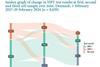
NewsCohort data from Denmark show real-world evidence of stable protection against HPV-related cervical cancer
Denmark has been offering free vaccination against human papillomavirus (HPV) to girls since 2008. New data show vaccination has effectively reduced infections with cancerogenic HPV 16/18 types covered by the vaccine, indicating population immunity.
-
 News
NewsResearchers develop mRNA-based vaccine against a deadly plague-causing bacterium
Researchers have used the platform developed for COVID-19 vaccines to create the world’s first mRNA-based vaccine against the deadly, antibiotic-resistant bacterium behind pneumonic plague.
-
 News
NewsSubstances isolated from marine sponges show potential for treating malária
In pre-clinical tests, compounds called batzelladins were found to be effective even against strains of Plasmodium that are resistant to conventional antimalarial drugs.
-
 News
NewsScientists ID new drug target for treating cancer and viral infections
An international team of researchers has identified a molecular mechanism that regulates the activity of N-myristoyltransferases, enzymes that ensure the proteins’ function by chemically modifying them during their production.
-
 News
NewsChameleon plant polysccharide targets acute pneumonia with H1N1 and MRSA coinfection
A new study discusses how an anti-complement homogeneous polysaccharide from Houttuynia cordata ameliorates acute pneumonia with H1N1 and MRSA coinfection through rectifying Treg/Th17 imbalance in the gut–lung axis and NLRP3 inflammasome activation.
-
 News
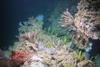
NewsScientists receive $1M grant to study gulf’s mesophotic coral habitats
Florida Atlantic University’s Harbor Branch Oceanographic Institute has received a $999,664 grant from FLRACEP for a three-year project titled, “Influences of Upwelling and Riverine Nutrient Plumes on the Mesophotic Coral Ecosystems of the West Florida Shelf.”
-
 News
NewsNew strategy developed to engineer high-affinity receptor-containing antibodies against malaria
Researchers have introduced an innovative approach to developing high-affinity receptor-containing antibodies in vitro, offering a promising strategy to combat malaria.
-
 News
NewsGlobal trends and cross-country inequalities of acute hepatitis E in the elderly, 1990–2021
Acute hepatitis E (AHE) in the elderly can lead to severe complications including liver failure and mortality. A new study aimed to assess the trends and health inequalities of AHE among the elderly over the past three decades, and predict its changes by 2030.
-
 News
NewsVersion 4 update to Human Oral Microbiome Database includes expanded whole-genome sequence info
A recent update to the Human Oral Microbiome Database (HOMD) database includes a greatly expanded set of whole-genome sequences, reflecting a significant advancement in taxonomy of bacterial species and the study of microbial states in disease and health.
-
 News
NewsThirty years of research shows increased resistance in fungi
Fungi are increasingly resistant to antifungals, and the variation in resistance has significantly increased, reveals an analysis of more than 12,000 lung samples collected over thirty years in Dutch hospitals.
-
 News
NewsStructure of tick-borne virus revealed at atomic resolution for the first time
One emerging tick-borne virus in North America is the Powassan virus (POWV), which can cause encephalitis, seizures, paralysis and coma. Rates of POWV infections have increased in recent years and currently, there are no treatments available.
-
 News
NewsGut microbes key to understanding how exercise boosts cancer immunity
A new study shows how exercise improves cancer outcomes and enhances response to immunotherapy in mice by reshaping the gut microbiome. These benefits are driven by a specific compound called formate, which is produced by gut bacteria in exercised mice.
-
 News
NewsPrairie dogs carry genes linked to surviving plague
A study of the genetic basis of plague immunity in prairie dogs has broad implications for conservation. By comparing whole-genome sequences, the authors identified genetic variants associated with survivorship.
-
 News
NewsLarge-scale DNA study maps 37,000 years of disease history
A new study maps infectious diseases across millennia and offers new insight into how human-animal interactions permanently transformed our health landscape.
-
 News
NewsAMI welcomes two new members to its Board of Trustees
Applied Microbiology International has welcomed two new trustees to the AMI Board of Trustees - Dr Helen Onyeaka and Otto Balsiger. Professor Catherine Rees has been re-elected for a second term as a Trustee.
-
 News
NewsResearchers develop superstrong, eco-friendly materials from bacteria
Scientists have developed a scalable approach to engineer bacterial cellulose into high-strength, multifunctional materials. Their biosynthesis technique aligns bacterial cellulose fibers in real-time, resulting in robust biopolymer sheets with exceptional mechanical properties.
-
 News
NewsSummer travel ‘will increase the spread of measles,’ expert says
The number of measles cases in the U.S. has reached its highest point in 33 years, and outbreaks are expected to continue, especially amid national and international travel.
-
 News
NewsFrom COVID to cancer, new at-home ‘coffee-ring’ test spots disease with startling accuracy
A new, low-cost biosensing technology could make rapid at-home tests up to 100 times more sensitive to viruses like COVID-19. The diagnostic could expand rapid screening to other life-threatening conditions like prostate cancer and sepsis as well.