
All Editorial articles – Page 275
-
 News
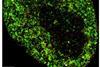
NewsAI spots cancer and viral infections at nanoscale precision
Scientists have developed an artificial intelligence which can differentiate cancer cells from normal cells, as well as detect the very early stages of viral infection inside cells.
-
 News
NewsWhat enables herpes simplex virus to become impervious to drugs?
Research pinpoints the key to the cold sore virus’s ability to evade treatment, offering broader clues on antiviral drug resistance.
-
 News
NewsCan fungi turn food waste into the next culinary sensation?
The East Javan food called oncom is made by growing orange Neurospora mold on soy pulp left over from making tofu. In about 36 hours, the soy pulp is turned into a tasty and nutritious food.
-
 News
NewsNew technology ‘lights up’ bacteria in wounds for better infection prevention
Autofluorescence (AF) imaging uses violet light to illuminate molecules in the cell walls of any bacteria. Different types of bacteria turn different colors, allowing physicians to immediately determine how much and which types of bacteria are in the wound.
-
 News
News3D shapes of viral proteins point to previously unknown roles
Scientists uncover an ancient immune-evading strategy shared by animal viruses and viruses that infect bacteria; findings may help in the development of new antiviral therapies.
-
 News
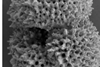
NewsWhat microscopic fossilized shells tell us about ancient climate change
New research pairs sea surface temperatures with levels of atmospheric CO2 during the end of the Paleocene, showing the two were closely linked.
-
 News
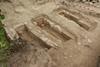
NewsStudy reveals isolation, endogamy and pathogens in early medieval Spanish community
An archaeogenetic study sheds new light on the isolated medieval community Las Gobas in northern Spain. The researchers have identified the variola virus which can offer a new explanation on how smallpox entered Iberia.
-
 News
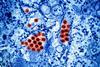
NewsPeople who recover from dengue are at higher risk of long-term health complications than those who recovered from COVID-19
People who caught dengue and recovered are more likely to face long-term health complications about a year later compared to those who contracted COVID-19, according to the findings of a Singapore-wide study.
-
 News
NewsDisease X is a threat to free societies - so pandemic preparedness is vital this time round
The Covid-19 pandemic uncovered fracture lines in society that have the potential to destabilize free societies by internal and external groups using misinformation on social media, a new review warns.
-
 News
NewsMen infected with high-risk types of HPV could struggle with fertility
Men infected with high-risk HPV genotypes show evidence of sperm death from oxidative stress and an impaired immune response, a new study suggests.
-
 News
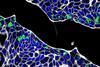
NewsChlamydia can form reservoir in the intestine
Scientists investigating persistence tested the theory that the bacteria find a niche in the body where they are not yet vulnerable, that they form a permanent reservoir there and can become active again later.
-
 News
NewsNIH grant establishes UAB’s Global Research Resource for Human Tuberculosis
A $5.8m grant led by Adrie Steyn, Ph.D., of the University of Alabama at Birmingham and the Africa Health Research Institute, or AHRI, in Durban, South Africa, will provide user-requested infected human lung tissue and analytical services to tuberculosis researchers worldwide.
-
 News
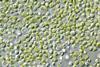
NewsCeO2 nanoparticles are a double-edged sword for aquatic algal life
A crucial study reveals significant alterations in growth, photosynthetic activity, and gene expression of freshwater algae due to cerium oxide nanoparticles.
-
 News
NewsResearchers granted $5m to study antibiotic-resistant wound infections in Ukraine
A new project funded by the U.S. Department of Defense partners emergency medicine faculty with research clinicians in Ukraine to launch a research platform for studying war-related wound infections and inform future clinical trials.
-
 News
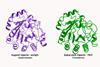
NewsNext time you beat a virus, thank your microbial ancestors
When you get infected with a virus, some of the first weapons your body deploys to fight it were passed down to us from our microbial ancestors. Two key elements of our innate immune system came from a group of microbes called Asgard archaea.
-
 News
NewsHoney bees may play key role in spreading viruses to wild bumble bees
Honey bees may play a role in increasing virus levels in wild bumble bees each spring, according to researchers who analyzed seasonal trends of parasite and virus transmission in bees.
-
 News
NewsCRISPR gene scissors switch off with built-in timer
Researchers have discovered a timer integrated into the CRISPR gene scissors that enables the gene scissors to switch themselves off.
-
 Careers
Meet the Global Ambassadors: Our Q&A with Suni Mathew
The Microbiologist chats with our new Global Ambassador for Finland, Suni Mathew, a senior researcher at the University of Turku who studies the effects of heavy metal pollution on plant-associated microbial communities in Arctic ecosystems.
-
 News
NewsFungal discovery changes the way we understand Charles Darwin’s most beloved plant – the sundew
A new study has uncovered a symbiotic relationship that has evolved between Darwin’s favourite carnivorous plant and a specific type of fungus which lives inside it and helps it digest its prey.
-
 News
NewsNew microbial fermentation manufacturing facility launched in Billingham
The UK’s life science sector has been bolstered by a £100m investment by FUJIFILM Diosynth Biotechnologies. This takes the form of a new microbial fermentation manufacturing facility in Billingham.