
All Editorial articles – Page 47
-
 News
NewsProtected areas that help wildlife often do little for the soil fungi that plants depend on
Scientists built the most comprehensive models ever of the ranges of 2,858 important fungal species and compared them with the world’s protected landscapes. More than half of these critical underground organisms are less protected than if conservation areas had been drawn at random.
-
 News
NewsTibet’s thawing lakes accelerate greenhouse gas release
Lakes on the Tibetan Plateau are undergoing a dramatic transformation; once stable carbon sinks, they are rapidly becoming significant sources of greenhouse gases due to climate warming. Rising temperatures are accelerating permafrost thaw and glacier retreat, feeding feeds the expansion of ’thermokarst’ lakes.
-
 News
NewsNew ‘permanently wet’ coating method could transform wastewater treatment by helping bacteria survive better
Living bacteria embedded in coatings could clean wastewater, capture carbon and generate biofuels – if they survive the manufacturing process. Researchers have developed a method that keeps bacteria submerged throughout coating formation, increasing the number of surviving cells by around 500 times compared to conventional approaches.
-
 News
NewsThe impact of microplastics on ocean carbon uptake
Scientists who collected phytoplankton data from various climate zones around the world determined the extent to which growth is limited by microplastics. They have then used this data to calculate the average impact that a certain concentration of microplastics will have on algae in different regions or climate zones, as well as on a global scale.
-
 News
NewsResearch findings could expand bioluminescence-based applications in medicine and other industries
Medical researchers have used fungal light-producing enzymes in the Fungal Bioluminescence Pathway (FBP) to visually track processes like tumor progression and inflammatory responses. New research provides insights that may help improve and expand such bioluminescence-based tools and applications.
-
 News
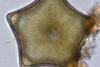
NewsRevealing the invisible: a new baseline for Salish sea diatoms answers a global call
Diatoms are powerful in driving roughly 20% of global photosynthesis and forming the very base of marine food webs. Scientists have published a new checklist of 924 diatom taxa alongside a curated dataset of 11,469 records, providing a long-needed foundation for environmental monitoring across the Salish Sea bioregion.
-
 News
NewsNew research offers practical biosecurity tools to limit poultry disease spread
New research could help producers better protect poultry flocks from disease outbreaks while reducing costs. By identifying where contamination occurs and how to interrupt those pathways, the research helps move biosecurity from theory to action, offering tools that can protect animal health and support a more stable food supply.
-
 News
NewsA common disinfectant could affect how well your liver works
Common household cleaners and pharmaceutical products contain benzalkonium chlorides (BACs), a type of disinfectant. A new study shows that exposure to these compounds caused changes in gut microbiome composition in mice, as well as the genes that encode for liver enzymes that metabolize drugs.
-
 News
NewsCOVID racism driven by more than fear of infection
Anti-Asian discrimination and violence increased during COVID, and new research has revealed one key psychological driver. Rather than being driven by a fear of infection, aggressive forms of discrimination appeared to be more strongly associated with anger.
-
 News
NewsScientists establish ‘eco-friendly bio-platform’ to replace petroleum-derived naphtha
KAIST announced on May 19th that the KAIST-Hanwha Solutions Future Technology Research Institute has secured bio-technology capable of mass-producing eco-friendly raw materials for plastics and textiles using waste resources, offering an alternative to petroleum-derived naphtha. Source: KAIST From Left: Hyun Bae Bang, Cheon Woo Moon, Cindy Pricilia Surya ...
-
 News
NewsStudy reveals “bet-hedging” strategy that helps gut bacteria survive and recover
Researchers have discovered that many gut bacteria use a flexible survival strategy to withstand disruptions such as antibiotics and diet changes. Microbes can switch between functional states, rather than relying solely on genetic mutations, to try to survive shifting conditions.
-
 News
NewsOral spray neutralizes smelly dog breath with plant extracts
An oral spray derived from molasses, a by-product of sugar cane refining, reduced bad smells, odor-producing compounds and harmful bacteria from 10 dogs’ mouths.
-
 News
NewsHigh-altitude exposure remodels the gut microbiota: health and disease
A new review synthesizes evidence from human and animal studies to elucidate how high-altitude stress reshapes the microbial landscape, explores the mechanisms linking microbiota to disease, and evaluates emerging microbiome-based interventions for promoting resilience.
-
 News
NewsMolecular net boosts the power of natural biopesticides
Scientists have uncovered a previously unknown mechanism that helps a widely used biological pesticide become more effective. The study reveals how bacteria produce ultra-strong protein fibers that form a molecular net, trapping infectious spores and toxins into a sticky film that enhances their ability to kill insect pests.
-
 News
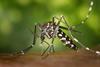
NewsClimate change and emerging diseases pose challenges for physicians
Climate change is affecting the local ecology in Canada, contributing to emerging tick- and mosquito-borne diseases and infections in humans, argue scientists.
-
 News
NewsAs day turns to night, blue-green algae undergo a molecular rewiring
Traditionally, biotechnology researchers have modified genes when engineering microbes. But researchers are using predictive phenomics to uncover additional layers of biological control, tracking how environmental changes reshape molecular activity inside a cell and how those shifts translate to function.
-
 News
NewsCorn diseases cost farmers $13.8 billion from 2020 to 2023
Corn diseases cost farmers an estimated $13.8 billion USD from 2020 to 2023, according to a new multiyear analysis led by plant disease specialists from across the United States and Ontario, Canada.
-
 News
NewsSweeping up dust to detect emerging viruses
Gathering dust from buildings may hold promise as a more efficient way to track viral outbreaks in indoor settings, according to a new study. After collecting nearly 30 vacuumed dust samples from different buildings, researchers simultaneously identified the presence of 54 distinct viruses.
-
 News
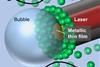
NewsOptical method concentrates microscopic targets for faster, more sensitive detection
Researchers have developed a light-driven technique that quickly amasses thousands of bacteria into a single spot, boosting detection speed and sensitivity. Their approach paves the way for earlier diagnosis of disease.
-
 News
NewsTiny ocean life helps scientists estimate whale prevalence off the California coast
Using an innovative alternative method, researchers examined microbial “ecological habitats” as highly accurate predictors of how many filter-feeding whales were occupying the California coast between 2014 and 2020 from San Diego to Morro Bay.