
All Environmental Microbiology articles – Page 6
-
 News
NewsDegradable sensors reveal hidden soil secrets
New degradable sensors being developed by soil scientists track biological activity in soil by having a degradable substrate that is nibbled on by microbes.
-
 News
NewsTwo types of biochar help alfalfa survive salty soils
A new study shows that carefully designed biochar can guide plant metabolism and reshape beneficial microbial communities around the roots to help reduce stress from saline-alkali soil.
-
 News
NewsBacteria organise themselves into diverse, coordinated communities in order to travel across large distances
A new study examined the migration of microbial communities over long distances, and found bacteria migrate not as solitary swimmers, but in diverse, coordinated communities that also contain viruses and “hitchhiking” microbes that cannot swim on their own.
-
 News
NewsBiologist dives beneath Antarctica sea ice to study the impact of climate change
One biologist is studying the genetic diversity of red algae to see how this vital part of Antarctica’s underwater ecosystem is affected by climate change. Answering that question is becoming increasingly important as Earth’s warming climate causes Antarctica’s sea ice to recede farther with every passing year.
-
 News
NewsResearcher efforts to reproduce corals shared with TV cameras
Scientists at Nova Southeastern University are sharing a rare look at a marine mission that aims to pump life back into coral reefs. Researchers waiting for coral-spawning hope the project will be a game-changer in the South Florida ecosystem.
-
 News
NewsQ&A: Meet Letters in Applied Microbiology Junior Reviewer Md. Ekramul Karim
We caught up with Md Ekramul Karim, a Ph.D. candidate at the University of Houston, who is one of the newest Junior Reviewers with Letters in Applied Microbiology.
-
 News
NewsScientists probe links between green space exposure, mental health and the nasal microbiome
Researchers recently studied associations among green space exposure, mental well-being, and the nasal microbiome—the microbes in a person’s nose. The analysis showed correlations among microbial signatures, time spent outdoors and positive mental well-being.
-
 News
NewsFrom spider silk to science: a new way to access hidden fungal diversity
A new study suggests that spider webs - particularly those incorporating environmental debris - can serve as natural, non-destructive collectors of fungal material in agricultural ecosystems. The findings show that viable fungi can be recovered from these structures, including lineages that may represent previously undocumented diversity.
-
 Long Reads
Losing the Earth’s bounty
Farmland degradation and soil erosion have caused food shortages and the collapse of civilizations throughout human history. Today, soil degradation is a growing driver of global threats such as climate change, biodiversity loss, and food insecurity. Loss of soil, the resource that supports production of 95% of the food supply, ...
-
 News
NewsFungal surges marked Cretaceous mass extinction that ended age of dinosaurs
The asteroid impact thought to have wiped out the dinosaurs 66 million years ago was followed by surges of fungi in North America. These are the first findings to provide direct evidence that this post-asteroid fungal bloom may have been a global event.
-
 News
NewsProtected areas that help wildlife often do little for the soil fungi that plants depend on
Scientists built the most comprehensive models ever of the ranges of 2,858 important fungal species and compared them with the world’s protected landscapes. More than half of these critical underground organisms are less protected than if conservation areas had been drawn at random.
-
 News
NewsMolecular net boosts the power of natural biopesticides
Scientists have uncovered a previously unknown mechanism that helps a widely used biological pesticide become more effective. The study reveals how bacteria produce ultra-strong protein fibers that form a molecular net, trapping infectious spores and toxins into a sticky film that enhances their ability to kill insect pests.
-
 News
NewsTiny ocean life helps scientists estimate whale prevalence off the California coast
Using an innovative alternative method, researchers examined microbial “ecological habitats” as highly accurate predictors of how many filter-feeding whales were occupying the California coast between 2014 and 2020 from San Diego to Morro Bay.
-
 News
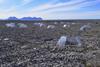
NewsClimate warming causes bleaching in key Arctic lichen, study finds
Long-term climate warming is causing a bleaching effect in a key Arctic lichen species, according to new research. Prolonged warming caused significant bleaching in the dominant lichen species Cetrariella delisei, reducing its ability to photosynthesise and grow.
-
 News
NewsHidden viruses reshape one of Earth’s largest carbon systems, study finds
Viruses play a far more active role in Earth’s carbon cycle than previously understood, according to new research that reveals how they infect and control microbes responsible for carbon production in some of the planet’s largest, darkest ecosystems.
-
 News
NewsNew report charts path for climate-disease preparedness
Changing patterns of temperature and precipitation, along with sea level rise and more extreme weather events, are impacting the ecology, evolution, distribution and prevalence of infectious disease reservoirs, hosts, vectors and pathogens. As a result, new diseases are emerging, and others are reappearing in regions where they were once uncommon.
-
 News
NewsTraditional dengue alerts are missing the mark as Vietnam’s climate shifts—researchers propose a one health solution
For decades, Vietnam’s dengue surveillance relied on a straightforward logic: when cases exceed the five-year average by a sufficient margin, sound the alarm. That logic is now breaking down.
-
 News
NewsMarine-inspired sunscreen ingredient made by E. coli
Researchers have engineered microbial “cell factories” to sustainably produce the UV-protective compound gadusol, which could eventually serve as a sunscreen ingredient and an antioxidant additive. Gadusol, found in the eggs of various fish and other marine organisms, helps protect against ultraviolet damage.
-
 News
NewsThe fog is alive - with tiny helpers
What if fog isn’t just misty air, but a living ecosystem? This question hung over cloud researcher Thi Thuong Thuong Cao. As a PhD student at Arizona State University, her curiosity led her from knocking on the doors of microbiologists and chemists, to sampling fog before sunrise in Pennsylvania, to ...
-
 News
NewsDoes agriculture and climate affect feeding activities of soil animals?
An international research team has shown that soil animal communities have greater trophic diversity in agricultural ecosystems and in tropical regions. Animals that feed on microorganisms – such as nematodes, springtails and mites – had higher trophic diversity than those that feed on dead organic matter or live as predators.