
All Goethe University Frankfurt articles
-
 News
NewsTaxiing through the gut: Formic acid in the microbiome
Scientists have found that the gut bacterium Blautia luti produces formic acid (formate) instead of carbon dioxide (CO₂) and hydrogen, with hydrogen bound to CO₂. In this case, formic acid is the electron taxi, allowing the energetically costly production of hydrogen to be bypassed.
-
 News
NewsBlue proteins from cold-adapted microbes could offer blueprint for molecular on-off switches
Rare blue proteins from cold-adapted microbes can serve as prototypes to design molecular on-off switches for cells, a new study finds.
-
 News
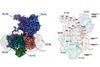
NewsWithout oxygen: How primordial microbes breathed
Scientists decode the fundamental mechanisms of a cell respiratory enzyme in ancient bacterial cells, with potential applications in removing greenhouse gases and drug development against pathogens.
-
 News
NewsBat genome signposts new potential pathway to fight viruses with genomic characterization
A promising discovery has been made from a study that deciphers how bats are more resistant to viral infections than human using genome annotations of transposable elements in bats to pave a way for adapting the bats’ immunity against future viral outbreaks.
-
 News
NewsStudy yields evidence of oldest confirmed photosymbiosis in corals
Researchers have demonstrated, using nitrogen isotope analyses, that some extinct corals from the Middle Devonian period were already symbiotic. This represents geochemical evidence of the oldest confirmed photosymbiosis in corals.
-
 News
NewsNovel electrochemical sensor detects dangerous bacteria
A newly developed sensor detects only intact bacteria, making use of the fact that microorganisms only ever attack certain body cells, which they recognize from the latter’s specific sugar molecule structure.
-
 News
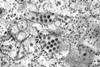
NewsIndustry collaboration funds development of RNA drugs against dengue fever virus
University team use patented nuclear magnetic resonance (NMR)-based screening method to identify small molecules that specifically bind to the viruses’ highly conserved RNA structures and interrupt the viral infection cycle.
-
 News
NewsSlumbering Acinetobacter baumannii infections can flare up again and again
Researchers have discovered a permanent, sleep-like state in dangerous bacteria.
-
 News
NewsN-protein research reveals role of human body temperature in Covid proliferation
Researchers shed light on a pivotal part in the RNA-binding mechanism of the nucleocapsid protein (N) – SARS-CoV-2 probably uses human body temperature for its proliferation strategy.
-
 News
NewsHigh diversity of cell appendages found in hospital superbug
Bioinformaticians have detected an unexpectedly wide diversity of certain cell appendages in hospital pathogen Acinetobacter baumannii that are associated with pathogenicity.
-
 News
NewsAchilles heel is uncovered in Helicobacter pylori
Researchers have discovered a weakness in the bacterium Helicobacter pylori, which could be exploited to develop new drugs.