
All Heinrich Heine University Düsseldorf articles
-
 News
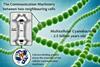
NewsEven ancient bacteria possessed intercellular communication structures like humans today
Communication between cells in plants, animals and humans takes place via specialised connecting structures. Researchers have discovered how the regulation of very similar structures was already present in multicellular bacteria.
-
 News
NewsResearchers find evidence for two independent origins of life
Researchers retraced the origin of enzymes during life’s earliest divergence into bacteria and archaea, and found evidence for two independent origins of life for free-living cells.
-
 News
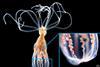
NewsEven invertebrates can specifically distinguish between bacteria
Researchers have found that the immune system of a sea anemone is capable of selectively distinguishing between different microorganisms and thus protecting beneficial over harmful bacteria – an ability that has only been attributed to vertebrates to date.
-
 News
NewsScientists probe antiviral molecules in bacteria that target bacteriophages
Researchers have examined the antiviral molecule daunorubicin, produced by Streptomycetes, and decoded its mode of operation against viruses. They now describe this mechanism, which primarily targets a specific group of viruses – namely bacteriophages.
-
 News
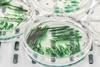
NewsNot only toxic but also a nutrient: guanidine as a nitrogen source
Cyanobacteria are key ecological players of global carbon and nitrogen cycles. They are also becoming increasingly important for carbon-neutral biotechnology. They could serve as green cell factories for a light-driven and sustainable production of chemicals and fuels – a central pillar of the sustainable bioeconomy. Source: André Künzelmann/UFZ ...
-
 News
NewsRare earth elements: of peptides and the origins of life
Elements from the group of rare earth metals are of great importance today, also in technical applications. Researchers have published two new studies - one examining peptides, which can bind these elements, while the other highlights the potential role of the elements in the origins of life.
-
 News
NewsNew mechanisms for bacterial motility and DNA transfer between bacteria decoded
Scientists have discovered a new family of signaling proteins, widespread in the bacterial kingdom and contributing to regulating bacterial motility and DNA uptake mechanisms.
-
 News
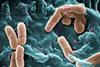
NewsNew research reveals how bacteria export the building blocks of biofilms
Chemists examined how the polysaccharide “Pel” – a central component of many biofilms – is exported out of the cell by the pathogen P. aeruginosa and describe the structure of the so-called PelBC export complex, which represents the last station in the cell before “Pel” is released.
-
 News
NewsBacterium yields secrets of how it produces ‘organic dishwashing liquid’ to degrade oil
The marine bacterium Alcanivorax borkumensis feeds on oil by producing an ’organic dishwashing liquid’ which it uses to attach itself to oil droplets. Researchers have now discovered the mechanism by which this “organic dishwashing liquid” is synthesized.
-
 News
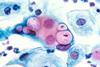
NewsScientists uncover Chlamydia’s sneak attack strategies
Researchers have described the structural and functional methods Chlamydia pneumoniae uses to penetrate the human cell: It mimics molecular structures of the human cell (so-called “molecular mimicry”) and uses them for its attack.
-
 News
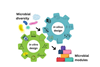
NewsComputer-aided biology can be deployed to develop tailored microbe communities
Researchers inspired by natural lichens want to develop the microbial networking manifested here as an example for future applications, as a contribution toward establishing interdisciplinary methods and technologies for CO2-negative processes.
-
 News
NewsSuper cally molecules take down tuberculosis
Researchers have identified and synthesised a group of molecules that can act against the cause of tuberculosis in a new way. The callyaerins act against TB by employing a fundamentally different mechanism compared to antibiotic agents used to date.
-
 News
NewsScientists uncover mechanism that could weaken virulence of Pseudomonas aeruginosa
Researchers have found a mechanism that makes it possible to weaken the virulence of opportunistic bacterial pathogen Pseudomonas aeruginosa - based on this knowledge, a new approach for antibiotics can be developed.
-
 News
NewsScientists create 3D image of the symbiotic communities around plant roots
Researchers report that microbial community composition varies along the root and that this is influenced by the root spatial metabolism.
-
 News
News“Honey, I shrunk the cookbook” – new approach to vaccine development
Bioinformaticians have presented a method for identifying epitopes that promise safe immunisation across the broadest possible population group.
-
 News
NewsResearch reveals how Halopseudomonas devours polyester urethane
Researchers have shown how bacteria of the genus Halopseudomonas break down common plastic coatings made of polyester urethane, underlying the relevance of the newly isolated bacterium for the biodegradation of plastics.
-
 News
NewsBacteria lay the foundations for their descendants
Researchers investigating a sea anemone microbiome found that the bacterial community is primarily controlled by the host organism during the early stages of life, while bacteria-bacteria interactions play the lead role in subsequent development.
-
 News
NewsMolecular mechanisms of fungal infections clarified
Researchers have clarified how fungal infections are regulated at molecular level, potentially leading to the development of new antifungal agents.
-
 News
NewsCyanobacteria membrane proteins similar to animals’
A dynamin-like protein, namely SynDLP, has been identified in the genome of a cyanobacterium.
-
 News
NewsFlagellate study reveals how cells gain control over their bacterial symbionts
A research team has cast fresh light on how eukaryotic cells integated bacteria in the course of evolution to become organelles, thanks to a study of the single-celled flagellate Angomonas deanei, which contains a bacterium that was taken up relatively recently.