
All Immunology articles – Page 30
-
 News
NewsResearch reveals fetuses exposed to Zika virus have long-term immune challenges
Researchers discovered that when a pregnant mother is infected with Zika virus, the resulting inflammatory response in the placenta permanently changes how the offspring’s immune system develops - even if the infection is mild or asymptomatic in the mother.
-
 News
NewsBreakthrough results from elephant herpesvirus trial find vaccine to be safe
The world’s first vaccine trial against elephant endotheliotropic herpesvirus (EEHV) – a leading cause of death in young Asian elephants – is safe and triggers a strong virus-fighting immune response, according to a research team.
-
 News
NewsQdenga vaccine shows effectiveness against dengue under real-world conditions during Brazil’s 2024 outbreak
An international team of researchers has demonstrated that the tetravalent dengue vaccine Qdenga provides significant protection against the disease under real-world conditions, during the large 2024 epidemic in São Paulo, Brazil.
-
 News
NewsPotential biomarker for the development of long COVID identified
A research team has demonstrated that a specific component of the immune system (PTX-3) remains at significantly higher levels in the blood of patients who have suffered from severe COVID-19, even months after the acute infection has subsided.
-
 News
NewsRisk of long COVID in kids doubles after second infection
Children and adolescents were twice as likely to experience long COVID after catching COVID for the second time, compared to their peers with a single previous infection, results running counter to the popular perceptions that COVID in children is ‘mild’.
-
 News
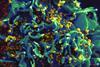
NewsResearchers uncover HIV mystery that could unlock the path to a cure
Researchers have identified for the first time how HIV enters a dormant state in infected cells that allows the virus to “hide” from the immune system and current treatments. HIV orchestrates its own survival by reprogramming host cells to create the perfect hiding place.
-
 News
NewsFungal toxin offers colonization support - in small doses
The yeast fungus Candida albicans not only uses the toxin candidalysin to cause infections, but also to colonize the oral mucosa inconspicuously – but only in finely balanced amounts. Too little toxin prevents oral colonization, too much triggers the immune system.
-
 News
NewsInactive H5N1 influenza virus in pasteurized milk poses minimal health risks
Proteins and genetic material from H5N1 influenza viruses have been found in pasteurized milk in the United States, but a study shows those inactive viral pieces represent little to no health risk. H5N1-contaminated milk that was pasteurized did not significantly affect the immune system.
-
 News
NewsMeta-analysis: COVID-19 vaccination during pregnancy is safe and beneficial for mother and infant
Vaccination is associated with better neonatal outcomes without added maternal risk, according to research presented during the American Academy of Pediatrics 2025 National Conference & Exhibition.
-
 News
NewsIn pregnant mice with severe flu, harmful molecules can breach fetal barriers
A new study shows, for the first time, that severe flu infection in pregnant mice leads to a breakdown in placental and brain barriers, leading to the accumulation of potentially harmful molecules in the fetal brain. Fibrinogen can pass into developing fetal brains.
-
 News
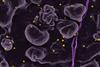
News NIH grant to UC Riverside supports research on dangerous emerging virus
Researchers have been awarded an NIH grant of about $3.4 million over five years to lead an international study focused on developing protective antibodies against Crimean-Congo hemorrhagic fever virus (CCHFV), a biosafety level 4 pathogen and a Category A bioterrorism agent.
-
 News
NewsNew single-dose, temperature-stable rabies vaccines could expand global access
Researchers have discovered a new way to make human rabies vaccines that could greatly expand access to immunization across the globe. The new method creates shots that are temperature-stable—meaning they don’t need to be stored at cold temperatures.
-
 News
NewsGut punch: $2 million to decode bacteria’s role in fighting disease
A $2 million grant to UC Riverside will explore how gut bacteria shape human health. The NIH award will support Ansel Hsiao’s lab in its quest to answer questions about how gut microbes communicate with each other and with their human hosts to influence health.
-
 News
NewsEngineered gut bacteria improves survival outcomes in colorectal cancer tumors
A genetically modified Salmonella typhimurium strain can colonise tumours and release a therapeutic protein, LIGHT, to induce the formation of mature tertiary lymphoid structures (mTLSs) in laboratory models.
-
 News
NewsKoala stress linked to virus infection risk
Researchers have revealed a clear relationship between stress and increased disease risk in koalas in South East Queensland and on the New South Wales North Coast.The study tracked the level of koala retrovirus (KoRV) in groups of captive and wild koalas.
-
 News
NewsYeast in gut microbiome can worsen salmonella infection
Researchers have discovered that a yeast commonly found in our gut can make infection with salmonella worse. Salmonella binds to Candida albicans and triggers a chain reaction that allows the bacteria to better invade cells lining the intestines.
-
 News
NewsCattle vaccine immunity ‘boost’ tested by new research
Scientists at Aberystwyth University are leading research into how a widely used vaccine can boost overall immunity in livestock. The four-year study will investigate the concept of ‘trained immunity’ – a form of immune memory triggered by a vaccine.
-
 News
NewsFood additives in pregnancy: effects on offspring microbiota increase susceptibility to inflammatory diseases
A study conducted in mice reveals that maternal consumption of dietary emulsifiers can have a negative impact on the gut microbiota of their offspring and may increase their risk of developing chronic inflammatory gut disorders and obesity in adulthood.
-
 News
NewsNIH grant aims for childhood vaccine against HIV
A multi-institutional team led by Weill Cornell Medicine investigators has been awarded a five-year, $20.8 million grant from the National Institute of Allergy and Infectious Diseases, part of the National Institutes of Health, for advanced preclinical development of a promising experimental HIV vaccine. Source: NIAID Transmission electron micrograph ...
-
 News
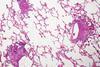
NewsTuberculosis vulnerability of people with HIV: a viral protein implicated
Tuberculosis accounts for one in three deaths among people living with HIV. A new study highlights the key role played by Tat 2 – a viral protein secreted by HIV-infected cells – in this hyper-vulnerability phenomenon.