
All Imperial College London articles
-
 News
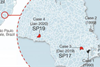
NewsSabiá virus has been circulating in Brazil for 142 years and mutating, study finds
Researchers developed a new method and identified the infection in two patients who died from acute hemorrhagic and neurological syndrome in São Paulo in 2019 and 2020.
-
 News
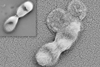
NewsResearchers disable antimicrobial resistance in cystic fibrosis-associated bacteria
A newly discovered mechanism renders antibiotic-resistant bacteria vulnerable by disabling both their individual resistance and a process known as cross-protection, the ability of resistant bacteria to shield nearby, otherwise sensitive strains.
-
 News
NewsEnteroBiotix announces completion of enrolment in Phase 2a Trial evaluating EBX-102-02 prior to allogeneic stem cell transplantation
EnteroBiotix announced that the investigator-initiated Phase 2a MAST trial has completed its enrolment of 50 adult patients undergoing allogeneic haematopoietic stem cell transplantation (allo-HSCT) for defined haematological malignancies.
-
 News
NewsThree women named Britain’s Brightest Young Scientists, each winning ‘unrestricted’ £100,000 Blavatnik Awards prize
The Blavatnik Family Foundation and The New York Academy of Sciences has announced the three 2026 Laureates of the Blavatnik Awards for Young Scientists in the United Kingdom, who each receive £100,000 – the nation’s largest unrestricted prize for science. The three Laureates with Sir Leonard Blavatnik ...
-
 News
NewsObesity linked to one in 10 infection deaths globally
Just over one in 10 deaths from a wide range of infectious diseases can be attributed to obesity worldwide, finds a major new study. People with obesity face a 70% higher risk of hospitalisation or death from an infection than those of a healthy weight.
-
 News
News£3.7 million project aims to provide unprecedented analysis of mesophotic coral reefs
Scientists are to carry out an unprecedented assessment of the response and resilience of mesophotic coral ecosystems – coral reef communities found at depths of between 30m and 150m in tropical regions – to the temperature shifts predicted under future climate change.
-
 News
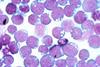
NewsGenetic risk factor and viral infection jointly contribute to MS
One of the leading triggers for multiple sclerosis (MS) is an infection with the Epstein-Barr virus. However, certain gene variants also play an important role. Researchers have shown that it is the molecular interaction between environmental and genetic risk factors that ultimately triggers the disease.
-
 News
NewsUK: COVID-19 vaccine hesitancy decreased over time, though mistrust persists among certain groups
Most COVID-19 vaccine hesitancy is rooted in concerns that can be addressed and effectively reduced over time, according to a new study following more than 1.1 million people in England between January 2021 and March 2022 during the COVID-19 pandemic.
-
 News
NewsNew study reveals that parasite-produced dopamine can alter host behaviour
A new study has shed light on how Toxoplasma gondii, the causative agent of toxoplasmosis, can alter host behaviour. The research findings show that such behavioural changes are achieved, at least in part, through dopamine manipulation caused by dopamine produced by the parasite itself.
-
 News
NewsMajor breakthrough against diabetes thanks to a microbial molecule that disarms inflammation
Researchers have uncovered a surprising ally in the fight against insulin resistance and type 2 diabetes: a microbial metabolite called trimethylamine. TMA, produced by gut bacteria from dietary choline can block a key immune pathway and improve blood sugar control.
-
 News
NewsLargest study of nose microbiome helps highlight those at risk of staph aureus infection
People who persistently carry Staphylococcus aureus (S. aureus) in their nose have fewer species of other bacteria, while certain bacteria may help to prevent S. aureus colonisation, according to the findings of the largest-ever study of the nasal microbiome.
-
 News
NewsGSK and Fleming Initiative scientists unite to target AMR with advanced AI
GSK and the Fleming Initiative have announced six major new research programmes, called ‘Grand Challenges’ which harness some of the best scientific expertise and the latest technologies, including advanced AI, to find new ways to slow the progress of antimicrobial resistance (AMR).
-
 News
NewsA new gateway to global antimicrobial resistance data
To support global AMR research, EMBL’s European Bioinformatics Institute (EMBL-EBI) has launched the AMR portal, a central hub that connects bacterial genomes, resistance phenotypes, and functional annotations, all in one place. The AMR portal ensures long-term availability, standardisation, and reusability of AMR data.
-
 News
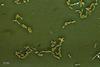
NewsNew drug target identified in fight against resistant infections
Researchers have identified new drug targets within a special repair system possessed by certain bacteria, known as Rtc, which enables them to counteract the effects of these antibiotics.
-
 News
NewsRODIN project will invest 10 M€ to explore cells as the architects of future biomaterials
RODIN - Cell-mediated Sculptable Living Platforms - is set to revolutionize the field of biomaterials and tissue engineering by shifting the focus from designing materials for cells to empowering cells to design their own environments.
-
 News
NewsGlobal platform for pandemic preparedness to be established at DTU National Food Institute
A new global online infrastructure aims to prevent disease outbreaks from developing into pandemics. DTU National Food Institute in Denmark will serve as the focal point for the new infrastructure. Work to build the platform will begin on 1 January 2026.
-
 News
NewsSummer studentship: Shen explores how a novel peptide can destabilise the outer membrane of E. coli
Li Shen reports back on his AMI-sponsored summer studentship which investigated a novel antibiotic adjuvant at the Centre for Bacterial Resistance Biology, Imperial College London.
-
 News
NewsStartling images show how antibiotic pierces bacteria’s armor
Researchers have shown for the first time how life-saving antibiotics called polymyxins pierce the armour of harmful bacteria. They showed how Polymyxin B rapidly caused bumps and bulges to break out on the surface of an E. coli cell, followed by the bacterium shedding its outer armour.
-
 News
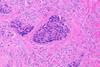
NewsMicrobial allies: Bacteria help fight against cancer
An international team of scientists have discovered that microbes associated with tumours produce a molecule that can control cancer progression and boost the effectiveness of chemotherapy.
-
 News
News‘Microbial piracy’ uncovers new way to fight drug-resistant infections
Researchers have discovered how ‘pirate phages’ hijack other viruses to break into bacteria, sharing new genetic material for dangerous traits.