
All Infection Prevention & Control articles – Page 38
-
 News
NewsNew clinical guidelines to reduce central line-associated bloodstream infection
Central line-associated bloodstream infections remain a major challenge in ICUs. A team of clinicians has proposed updated guidelines to standardize the clinical practices addressing CLABSI, aiming to reduce infection rates and improve outcomes for critically ill patients.
-
 News
NewsGlobal commitment on display as countries negotiate key annex to the Pandemic Agreement
Member States of the World Health Organization (WHO) concluded a weeklong round of negotiations on draft annex for Pathogen Access and Benefit Sharing (PABS) – a key component of the WHO Pandemic Agreement.
-
 News
NewsNew biosensor offers early warning system for disease
Researchers have developed a tissue-adhesive sensor for real-time oral health monitoring to combat long-term issues such as gum disease and tooth loss.
-
 News
NewsMpox: recombinant virus with genomic elements of clades Ib and IIb
Recombination of monkeypox virus (MPXV) strains has been documented in recent months, with two cases of a recombinant strain comprising clade Ib and IIb MPXV reported, the World Health Organization says.
-
 News
NewsValneva provides update on recommendations for use of IXCHIQ® in UK
Valneva SE has announced that following a review of the benefits and risks of the Company’s single-dose chikungunya vaccine, IXCHIQ® , the United Kingdom’s (UK) Commission on Human Medicines (CHM) has updated its recommendations for use of the vaccine.
-
 News
NewsRich medieval Danes bought graves ‘closer to God’ despite leprosy stigma, archaeologists find
Researchers used gravesites to investigate social exclusion based on illness, by studying whether people with leprosy or tuberculosis were kept out of the higher-status areas. Unexpectedly, they found that people who were ill with stigmatized diseases were buried just as prominently as their peers.
-
 News
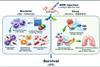
NewsOne strategy to block both drug-resistant bacteria and influenza: new broad-spectrum infection prevention approach validated
A new paper moves beyond traditional infection control strategies reliant on antibiotics and vaccines by introducing a new approach that primes the immune system before infection occurs.
-
 News
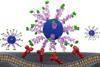
NewsHPV cancer vaccine slows tumor growth, extends survival in preclinical model
Scientists discovered that systematically changing the orientation and placement of a single cancer-targeting peptide can lead to formulations that supercharge the immune system’s ability to attack HPV-driven tumors.
-
 News
NewsStiff gels slow germs: New study maps hydrogel properties that control bacterial growth
Scientists has found that firmer, lower water content hydrogels limit bacterial growth, with implications for designing antibacterial coatings, infection models, and advanced medical materials.
-
 News
NewsResearchers develop new inhalable treatment for TB
Researchers have developed an inhalable, immunomodulating, biocompatible nanoparticle system encapsulating rifampin, one of the most important TB drugs.
-
 News
NewsHow food shortages reprogram the immune system’s response to infection
When food is scarce, stress hormones direct the immune system to operate in “low power” mode to preserve immune function while conserving energy. This reconfiguration is crucial to combating infections amid food insecurity.
-
 News
NewsAvian malaria widespread across Hawaiʻi bird communities, new study finds
A new study shows that avian malaria can be transmitted by nearly all forest bird species in Hawaiʻi, helping explain why the disease is present almost everywhere mosquitoes are found across the islands.
-
 News
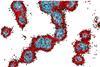
NewsBacterial hitchhikers can give their hosts super strength
Molecular hitchhikers living within bacteria can make their hosts extra resistant to medical treatment by corralling them into tightly packed groups. The study introduces a previously unknown avenue through which bacterial infections can become more difficult to treat.
-
 News
NewsShorter treatment regimens are safe options for preventing active tuberculosis
A study comparing one- and three-month antibiotic treatments to prevent active tuberculosis (TB) finds that a high percentage of patients successfully completed both regimens and suffered few adverse side effects.
-
 News
NewsGenotype-specific response to 144-week entecavir therapy for HBeAg-positive chronic hepatitis B
HBV genotype B demonstrates superior histological responses to ETV therapy compared with genotype C, supporting the clinical value of HBV genotyping for personalized CHB management. These findings highlight the importance of considering viral genotype when evaluating treatment outcomes.
-
 News
NewsResearchers identify strategies for preventing the most infectious strains of S. aureus in the NICU
A new study has identified which strains of Staphylococcus aureus – commonly known as staph – are commonly transmitted in neonatal intensive care units and which specific strains are most likely to cause invasive and serious infections.
-
 News
NewsStudy reveals how chills develop and support the body’s defense against infection
Researchers in Japan have identified the neural mechanism behind chills and the instinct to increase body temperature during infection.
-
 News
NewsAccomplices in the spotlight: When the interaction between fungi and bacteria becomes a dangerous alliance
Researchers discover new co-infection strategies of Candida albicans and Enterococcus faecalis. Only some E. faecalis strains significantly increased cell damage when infected simultaneously with Candida albicans. These strains produced cytolysin, a toxin that perforates cell membranes and kills the cells.
-
 News
NewsTechnology transfer for Corallopyronin A successfully completed with Phyton Biotech
Phyton Biotech has successfully transferred the manufacturing process for the microbial production of Corallopyronin A (CorA). CorA is a novel anti-infective agent with the potential to address neglected tropical diseases.
-
 News
NewsObesity linked to one in 10 infection deaths globally
Just over one in 10 deaths from a wide range of infectious diseases can be attributed to obesity worldwide, finds a major new study. People with obesity face a 70% higher risk of hospitalisation or death from an infection than those of a healthy weight.