
All Infection Prevention & Control articles – Page 36
-
 News
NewsBiomarkers indicating higher liver cancer risk in chronic hepatitis B patients identified
Researchers have identified Hepatitis B RNA serum levels as a biomarker that more accurately stratifies risk of liver cancer in individuals who have been functionally cured of chronic hepatitis B.
-
 News
NewsStudy reveals immune blueprint for next-generation malaria vaccine
New research has uncovered how the human immune system fights Plasmodium vivax, paving the way for the first effective vaccine against the most widespread form of malaria. It provides critical evidence of how protective immunity to P. vivax works, identifying specific targets on the parasite.
-
 News
NewsTackling tuberculosis systematically: How the environment shapes TB risk
Researchers introduce the concept of the “tuberculogenic environment”: the complex interplay of structures, rules, and living conditions that keep certain communities at high TB risk, even when care is available.
-
 News
NewsBacterial cellulose as a sustainable vehicle for the controlled release of nisin and mandelic acid: A clean beauty-based approach for acne treatment
A new study developed a bacterial cellulose-based delivery system loaded with nisin and mandelic acid, targeting acne treatment. Bacterial cellulose, derived from Komagataebacter xylinus, served as a biocompatible, biodegradable matrix to control the release of bioactive compounds.
-
 News
NewsA highly precise target for medications against tropical diseases
Researchers have discovered a critical vulnerability shared by the pathogens that cause African sleeping sickness, Chagas disease and leishmaniasis. The PEX38 protein plays a crucial role in the formation of certain organelles of the trypanosomes that are essential for their energy supply.
-
 News
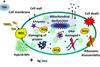
NewsFe₃O₄@mPEG-Ag nanoparticles: a new frontier in combating antibiotic resistance
A collaborative study introduces Fe₃O₄@mPEG-Ag nanoparticles (NPs) as a groundbreaking non-antibiotic strategy to combat drug-resistant bacteria, offering the antibacterial properties of silver (Ag) with the stability and biocompatibility of magnetite (Fe₃O₄) modified by methoxy poly(ethylene glycol) (mPEG).
-
 News
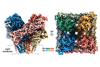
NewsImaging technique is step towards needed treatments for hantaviruses in new molecular ma
Researchers have produced a detailed blueprint, the highest resolution yet, for a protein complex the Andes virus uses to infect host cells. The new detailed structural information enabled the researchers to produce a vaccine candidate that caused mice to produce neutralizing antibodies against the Andes virus.
-
 News
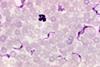
NewsAcoziborole Winthrop receives European Medicines Agency positive opinion as three-tablet, single-dose treatment for most common form of sleeping sickness
The European Medicines Agency has granted a positive opinion to Acoziborole Winthrop (acoziborole) as a single-dose oral treatment for both early- and advanced-stage gambiense sleeping sickness in adults as well as in adolescents 12 years and older weighing at least 40 kilograms.
-
 News
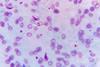
NewsScientists identify key protein that stops malaria parasite growth
An international team of scientists have identified a unique protein essential for the malaria parasite’s survival and transmission. Aurora-related kinase 1 (ARK1) acts as a ‘traffic controller’ during the parasite’s unusual cell division and growth process.
-
 News
NewsDiffering immune responses in infants may explain increased severity of RSV over SARS-CoV-2
Reseachers report that the two respiratory viruses trigger different immune responses. Those differences might explain why these two diseases have different clinical outcomes and require different treatment strategies.
-
 News
NewsEmerging class of antibiotics to tackle global tuberculosis crisis
Researchers investigated how three naturally occurring antibiotic compounds – ecumicin, ilamycin and cyclomarin – act on a vital protein degradation machine inside Mycobacterium tuberculosis, the bacterium that causes TB.
-
 News
NewsHPV vaccination provides “sustained protection” against cervical cancer
Human papillomavirus (HPV) vaccination is associated with a significantly reduced risk of invasive cervical cancer, with no indication of waning protection up to 18 years after vaccination, finds a study.
-
 News
NewsVaccine uptake: Why conspiracy theories can be so irresistible
New research has found that understanding how someone processes information can be a strong predictor of whether they are drawn to conspiracy beliefs that can influence vaccine uptake, trust in institutions and responses to emergencies.
-
 News
NewsMeningococcal B vaccination does not reduce gonorrhoea, trial results show
Contrary to existing evidence from observational studies, the meningococcal B vaccine (4CMenB) has no effect on preventing the acquisition of gonorrhoea, according to the results of the world’s largest randomised control trial (RCT) into possible efficacy.
-
 News
NewsUrinary tract infections can trigger delirium and worsen dementia
Urinary tract infections can pose serious risks for older adults, particularly those with Alzheimer’s disease and other forms of dementia. In older patients, a common UTI can trigger delirium, a medical emergency marked by sudden confusion and altered awareness.
-
 News
NewsNew strategies aim at HIV’s last strongholds
A new study has overcome a long-standing challenge—how to isolate and study elusive HIV-infected cells called authentic reservoir clones (ARCs) that evade the immune system, making the disease difficult to cure.
-
 News
NewsA comparison of the efficacy of non-chemical versus chemical cleansers against Candida species on removable dental prostheses
A new review aims to systematically compare the efficacy of chemical and non-chemical denture cleansers in reducing Candida spp. on removable dental prostheses.
-
 News
NewsNew study finds sex and menopause-based differences in presentation of early Lyme disease
In a new study, researchers found that male and female patients with early Lyme disease present with different signs of the disease in the symptoms they report, their physical exams and their laboratory test results.
-
 News
NewsScientists find that silencing bacteria can worsen heart infections
By studying a bacterium responsible for a severe heart infection, the scientists show that disrupting bacterial communication can be associated with adverse clinical outcomes. These findings open the door to more targeted therapeutic strategies against this type of infection.
-
 News
NewsYou don’t need to be very altruistic to stop an epidemic
Researchers have used a mathematical model of epidemic behaviour to find that even people who are only barely altruistic - valuing their own life as equivalent to the lives of around 100,000 others – would still see it as rational to drastically reduce their social contacts when infected.