
All Infection Prevention & Control articles – Page 44
-
 News
NewsNew findings on Candida auris open up potential targets for future therapies
A study shows for the first time that Candida auris uses a CO₂-based metabolic strategy to survive in the nutrient-poor conditions of the skin and to better tolerate antifungal therapies – especially amphotericin B.
-
 News
NewsBeing infected or vaccinated first influences COVID-19 immunity
A new study analysing the immune response to COVID-19 sheds light on an important question: does it matter whether a person was first infected or first vaccinated? According to the results, the order of the events does alter the outcome.
-
 News
NewsScientists identify potential therapy and diagnostic markers for cerebral malaria
Researchers examined whether methylene blue could mitigate brain injury during severe malaria, and whether a practical set of blood biomarkers could help clinicians identify cerebral malaria early and track how patients respond to treatment.
-
 News
NewsCytomegalovirus breakthrough could lead to new treatments
Researchers have developed a new type of antibody with a modified structure that can outsmart cytomegalovirus and neutralize its ability to evade the immune system.
-
 News
NewsReal-world data gives Africa a smarter path to fighting HIV and TB
African biostatisticians have offered a powerful, data-driven alternative that can accurately inform HIV policy, reduce healthcare costs, and save more lives.
-
 News
NewsAn enzyme neutralizes pathogens by cleaving a bacterial toxin
Researchers have discovered an enzyme that neutralizes the virulence factor malleicyprol in the bacterium Burkholderia pseudomallei, considered one of the most dangerous bacterial pathogens in the tropics.
-
 News
NewsYour genes may influence gut microbiome of others, rat study shows
New research, carried out by studying more than four thousand animals, reveals that the composition of the rat gut microbiome is shaped not only by an individual’s own genes but also by the genes of the individuals they share a living space with.
-
 News
NewsSilent dengue infections may hold clues to future vaccine design, study finds
Researchers report the first single-cell immune atlas of asymptomatic dengue, offering a rare look at how the immune system can defeat the virus without triggering illness. The work could help guide the design of safer and more effective dengue vaccines.
-
 News
NewsEvaluation of antiviral activity of organic–polyoxometalate hybrids based on berberine against encephalomyocarditis virus in vitro
A new study promotes the development of POM-based drugs for clinical application by controlling the organic cations on the surface of organic–POM hybrids, ultimately yielding new POM drugs with high efficiency and low toxicity.
-
 News
News4 million euros for study with personalized phage therapy
UMC Utrecht has received a grant of 4 million euros for the first clinical study in the Netherlands involving a customized therapy with bacteriophages for patients with recurrent urinary tract infections.
-
 Careers
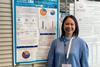
Scientific Event Travel Grant: how the Safepork conference surpassed my expectations
Shan Goh from the University of Hertfordshire reports back on the International Symposium on the Epidemiology and Control of Biological, Chemical and Physical Hazards in Pigs and Pork held in Rennes, France, in October. Shan was supported with a Scientific Event Travel Grant awarded by AMI.
-
 News
NewsNew one-two punch could knock out drug-resistant TB
Researchers found that pairing the antibiotic rifampicin with a second compound turned multidrug resistance into a weakness—providing proof of concept for using basic science to design life-saving dual-drug strategies.
-
 News
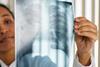
NewsA new way to diagnose deadly lung infections and save lives
Researchers have found a way to identify lung infections in critically ill patients by pairing a generative AI analysis of medical records with a biomarker of lower respiratory infections.
-
 News
NewsNew method accelerates resistance testing in urinary tract infections
Researchers have developed two methods that allow urine samples to be tested directly for antibiotic susceptibility. Because the procedures do not require standardized bacterial suspensions, the time to result is reduced by up to 24 hours compared to conventional testing.
-
 Careers
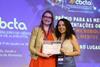
CBCTA 2024 oral presentation winners: Isabella and Lia take home the honours
Letters in Applied Microbiology sponsored the best oral presentation award at the 29th Brazilian Congress of Food Science and Technology (CBCTA 2024). Winner Isabella Bassoto Xavier and runner-up Lia Mariano Aquino take a dive into their research.
-
 News
NewsStudy uncovers new drug target for huge class of viruses
A study reveals how enteroviruses—including pathogens that cause polio, encephalitis, myocarditis, and the common cold—initiate replication by hijacking host-cell machinery.
-
 News
NewsOroya fever: Elucidation of disease mechanism opens possibility for novel therapy
An international research team has generated and analyzed more than 1,700 genetic variants of the pathogen that causes Oroya fever, identifying two proteins that Bartonella requires for the destruction of red blood cells.
-
 News
NewsNew method means contaminated bathing water easier to detect
A new method can provide both faster and more complete answers on whether the water is safe for swimming or not. The innovation has been successfully tested in Helsingborg, where the response time has been reduced from several days to just a few hours.
-
 News
NewsStrategic advancement of second-generation fungal vaccine VXV-01 through Phase 1 trials
The Lundquist Institute (TLI) and its start-up company Vitalex Biosciences (Vitalex) have announced that the second-generation fungal vaccine candidate known as VXV‑01 is poised to move forward in development up to and including Phase 1 clinical evaluation.
-
 News
NewsA testing paradox for sexually transmitted infections
Surveillance evidence shows an increase in people infected with other STIs after initiating PrEP. A new study provides a counterintuitive explanation revealing a testing paradox: even when the observed cases increase, the true numbers of STIs can decrease.