
All Infectious Disease articles – Page 46
-
 News
NewsOral bacterium may promote breast cancer development and spread
Researchers found that Fusobacterium nucleatum, an oral bacterium commonly associated with periodontal disease, can promote breast cancer initiation, tumor growth and spread by inducing DNA damage and altering cancer cell behavior.
-
 News
NewsResearch team identifies species of brucellosis-causing bacteria in Cameroon
Researchers have identified the specific species of the Brucella bacterium that causes illness in animals in Cameroon. A study of more than 4,600 livestock animals found that the only Brucella species present was Brucella abortus, a species primarily associated with cattle that causes pregnancy loss and infertility.
-
 News
NewsScientists discover novel immune ‘traffic controller’ hijacked by virus
Researchers have discovered a tissue protein that acts as a central ‘traffic controller’ for immune cells and can be hijacked by a virus to weaken immune responses. Cytomegalovirus (CMV) can hijack this system by producing a protein that blocks CD44 function on stromal cells.
-
 News
NewsMost would recommend RSV immunizations for older and pregnant people
A US survey found an increase in awareness of immunizations that are available for RSV. The survey of 1,637 U.S. adults also found that about 6 in 10 respondents would recommend the vaccine or antibody injections to the groups recommended by the CDC, an increase from past years.
-
 Careers
The National Collection of Pathogenic Viruses (NCPV): a critical resource for virology and public health
It’s now 25 years since the National Collection of Pathogenic Viruses (NCPV) was founded as a dedicated, secure, and relevant national virus repository for the UK. Jane Burton, Teresa Ramalho and Tilly Maybery explore how the collection has evolved - and is tackling future global health concerns.
-
 News
NewsEarly translational study supports the role of high-dose inhaled nitric oxide as a potential antimicrobial therapy
Researchers report that high-dose inhaled nitric oxide (iNO) demonstrates potential antimicrobial activity in preclinical models and is safe and feasible in early human studies, supporting further clinical investigation.
-
 News
NewsEngineered nanobodies improved respiratory defenses in preclinical study
Engineered nanobodies improved protection against multiple viruses by bolstering respiratory mucus. The bispecific design of the nanobodies works against viruses, like influenza, which can normally evade mucosal defenses.
-
 News
NewsThe brain’s sneakiest houseguest: how a parasite rewrites neuron messages and alters neuroplasticity
A new study describes how Toxoplasma gondii manipulates the behaviour and brain function of its hosts. It explored a new angle by looking at nanoparticles called extracellular vesicles, which cells use to send messages to one another, and carry small regulatory molecules known as microRNAs.
-
 News
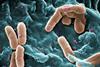
NewsNew study shows how light suppresses virulence in antibiotic-resistant pathogen
Researchers uncover a light-sensitive signaling cascade in Pseudomonas aeruginosa that suppresses biofilm formation and virulence, offering a potential new strategy to combat antibiotic-resistant infections.
-
 News
NewsSeawater microbes offer new, non-invasive way to detect coral disease, study finds
Researchers have discovered that microorganisms in seawater surrounding corals provide a powerful indicator of coral disease, potentially transforming how reef health is monitored worldwide.
-
 News
NewsGlobal Virus Network warns of measles resurgence
The Global Virus Network (GVN) has expressed deep concern regarding the ongoing resurgence of measles in the United States and around the globe. Measles is one of the most contagious viral diseases known and can be lethal, particularly in unvaccinated children.
-
 News
NewsPaper sheds light on human impact of first known ancient pandemic
A new paper examines the Plague of Justinian and its consequences for ancient Jordan. Focusing on the first-known outbreak of bubonic plague in the Mediterranean world, it adds to the historical record on what caused the devastating outbreak that killed millions within the Byzantine Empire.
-
 News
NewsHidden mpox exposure detected in healthy Nigerian adults, revealing under-recognized transmission
The mpox virus appears to be circulating silently in parts of Nigeria, in many cases without the symptoms typically associated with the disease, according to new research.
-
 News
NewsHuman nasal passages defend against the common cold and help determine how sick we get
Researchers demonstrate how the cells in our noses work together to defend us from the common cold and suggest that our body’s defense to rhinovirus—not the virus itself—typically predicts whether or not we catch a cold, as well as how bad our symptoms will be.
-
 News
NewsGolden Gate method enables rapid, fully-synthetic engineering of therapeutically relevant bacteriophages
Researchers have described the first fully synthetic bacteriophage engineering system for Pseudomonas aeruginosa. In this method, researchers engineer bacteriophages synthetically using sequence data rather than bacteriophage isolates.
-
 News
NewsValneva provides update on Chikungunya vaccine IXCHIQ®
Valneva SE has announced that the company has decided to voluntarily withdraw the biologics license application (BLA) and Investigational New Drug (IND) application for its chikungunya vaccine, IXCHIQ® , in the United States, following suspension of the license by the FDA.
-
 News
NewsShingles vaccine linked to slower biological aging in older adults
Shingles vaccination not only protects against the disease but may also contribute to slower biological aging in older adults, according to a new study.
-
 News
News58% of patients affected by 2022 mpox outbreak report lasting physical symptoms
A cohort study found that more than half of those diagnosed with mpox during the 2022 outbreak still had lingering physical effects 11 to 18 months later.
-
 News
NewsPregnant women hospitalized for COVID-19, and their newborns, have higher complication risk
When hospitalized for COVID-19, pregnant women — and their eventual newborn children — have a higher risk of complications. Research revealed that pregnant women were nearly 3.5 times more likely than non-pregnant women to require respiratory support when hospitalized for COVID-19.
-
 News
NewsDeadly to amphibians, a fungal strain emerged in Brazil and spread around the world
The fungal infection Batrachochytrium dendrobatidis is responsible for the decline of toad and frog populations across the globe. A new study has pinpointed the origin of the fungal strain.