
All Institut Pasteur articles – Page 2
-
 News
NewsMpox: a better understanding of tecovirimat resistance
Through biochemical and structural studies, researchers managed to find out how the mutation of an enzyme could affect the interactions between it and the antiviral drug against mpox virus, tecovirimat, hence leading to a better understanding in developing new therapeutic approach against all mpox strains.
-
 News
NewsScientists harness microbiota as ally for predicting individual sensitivity to food additives
Researchers developed a human microbiota modelling system capable of predicting each person’s sensitivity to an emulsifier, using a simple stool sample, paving the way for a personalised nutrition approach based on the gut microbiota.
-
 News
NewsSystem to auto-detect new variants will inform better response to future infectious disease outbreaks
Researchers have come up with a new way to identify more infectious variants of viruses or bacteria that start spreading in humans - including those causing flu, COVID, whooping cough and tuberculosis.
-
 News
NewsScientists find a vulnerability in antibiotic resistance mechanism
Superbugs, bacteria that are immune to multiple antibiotics, pose a great challenge to modern medicine. Researchers from the B CUBE - Center for Molecular Bioengineering at TUD Dresden University of Technology and Institut Pasteur in Paris identified a weakness in the bacterial machinery that drives antibiotic resistance adaptation. Their findings, ...
-
 News
NewsFrom Yemen to Mayotte, the spread of a highly drug-resistant cholera strain
Scientists have revealed the spread of a highly drug-resistant cholera strain. The strain is resistant to ten antibiotics – including azithromycin and ciprofloxacin, two of the three recommended for treating cholera – and was identified for the first time in Yemen in 2018-2019.
-
 News
NewsResearchers call for global discussion about possible risks from ‘mirror bacteria’
A group of researchers has published new findings on potential risks from the development of mirror bacteria — synthetic organisms in which all molecules have reversed chirality (i.e. are ‘mirrored’).
-
 News
NewsA new tool to predict the most effective phage cocktail
Researchers have developed a simple and effective new tool that recommends the best possible phage cocktail for a given patient. Paving the way for personalized phage therapies to treat antibiotic-resistant bacterial infections.
-
 News
NewsGlobal researchers unite their expertise to boost infectious diseases research across the Asia-Pacific region
Singapore’s Agency for Science, Technology and Research Infectious Diseases Labs and France’s Institut Pasteur have signed a Memorandum of Understanding to address the urgent health threats posed by the rise of tropical infectious diseases in the Asia-Pacific region.
-
 News
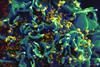
NewsFirst sustained remission of HIV infection following a bone marrow transplant in the absence of protective mutation
A total of seven individuals worldwide (two patients in Berlin and patients in London, Düsseldorf, New York, City of Hope and Geneva) are considered likely to have been cured or to be in long-term remission of HIV infection after receiving a bone marrow transplant to treat blood cancer. ...
-
 News
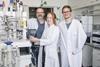
NewsCRISPR gene scissors switch off with built-in timer
Researchers have discovered a timer integrated into the CRISPR gene scissors that enables the gene scissors to switch themselves off.
-
 News
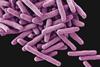
NewsResearchers reveals why recombinant BCG induces a stronger and longer-lasting response
Researchers are working on a more potent version of the BCG vaccine that protects against TB. While the conventional immunizer reduced infection by 90% in experiments with mice, the recombinant BCG increased protection rates to 99%.
-
 News
NewsOlympics: how many days does it take for mosquitoes in Greater Paris to transmit arboviruses?
In the run-up to the Olympic Games, scientists have demonstrated that the tiger mosquito, now present in Greater Paris, is capable of transmitting five viruses - West Nile, chikungunya, Usutu, Zika and dengue - within different time frames.
-
 News
NewsIndian Ocean surface temperature could help anticipate dengue outbreaks
An international research team has recently identified a global climate indicator that may help improve predictions about the magnitude of dengue outbreaks several months in advance.
-
 News
NewsEngineers develop innovative microbiome analysis software tools
Since the first microbial genome was sequenced in 1995, scientists have reconstructed the genomic makeup of hundreds of thousands of microorganisms and have even devised methods to take a census of bacterial communities on the skin, in the gut, or in soil, water and elsewhere based on bulk samples, leading ...
-
 News
NewsInauguration of the Institut Pasteur de São Paulo
A ceremony has taken place in Brazil to mark the inauguration of the Institut Pasteur de São Paulo, the latest member of the Pasteur Network.
-
 News
NewsAustria isolates and genotypes Leptospira bacteria for the first time
The serological diagnostic test used to detect antibodies against the bacterium responsible for leptospirosis performs better when local variants are used but no locally circulating strain has been available in Austria - until now.
-
 News
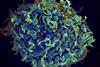
NewsScientists identify window of opportunity for treatment promoting HIV remission
Starting treatment four weeks after infection with HIV promotes long-term control of the virus following the interruption of treatment after two years of antiretroviral therapy.
-
 News
NewsProfessor Yasmine Belkaid takes office as President of the Institut Pasteur
The Institut Pasteur has announced that Professor Yasmine Belkaid took office as its new President on January 2, 2024.
-
 News
NewsNew antibiotics make TB bacterium less pathogenic for humans
Researchers have identified new, antibiotic molecules that target Mycobacterium tuberculosis and make it less pathogenic for humans.
-
 News
NewsProspective study clarifies the role of an innovative metagenomic tool in diagnosing infection
A new study aims to improve use of metagenomics using next-generation sequencing (mNGS) to identify a wide range of pathogens, including rare or novel microorganisms.
- Previous Page
- Page1
- Page2
- Page3
- Next Page