
All articles by Linda Stewart – Page 136
-
 News
News NIH grant to UC Riverside supports research on dangerous emerging virus
Researchers have been awarded an NIH grant of about $3.4 million over five years to lead an international study focused on developing protective antibodies against Crimean-Congo hemorrhagic fever virus (CCHFV), a biosafety level 4 pathogen and a Category A bioterrorism agent.
-
 Careers
Summer studentship: Amelia investigates how Streptococci aggregate with other oral bacteria
Amelia Rohim reports back on her AMI-sponsored summer studentship which focused on the investigation of inter-species aggregation between oral bacteria at the University of Michigan with Dr. Alexander Rickard.
-
 News
NewsHow viruses build perfectly symmetrical protective shells
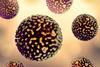
Researchers used a new simulation framework to capture key biological factors like protein diffusion, genome flexibility, and shape-shifting behavior to model how viral proteins self-assemble into symmetric shells.
-
 News
NewsCholera vaccination campaign launched in Darfur to protect over 1.8 million people
A cholera vaccination campaign kicked off on 21 September 2025 in South Darfur, marking the start of a campaign that aims to reach 1.86 million people aged one year and older with oral vaccines in response to the ongoing outbreak.
-
 News
NewsNew single-dose, temperature-stable rabies vaccines could expand global access
Researchers have discovered a new way to make human rabies vaccines that could greatly expand access to immunization across the globe. The new method creates shots that are temperature-stable—meaning they don’t need to be stored at cold temperatures.
-
 News
NewsScientists show how to grow more nutritious rice that uses less fertilizer
Scientists have shown that nanoscale applications of selenium can decrease the amount of fertilizer necessary for rice cultivation while sustaining yields, boosting nutrition, enhancing the soil’s microbial diversity and cutting greenhouse gas emissions.
-
 News
NewsGut bacteria linked to how our genes switch on and off, research finds
The trillions of microbes that live in the human gut may play a bigger role in health than previously thought, according to a review highlighting how the gut microbiome can affect epigenetics, the process that turns genes on or off without changing the DNA itself.
-
 News
NewsFungal genome secrets unlocked in breakthrough for crop disease research
Scientists have developed a new method to improve the accuracy of gene mapping in complex organisms. Using an advanced bioinformatics tool, they re-annotated the genome of Zymoseptoria tritici, a major fungal pathogen responsible for septoria leaf blotch.
-
 News
NewsTropical diseases: Global health meeting showcases resilience of field under fire
At a moment of monumental challenges for global health, thousands of researchers, clinicians and public health professionals from over 100 countries will gather in Toronto for the 2025 Annual Meeting of the American Society of Tropical Medicine and Hygiene (ASTMH).
-
 News
NewsTea plant defense: new insights into anthracnose resistance mechanisms
In a recent study, researchers identified key genetic factors that enhance tea plant resistance to Colletotrichum gloeosporioides, the pathogen responsible for anthracnose, a devastating disease in tea cultivation.
-
 News
NewsNext-gen anti-bacterial and anti-viral surface modification technology inspired by Korean mussels
Researchers have successfully developed a next-generation surface modification technology with anti-bacterial and anti-viral contamination properties.While maximizing the bactericidal effect, a polydopamine layer, combined with an antibiotic, inhibits the adsorption of coronavirus.
-
 News
NewsGut punch: $2 million to decode bacteria’s role in fighting disease
A $2 million grant to UC Riverside will explore how gut bacteria shape human health. The NIH award will support Ansel Hsiao’s lab in its quest to answer questions about how gut microbes communicate with each other and with their human hosts to influence health.
-
 News
NewsBiohybrids: Pioneering sustainable chemical synthesis at the energy-environment frontier
A review highlights ‘biohybrid’ synthesis systems—an innovative technology integrating living cells with advanced materials—to unlock clean production of chemicals for a greener future.
-
 News
NewsJie Xiao to receive 2026 Carolyn Cohen Innovation Award from The Biophysical Society
The Biophysical Society has announced that Jie Xiao, of the Johns Hopkins School of Medicine, USA, will receive the 2026 Carolyn Cohen Innovation Award.
-
 News
News'Know-do gap' drives inappropriate antibiotic overprescribing for child diarrhea in India
Researchers report that the persistent “know-do gap” — where clinicians know guidelines but practice differently — is the primary driver of antibiotic overprescribing for pediatric diarrhea in India’s private sector.
-
 News
NewsMagic mushrooms invent active compound twice
A study shows that fungi have developed the ability to produce psilocybin at least twice independently of each other. While Psilocybe species use a known enzyme toolkit for this purpose, fiber cap mushrooms employ a different biochemical arsenal – and yet arrive at the same molecule.
-
 News
NewsAMI joins forces with microbiology leaders to launch Global Climate Change Strategy
In a bold step toward climate action, leading microbiology societies and organizations have unveiled their first joint global strategy to harness the power of microbial science in addressing the climate crisis.
-
 News
NewsEngineered gut bacteria improves survival outcomes in colorectal cancer tumors
A genetically modified Salmonella typhimurium strain can colonise tumours and release a therapeutic protein, LIGHT, to induce the formation of mature tertiary lymphoid structures (mTLSs) in laboratory models.
-
 News
NewsNanoparticles supercharge vinegar’s old-fashioned wound healing power
New research has resulted in the ability to boost the natural bacterial killing qualities of vinegar by adding antimicrobial nanoparticles made from carbon and cobalt.
-
 News
NewsStudy links chronic sickle cell pain to gut microbial imbalance
Researchers have found a clear connection between chronic sickle cell disease pain and the bacteria present in the gastrointestinal tract. The team alleviated chronic pain by transplanting bacteria from the feces of healthy mice into the digestive tract of sickle cell animals.