
All articles by Linda Stewart – Page 144
-
 News
NewsBiodegradable PET alternative bioproduced at unprecedented levels
The PET-alternative PDCA is biodegradable and has superior physical properties. A team of bioengineers has engineered E. coli bacteria to produce the compound from glucose at unprecedented levels and without byproducts — and opened up a realm of possibilities for the future of bioengineering.
-
 News
NewsProtein discovery gives new hope for longer COVID protection
Scientists have discovered that the body’s immune system strongly reacts to an internal protein from SARS-CoV-2, the virus that causes COVID-19, which mutates less frequently than the surface-spike protein currently targeted by vaccines.
-
 News
NewsResearchers develop first-of-its-kind RNA tool to advance cancer and infectious disease research and treatment
Scientists have developed a powerful tool capable of scanning thousands of biological samples to detect transfer ribonucleic acid (tRNA) modifications — tiny chemical changes to RNA molecules that help control how cells grow, adapt to stress and respond to diseases such as cancer and antibiotic‑resistant infections.
-
 News
NewsAre probiotics worth the cost to prevent infection after a colon removal surgery?
A study found that taking an 8-strain probiotic daily may reduce the risk of pouchitis, a common inflammatory condition that occurs after colon removal surgery for ulcerative colitis, but the treatment may not be worth the cost depending on a patient’s likelihood of flare-ups.
-
 News
NewsNew papers reveal how gut-brain interactions shape eating behaviors
Researchers found that stress from life circumstances can disrupt the brain-gut-microbiome balance. This disruption may alter mood, decision-making, and hunger signals — increasing the likelihood of craving and consuming high-calorie foods.
-
 News
NewsPretreatment methods deploying microbes bring second-gen biofuels from oilcane closer to commercialization
In collaboration with other Bioenergy Research Centers (BRCs), researchers at the Center for Advanced Bioenergy and Bioproducts Innovation (CABBI) are developing industrially feasible techniques for second-generation biofuel production from oilcane, an oil-rich variety of sugarcane, to help meet our growing societal demand for fuels. Source: April Wendling/CABBI CABBI ...
-
 News
NewsAntibody-making cells reveal new function in response to flu infection
A study has uncovered a new function of the immune cells that are known for making antibodies. Researchers determined that, in response to flu infection, a specialized set of B cells produce a key signaling molecule that the immune system needs to develop a robust, long-term response to fight off infections.
-
 News
NewsInfectious disease modelling teams invited to strengthen global response to highly pathogenic avian influenza
An international modelling challenge is calling on experts across disciplines to help tackle one of Europe’s most pressing health threats: highly pathogenic avian influenza (HPAI). The initiative, which is now open for applications, seeks to improve outbreak modelling readiness and to foster international collaboration among researchers and decision makers.
-
 News
NewsStress-tolerant corals could help buy time for reefs in a warming world
New research demonstrates how corals that naturally thrive in extreme environments could be used in restoration efforts to protect vulnerable reef systems.
-
 News
NewsReview explores critical role of microbiome in cancer development and treatment
The human microbiome plays a pivotal role in cancer initiation, progression, and treatment response, according to a major review article published in the open-access journal iMeta. The study, led by an international team of researchers, details how bacteria, viruses, and fungi interact with tumors and the immune system to either promote or inhibit cancer growth.
-
 News
NewsOne dose of antibiotic treats early syphilis as well as three doses
Researchers have found that a single injection of the antibiotic benzathine penicillin G (BPG) successfully treated early syphilis just as well as the three-injection regimen used by many clinicians. These findings from a late-stage clinical trial suggest the second and third doses of conventional BPG therapy do not provide a health benefit.
-
 News
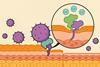
NewsThe cling of doom: How staph bacteria latch onto human skin
Scientists have discovered the strongest natural protein bond ever recorded, explaining how Staphylococcus aureus clings so tightly to human skin and pointing to new ways to fight antibiotic resistance.
-
 News
NewsCARB-X to support lower respiratory tract infection diagnostic by Zeteo
CARB-X has awarded Zeteo Tech, Inc. US$1M to execute a workplan for its noninvasive diagnostic platform that aims to evaluate whether exhaled breath can diagnose lower respiratory tract infections (LRTIs) in high-risk populations within critical care environments.
-
 News
NewsBacteria that ‘shine a light’ on microplastic pollution
Researchers have developed a living sensor that attaches to plastic and produces green fluorescence. In an initial test on real-world water samples, the biosensor could easily detect environmentally relevant levels of microplastics.
-
 News
NewsResearch team on quest to engineer computing systems from living cells
A research team has received a $1.99 million grant to lead research on engineered bacterial consortia that could form the basis of biological computing systems. They aim to integrate microbial sensing and communication with electronic networks, paving the way for computing systems constructed from living cells instead of traditional silicon-based hardware.
-
 News
NewsBacteria rewire digestive systems to turn plant waste into power
A new study shows that Pseudomonas putida, a common soil bacterium, completely reorganizes its metabolism to thrive on complex carbons from lignin. By slowing down some metabolic pathways while accelerating others, the bacterium manages to extract energy from lignin without exhausting itself.
-
 News
NewsClinical study shows that nasal spray containing azelastine reduces risk of coronavirus infection by two-thirds
In addition to showing a marked reduction in coronavirus infections, the azelastine group also displayed fewer symptomatic SARS-CoV-2 infections, a lower overall number of confirmed respiratory infections, and, unexpectedly, a reduced incidence of rhinovirus infections, another major cause of respiratory illness.
-
 News
NewsStudy suggests link between hepatitis B immunity and lower risk of developing diabetes
A research study shows that overall HBV immunity is linked with a 15% lower risk of diabetes, with higher protection in younger people and those with higher immunity shown by higher antibody levels.
-
 News
NewsZoo poo might hold the secrets to new medical treatments
Scientists are hoping the collection of poo from tigers, elephants, giraffes and other exotic animals, could contain the secret to finding new medical treatments. Although a waste product to the animals, hidden amongst it are thousands of phages which are potentially capable of fighting bacterial infections.
-
 News
NewsUnlocking how bacteria bounce back after antibiotics
A groundbreaking study has uncovered how Escherichia coli (E. coli) persister bacteria survive antibiotics by protecting their genetic instructions. The work offers new hope for tackling chronic, recurring infections.