
All articles by Linda Stewart – Page 43
-
 News
NewsSeasonal COVID-19 vaccination in 2025/26 reduced risk of illness by half in Canada
An interim analysis estimates that the COVID-19 vaccine for the 2025/26 season reduced the risk of illness in Canada by about half at about 9 weeks after vaccination, offering protection beyond the vaccine’s target strain.
-
 News
NewsTuberculosis risk: promising approaches for screening and prediction
It is currently difficult to detect TB in its early stages, or predict who will go on to have TB, and therefore preventive treatment is not widely used. Researchers assessed whether a blood-based 3-gene host-response test can detect active tuberculosis and help predict future disease.
-
 News
NewsLong-term dynamic virological response patterns and clinical outcomes in hepatitis B virus-related cirrhosis
The long-term clinical outcomes of patients with hepatitis B virus (HBV)-related cirrhosis receiving nucleos(t)ide analog (NA) therapy according to virological response patterns remain inadequately defined. A new study aimed to investigate the association between virological response patterns and clinical outcomes.
-
 News
NewsResearchers find diagnostic delays are common for US pediatric patients with malaria
Researchers found that more than one in four pediatric patients treated for malaria in the United States had a delay in their initial diagnosis, increasing the risk of more severe infection.
-
 News
NewsThe Nexus of Food Systems, Ecosystems and Human Health: Sign up for our fascinating free webinar!
What if health is not produced by humans alone, but co-created with the ecosystems, organisms, and food systems we depend on? A fascinating free webinar will explore how microbes connect people to food systems and the ecosystems that undergird food production.
-
 News
NewsLight without electricity? Glowing algae could make it possible
Researchers successfully turned on the “light switch” in algae and kept them lit up using simple chemical solutions. The finding opens the door for future technologies such as autonomous robots that can operate in dark environments and living sensors for water quality.
-
 News
NewsHead impacts associated with altered gut microbiome in football players
Non-concussive head impacts—hits to the head that don’t cause clinically detectable symptoms—are correlated with subsequent changes to the gut microbiome in a small sample of US collegiate football players, according to a new study.
-
 News
News Researchers unveil new AI-driven system set to transform coral reef restoration
Researchers have developed a first-of-its-kind bespoke AI system designed to assess coral health and detect early stress. BlueBiome is reimagining coral reef care by applying the same principles of preventive, precision health commonly used in human gut health.
-
 News
NewsMembrane complex aids rock-eating microbes in converting carbon dioxide to biomass
So-called rock-eating microorganisms obtain their energy to convert carbon dioxide (CO2) from inorganic sources. Using electron microscopy and infrared spectroscopy, researchers investigated the structure of DAB2 in the sulfur bacterium Halothiobacillus neapolitanus.
-
 News
NewsScientists use ultrasound to destroy influenza A and COVID-19 viruses without damaging human cells
Researchers have discovered that high-frequency ultrasound waves similar to those used in medical exams can eliminate viruses such as SARS-CoV-2 and H1N1 without damaging human cells. Acoustic resonance causes structural changes in viral particles until they rupture and become inactivated.
-
 News
News‘Not just hot water’: marine heatwaves can create toxic relationship between seagrasses and microbes
Heat stress from marine heatwaves can create a toxic relationship between seagrasses and a hidden ecosystem of bacteria, transforming a previously beneficial co-existence between marine plants and microbes into a harmful one, a study has found.
-
 News
NewsNew kind of CRISPR could treat viral infection and cancer by shredding sick cells’ DNA
A new technology uses a relative of the CRISPR-Cas9 gene editing system to kill target cells. When activated by a specific, programmable genetic target, the Cas12a2 protein rips a cell’s genome apart. Researchers programmed Cas12a2 to kill virus-infected cells or cancer cells while leaving healthy cells untouched.
-
 News
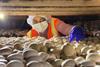
NewsDNA analyses uncover what is hiding under the cap plaguing the white button mushroom industry
Researchers have uncovered that bacterial blotch is not caused by a single disease-causing bacteria or pathogen as originally learned, but by a complex of pathogenic bacterial species that thrive in the indoor controlled, humid environments where they are grown.
-
 News
NewsStudy uncovers new kind of cold sensor
Investigators studying a bacterial protein have identified a new mechanism of sensing cold temperatures. The finding points to the possibility that this same type of mechanism exists in other organisms, including humans, and may have relevance for disorders involving faulty temperature regulation.
-
 News
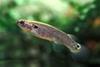
NewsKey magic mushroom ingredient makes fish less aggressive and lazier
Psilocybin, the chemical compound in magic mushrooms, may reduce energetically costly social behaviors like aggressive swimming bursts, shows a study demonstrating the first evidence of a calming effect in fish.
-
 News
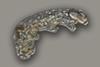
NewsDeath-defying protein found in tardigrades preserves synthetic cells
Researchers have shown how a tardigrade protein protects cell membranes, using the proteins to preserve synthetic cells that were dried out and rehydrated in the lab. The finding could lead to a way to store and transport “microfactories” for producing medicines and other biological products.
-
 News
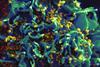
NewsScientists discover how HIV hijacks a cellular ‘gateway’ to infect resting immune cells
New research reveals that when HIV spreads directly between T-cells it triggers a molecular signalling chain that temporarily ‘unlocks’ the nuclear pore complex, allowing the HIV virus and capsid to enter and integrate into the host’s DNA.
-
 News
NewsResearchers flip the CRISPR script to develop world’s first DNA-guided gene editing tool for precise infectious disease diagnosis
A research team has successfully developed the world’s first DNA-guided CRISPR-Cas system capable of programmable RNA targeting and cleavage. This breakthrough overturns the conventional CRISPR paradigm, which uses RNA as a guide to target DNA.
-
 News
NewsEvolutionary processes shape bacterial populations in the human gut
Researchers used the ‘reverse ecology’ analytical approach to demonstrate that many known gut bacterial species consist of several evolutionarily distinct groups that have adapted to different conditions in the gut.
-
 News
NewsReview finds no direct link between aluminium adjuvanted vaccines and serious or long term health conditions
Current evidence does not support direct (causal) associations between aluminium adjuvanted vaccines and serious or long term health outcomes, including autism, diabetes and asthma, finds a review of the latest data.