
All Lung Microbiome articles – Page 3
-
 News
NewsWhy some kids get sicker: The hidden power of nose bacteria
A scoping review unravels how bacterial colonization in the respiratory tract impacts both the severity of respiratory syncytial virus (RSV) infections and long-term respiratory health in children.
-
 News
NewsExposure to air pollution associated with more hospital admissions for lower respiratory infections
New research shows that long-term exposure to PM2.5, PM10, NO2 and ozone (O3) air pollution is associated with more hospital admissions for lower respiratory tract infections in adults.
-
 Features
Bridging the gap: mouse breath research to advance infectious disease diagnostics
The role of VOCs in health and disease is garnering increasing attention, particularly in their use as biomarkers for a wide range of medical conditions.
-
 News
NewsInternational disease classification codes ambiguities create challenges in comparing respiratory infection diagnose
The International Classification of Diseases (ICD) system standardizes diagnostic codes globally, enabling accurate comparisons of health data. This study investigated regional differences in respiratory infection diagnoses to identify potential ambiguities in ICD coding and their implications for data comparability.
-
 News
NewsBreakthrough infection test designed to tackle AMR on target for 2025 UK NHS availability after positive trial results
UK medtech company Presymptom Health has announced positive results from its clinical trial of diagnostic technology in the management of infection and sepsis in patients presenting to Emergency Departments with respiratory infection.
-
 News
NewsAntibiotics initiated for suspected community-acquired pneumonia even when chest radiography results are negative
A new study shows that many general practitioners prescribe antibiotics for suspected community-acquired pneumonia even when chest X-ray results are negative, highlighting a gap between guidelines and actual practice.
-
 News
NewsCigarette smoke alters microbiota and aggravates flu severity
New research has shown that cigarette smoke can induce disordered oropharyngeal microbiota that aggravates the severity of influenza A virus infection.
-
 News
NewsZinc deficiency promotes Acinetobacter lung infection: study
Dietary zinc deficiency promotes lung infection by Acinetobacter baumannii bacteria — a leading cause of ventilator-associated pneumonia, according to a new study.
-
 News
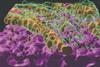
NewsA lung pathogen’s dilemma: infect or resist antibiotics?
Research has uncovered how Pseudomonas aeruginosa manages the trade-off between colonizing and surviving during infection by switching between biofilm formation for antibiotic protection and a more mobile, “planktonic” state to spread and access nutrients.
-
 News
News$7 Million grant to tackle lung infections through innovative probiotic treatment
The PROTECT project seeks to combat lung infections by assembling a community of beneficial lung microbes that can outcompete harmful pathogens.
-
 News
NewsNIH grant establishes UAB’s Global Research Resource for Human Tuberculosis
A $5.8m grant led by Adrie Steyn, Ph.D., of the University of Alabama at Birmingham and the Africa Health Research Institute, or AHRI, in Durban, South Africa, will provide user-requested infected human lung tissue and analytical services to tuberculosis researchers worldwide.
-
 News
NewsRecurrent wheezing in children linked to ‘silent’ lung infections
Nearly a quarter of children with recurrent wheezing have “silent” lung infections without symptoms, new research reveals. That finding could have big effects on how the condition is treated.
-
 News
NewsCancer drug could be repurposed to fight Covid-19
Twelve years ago, cancer researchers identified a molecule that helps cancer cells survive by shuttling damaging inflammatory cells into tumor tissue. In new research, they show that the same molecule does the same thing in lung tissue infected with COVID-19.
-
 News
NewsTwo types of polymicrobial infections in chronic lung diseases
Chronic lung diseases are often accelerated and exacerbated by polymicrobial infections. An international study team led by MedUni Vienna has identified two types of these so-called dysbioses in cystic fibrosis. They display distinct ecology and are also likely to respond differently to treatment. The study was published in the journal ...
-
 News
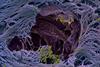
NewsLung organoids unveil secret of how pathogens infect human lung tissue
Using human lung microtissues, researchers have uncovered the strategy used by a dangerous pathogen to invade the lungs. Pseudomonas aeruginosa targets specific lung cells and has developed a sophisticated strategy to break through the lungs’ line of defense.
-
 News
NewsLung microbiomes predict mortality in children following bone marrow transplant
Using a method that identifies all potentially pathogenic organisms present in the lungs, scientists have discovered links between certain microbial communities and the relative risk of mortality in children who undergo bone marrow transplants.
-
 News
NewsGroundbreaking clinical trial evaluates oncolytic virus for non-small cell lung cancer
Moffitt Cancer Center has launched a pioneering clinical trial for patients with late-stage non-small cell lung cancer, using a novel oncolytic virus, MEM-288, in combination with the immune checkpoint inhibitor nivolumab.
-
 News
NewsResearchers uncover new reasons to target neutrophils for tuberculosis therapy
Using cell models of infection, scientists examined the cross-talk between two lung immune cells: the macrophage and the neutrophil.
-
 News
NewsAntibiotics aren’t effective for most lower tract respiratory infections
Use of antibiotics provided no measurable impact on the severity or duration of coughs even if a bacterial infection was present, finds a large, prospective study of people who sought treatment for lower-respiratory tract infections.
-
 News
News Tuberculosis can have a lasting impact on the lung health of individuals who have been successfully treated for the disease
New research has found compelling evidence that tuberculosis (TB) can have a lasting impact on the lungs of individuals who have been successfully treated for the disease.
- Previous Page
- Page1
- Page2
- Page3
- Page4
- Next Page