
More Africa & Middle East News – Page 10
-
 News
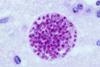
NewsResearchers engineer ‘cat parasite’ Toxoplasma gondii to release therapeutic proteins in the human brain
In a breakthrough study by an international team of scientists, the ‘cat parasite’ Toxoplasma gondii was engineered to deliver drugs to the human brain.
-
 News
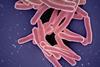
NewsStudy highlights factors associated with higher tuberculosis risk in South Africa
Tuberculosis is the world’s top infectious killer. About 10 million people fall ill with the disease every year, and roughly 1.5 million people die because of it, according to the World Health Organization. Additionally, about one-quarter of the world’s population is infected with the disease’s causative agent Myctuberobacterium tuberculosis. ...
-
 News
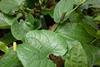
NewsDerivative of the long pepper battles bacterial biofilms
Scientists investigating the long pepper - known in traditional medicine for its treatment of a variety of illnesses - have created a derivative that disrupts bacterial chemical communication.
-
 News
NewsKissing and petting young camels found to be key transmitter of MERS virus
New research has found that young camels present a high risk for human exposure to the MERS-CoV virus, with kissing and petting young camels found to be an important route of viral transmission.
-
 News
NewsResearcher to study role of tiny diatoms in protecting endangered marine animals
A new study is aimed at understanding the essential role played by diatoms, tiny microalgae that can live in oceans or in symbiosis with endangered marine animal hosts and play a fundamental role in maintaining Earth’s delicate ecosystem.
-
 News
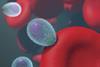
NewsNew agent effective against drug-resistant malaria parasites
Scientists have developed a promising new antimalarial agent, DIF-1(+3), which is a derivative of Dictyostelium differentiation-inducing factor-1 (DIF-1).
-
 News
NewsBoosting plant health: the role of gene exchange with bacteria
Scientists have discovered 75 genes that were transferred between small, fast-growing plants (Arabidopsis thaliana) and its bacterial companions, influencing key processes like carbohydrate metabolism and hormone synthesis.
-
 News
NewsHIV vaccines tested in PrEPVacc fail to reduce infections
The results of the PrEPVacc HIV vaccine trial conducted in Eastern and Southern Africa, which ran between 2020 and 2024, show that neither of the two experimental vaccine regimens tested reduced HIV infections among the study population.
-
 News
NewsPeptide cocktails could be key to fighting antibiotic resistance
A new study highlights the potential of random antimicrobial peptide mixtures to significantly reduce the risk of resistance evolution compared to single peptides, emphasizing the need for innovative solutions to outpace bacterial resistance and safeguard health.
-
 News
NewsIt’s not just humans — bacteria have memory too
Beneficial bacteria — used in probiotics and biological pest control to fight harmful bacteria — possess memory, and even pass information on to future generations.
-
 News
NewsFirst locally transmitted dengue cases reported in Iran
On June 14 the Ministry of Health and Medical Education (MoHME) of Iran reported the first two locally acquired cases of dengue recorded in the country. As of 17 July, the total number of locally acquired dengue cases in the country has risen to 12.
-
 News
NewsUrgent action needed to combat rising antimalarial resistance in Africa
Urgent action is needed to prevent a surge in malaria-related sickness and death in eastern Africa, scientists say.
-
 News
NewsRhizobacteria identified to combat striga and boost sorghum yields in Ethiopia
Researchers have identified potential Striga-suppressing rhizobacteria associated with sorghum, which have been shown to significantly reduce Striga seed germination rates.
-
 News
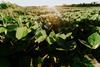
NewsResearch unveils rhizobia strains effective against soybean root rot fungal pathogens
Scientists have identified three rhizobia strains which effectively suppressed root rot fungal pathogens in soybeans under both in vitro and greenhouse conditions, demonstrating significant potential as biocontrol agents.
-
 News
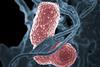
NewsDischarge of untreated hospital effluent is a key driver of multidrug resistance, study finds
A new study has highlighted the discharge of untreated hospital effluent to the environment as a major driver of multidrug resistance among the microbial community.
-
 News
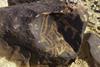
NewsDesert-loving fungi and lichens pose deadly threat to 5,000-year-old rock art
A study has revealed that the petroglyphs of the Negev desert are home to a community of uncommon specialist fungi and lichens. Unfortunately, these species may pose a serious threat to the rock art in the long term.
-
 News
NewsMobile phone data helps track pathogen spread and evolution of superbugs
Combining genomic data and human travel patterns over a 14-year period in South Africa reveals key insights into the spread, evolution and resistance patterns of a major bacterium behind pneumonia and meningitis globally.
-
 News
NewsInvasive brown widow spiders host novel bacteria related to chlamydia
Invasive brown widow spiders across three continents were highly infected with a single strain of Rhabdochlamydia, a bacterium that is related to major pathogens of humans and animals, including chlamydia.
-
 News
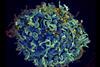
NewsNew lab test to detect persistent HIV strains in Africa may aid search for cure
A multinational team has developed a test that will help measure the persistence of HIV in people affected by viral strains found predominantly in Africa—a vital tool in the search for an HIV cure that will benefit patients around the world.
-
 News
NewsTreatment with a mixture of antimicrobial peptides can impede antibiotic resistance
A common infection-causing bacteria was much less likely to evolve antibiotic resistance when treated with a mixture of antimicrobial peptides rather than a single peptide, making these mixtures a viable strategy for new antibiotic treatments.