
More Healthy Land – Page 70
-
 News
NewsHydrogen-fuelled bacteria can produce wide range of chemicals
Researchers probing microbial electrosynthesis have confirmed experimentally for the first time that the bacteria use electrons from hydrogen and can produce more chemical substances than previously known.
-
 News
NewsOak bud bacterium could pave way to sifting out rare earths
A protein found naturally in a bacterium isolated from English oak buds shows strong capabilities of differentiating between rare earths.
-
 News
NewsReichman University announces new Scojen Institute for Synthetic Biology
A new research institute for the development of cutting-edge technologies in the field of synthetic biology is to be set up, acting as a hub for interdisciplinary research.
-
 News
NewsTwo biological cleaners break down ‘forever chemicals’
Scientists have identified two species of bacteria found in soil that break down a class of stubborn ’forever chemicals’, giving hope for low-cost biological cleanup of industrial pollutants.
-
 News
NewsPeat bog microbes could be deployed to break down plastic pollution
Microbes discovered in a peat bog could be used to break down plastic pollution, research being carried out at Queen’s University Belfast has revealed.
-
 News
NewsInsects rely on bacteria for essential nutrients
Insects heavily rely on bacteria for essential nutrients that are lacking in their diet. This has allowed insects to access a wide variety of food, leading to remarkable species diversification in some cases.
-
 News
NewsPectin carriers unleash army of predatory bacteria
Researchers in Israel have come up with a way to turn the weapons of potato soft-rot pathogens against themselves, unleashing an army of predatory bacteria that can destroy the pathogens.
-
 News
NewsDr. Silvia Restrepo appointed next president of Boyce Thompson Institute
The Boyce Thompson Institute (BTI) has announced the appointment of renowned plant pathologist and microbiologist Dr. Silvia Restrepo as the research institution’s ninth and first female president.
-
 News
NewsScientists develop test for amphibian pandemic disease
A new diagnostic test showed comparable or even better results than the gold-standard assay recommended for the diagnosis of chytridiomycosis, a wildlife disease that has caused dramatic declines of amphibians globally.
-
 News
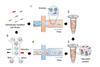
NewsHigh-throughput method screens protein-secreting microbial strains
A unique method to screen large-scale libraries for industrially useful bacterial strains was recently developed, combining biosensors and microfluidics to quickly identify mutant strains that secrete large amounts of industrially useful proteins.
-
 News
NewsPossum poo tool predicts Buruli ulcer outbreaks
Researchers have developed a surveillance system capable of detecting elevated risks of Buruli ulcer outbreaks in Victoria, Australia, thanks to possum ‘poo’ – a breakthrough in the fight against the disease.
-
 News
NewsResearchers fight Lyme disease with local herbs
Scientists are investigating whether medicinal plants growing in Estonia could be used to fight Lyme disease and destroy the bacteria causing it.
-
 News
NewsPuppeteer fungus directs ‘summiting’ of zombie flies
Scientists have uncovered the molecular and cellular underpinnings behind the ability of the parasitic fungus Entomophthora muscae’s ability to manipulate the behaviour of fruit flies.
-
 Opinion
The threat of viral zoonosis hasn’t gone away
Why we’re liable to be ambushed by viral zoonosis - despite everything we’ve learned from Covid
-
 News
NewsBacteria found thousands of metres high in the sky
Researchers have discovered the widespread presence of prokaryotic and eukaryotic eDNA in the atmosphere, including pathogenic bacteria and bacteria previously unknown to be present in the atmosphere but found in other extreme environments such as deep-sea sediment.
-
 News
NewsWild bees in the city show more pathogens and inbreeding
Changes to the microbiome are seen in wild bees living in densely urban areas and fragmented habitats, which makes it more difficult for the bees to access food sources, ideal nesting areas and mates.
-
 News
NewsHeat-loving marine bacteria can help detoxify asbestos
Researchers have shown that extremophilic bacteria from high temperature marine environments can be used to reduce the toxicity of asbestos.
-
 News
NewsResearchers uncover how PETases go about recovering monomers
A new study has revealed the details, at the molecular level, of the PET degradation process by polyester hydrolases - aka PETases.
-
 News
NewsEndophytes colonize and protect coffee seedlings
Fungi found living within the tissue of plants from old growth forests in Costa Rica can colonize coffee seedlings and protect them from disease, a new study has revealed.
-
 News
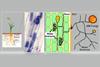
NewsAncestral mitoviruses discovered in mycorrhizal fungi
A new group of mitochondrial viruses confined to the arbuscular mycorrhizal fungi Glomeromycotina may represent an ancestral lineage of mitoviruses.