
More News – Page 16
-
 News
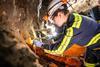
NewsOrganized microbial ‘workforces’ keep Earth’s underground biosphere running
By studying life deep inside a former gold mine, scientists uncovered evidence that Earth’s hidden biosphere operates less like a random collection of microbes and more like an organized workforce. From site to site, the ecosystems were incredibly different from one another but largely stable through time.
-
 News
NewsNew model could help track deadly viruses back to their source
A new predictive model could help scientists more efficiently identify the reservoirs of emerging zoonotic viruses and dangerous pathogens like Ebola that can spill over from animals into humans. It relies on detailed information collected on suspected reservoir species to identify key windows.
-
 News
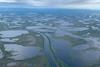
NewsArctic river deltas at risk from mounting pressures
Researchers have performed a detailed calculation of the amount of carbon stored in permafrost in Arctic river deltas. In a new study, they point out the risks endangering the storage function of these highly sensitive landscapes due to rapid climate change.
-
 News
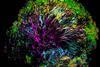
NewsThe road to better health requires a map of the microbes in your mouth
Different parts of your mouth have entirely different bacterial communities, reveals a new microbial map. Researchers believe mapping these microbial niches will provide a census of the good bacteria present in the mouth and help to develop targeted therapies, such as probiotics, to maintain oral health and prevent disease.
-
 News
NewsResearcher investigates how a bioengineered peptide can break through harmful bacterial ‘fortresses’ and curb severe infections
A researcher is refining a powerful therapy for drug-resistant bacteria that pierces the gooey coating that anchors and protects such germs from the drugs we take to kill them. She has found that an antimicrobial peptide naturally found in cows weakens the biofilm defenses of Klebsiella pneumoniae bacteria and destroys it.
-
 News
NewsIron-modified biochar turns soil oxygen into a cleaner for antibiotic pollution
Antibiotic residues in agricultural soils are an emerging environmental concern, with potential impacts on soil health, crop safety, and the spread of antimicrobial resistance. A new study reports on an iron-modified biochar that helps soil use its own oxygen and iron chemistry to break down sulfamethoxazole.
-
 News
NewsResearchers develop new vaccine adjuvant that could make it easier to eradicate polio
Researchers have now come up with a way to modify the injectable polio vaccine so that it can also promote a mucosal immune response. This vaccine could help to achieve polio eradication while avoiding the risks of the oral polio vaccine.
-
 News
NewsScientists map the microbes behind a climate-regulating gas in India’s busiest estuary — a first
When bacteria in the water and sediment break dimethylsulfoniopropionate down, they release dimethylsulfide (DMS), a gas that drifts into the atmosphere and helps form clouds by seeding cloud condensation nuclei. A new paper reports the first-ever study of DMSP concentrations and the bacteria that degrade it along the entire length of the Cochin Estuary.
-
 News
NewsResearchers discover a new antibiotic — and a new way to kill drug-resistant bacteria
Researchers have discovered a new antibiotic that kills some of the world’s most dangerous and drug-resistant bacteria by targeting a previously unknown vulnerability. Manikomycin has shown early effectiveness against priority pathogens including Salmonella, E. coli, and Klebsiella.
-
 News
NewsLong-term biochar use can help cropland soils store more microbial carbon, but depth matters
A 12-year field study shows that biochar boosts stable microbial carbon in topsoil while reducing it in deeper soil layers, highlighting the need for depth-specific carbon management.
-
 News
NewsResearcher studying probiotics to fight acid reflux and esophageal cancer
Patients with acid reflux, which occurs when stomach acid pushes up into the esophagus, know the symptoms all too well: heartburn, belching, chest pain and trouble swallowing. Acid reflux also increases the risk of esophageal cancer, but researchers are investigating how a simple probiotic could treat and prevent both conditions.
-
 News
NewsNew climate-based tool predicts coral bleaching months in advance
Researchers found that coral bleaching on a Caribbean island occurs when three major climate patterns in the Pacific and Atlantic Oceans align in specific ways that intensify ocean warming. They created a new, early-warning tool called the Bleaching Event Early Predictor (BEEP).
-
 News
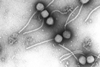
NewsThe future of phage therapy will be decided by more than science alone
As antimicrobial resistance accelerates worldwide, leading experts gather in Valencia to address the scientific, regulatory, manufacturing and clinical challenges that will determine whether phage therapy becomes a routine healthcare solution.
-
 News
NewsStudy reveals core values that drive Black and Hispanic parents’ decisions on vaccinating their kids against COVID-19
Persistently low rates of COVID-19 vaccination in Black and Hispanic children suggest that parents in these communities tend to be hesitant about the vaccine for their kids, even when they have received it themselves. A new study sheds light on the factors influencing decisions about vaccination.
-
 News
NewsAntibiotics for common sore throats have very limited effect on Strep spread
Antibiotics for sore throats have hardly any preventive effect against serious streptococcal infections in the population, according to a study. Instead, healthcare needs to quickly recognize warning signs of a serious infection.
-
 News
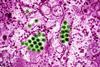
NewsDengue vaccine shows favorable safety profile in travellers from non-endemic regions
A prospective study of more than 1,000 people vaccinated with TAK-003 in Catalonia found no serious adverse events and provides new evidence on the vaccine’s short-term safety in travelers.
-
 News
News CEPI fast-tracks three Bundibugyo ebolavirus vaccine candidates
The Coalition for Epidemic Preparedness Innovations (CEPI) will urgently accelerate development of three investigational vaccines targeting the Bundibugyo ebolavirus that has caused a rapidly spreading epidemic in the Democratic Republic of the Congo (DRC) and neighbouring Uganda.
-
 News
NewsÖtzi and his microbiome: a 5,300-year-old relationship
Researchers have obtained a detailed picture of the microbial community associated with the Iceman mummy Ötzi. The study provides insights into a complex microbiome, ranging from the gut flora of a Copper Age human to cold-adapted yeasts.
-
 News
News‘Baked’, printed, ready – premiere of architecture made from yeast
Researchers have developed a new, entirely bio-based material from a somewhat unexpected ingredient: yeast. The material is 3D printed and customised for use in architectural and interior design elements that are currently made from non-renewable or fossil-based materials, such as plaster, plastic or synthetic textiles.
-
 News
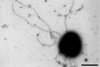
NewsExtreme adaptation helps Dead Sea single-celled organisms to swim
Researchers have described in detail a structural adaptation supporting one of the Dead Sea’s few hardy inhabitants — a single-celled archaea called Haloarcula marismortui (H. marismortui). They characterized the proteins that form the archaeal filament, a long tail-like structure essential for movement.