
More News – Page 86
-
 News
NewsHigh-dose antibiotic does not reduce mortality in tuberculous meningitis
The first trial examining the effects of higher rifampicin doses on tuberculosis survival has been completed. The study found no evidence of a beneficial effect from high-dose rifampicin.
-
 News
NewsSoil microbes in Colombia’s páramo and tropical forests respond to seasonal shifts
A new study has demonstrated that microbial communities in the soil of Colombia’s tropical forests and high-altitude páramos are significantly influenced by seasonal changes, particularly during the dry season.
-
 News
NewsGut bacteria have evolved rapidly to digest starches in ultra-processed foods
Researchers have found that gene variants that help microbes digest starches found in ultra-processed foods have “swept” the genomes of some species of gut bacteria in industrialized parts of the world.
-
 News
NewsFifteen-year cattle manure application reshapes phoD- and gcd-harboring microbiomes, enhancing vegetable yields
A new study demonstrates that combined manure and chemical fertilizer (M+CF) in an open-field lettuce cropping system enhanced both diversity (+45.3%) and abundance (+290%) of gcd-harboring bacteria.
-
 News
NewsResearchers develop novel composite copper oxides with strong and stable antiviral activity
Composite copper–lanthanum and copper–yttrium oxides developed by researchers from Japan demonstrate exceptionally high antiviral activity against non-enveloped virus. These oxides are highly stable and achieve over 99.999% viral inactivation in laboratory tests.
-
 News
NewsA practical guide for characterization of novel CRISPR-Cas systems with Pro-CRISPR factors
In this protocol, the authors provide a method encompassing protein purification, biochemical characterization, validation of protein-protein interactions, and preliminary in vivo functional assays in bacteria for Cas nuclease and its associated Pro-CRISPR factor.
-
 News
NewsOral bacterium tied to disability severity in multiple sclerosis
A research team has conducted a study with findings that suggest a potential association between the relative abundance of Fusobacterium nucleatum (F. nucleatum), a bacterium found in the mouth, and disease severity in multiple sclerosis (MS) patients.
-
 News
NewsFiltering the invisible: New evidence points to more efficient indoor air microbe sampling
Using fluorescence-based detection, a new study provides clear, quantitative evidence that sampling principle, collection medium, and airflow rate strongly shape how well indoor microbial aerosols can be measured.
-
 News
NewsResearch reveals how ancient viral DNA shapes early embryonic development
New research focuses on a viral transposable element called MERVL. This element becomes highly active for a short window of time when a mouse embryo reaches the 2-cell stage – the point at which a fertilised egg has divided into two cells and switches on its own genome for the first time.
-
 News
NewsResearch links tumor bacteria to immunotherapy resistance in head and neck cancer
Two new studies reveal that elevated levels of bacteria in the tumor microenvironment suppress immune response, driving resistance to immunotherapy in patients with head and neck squamous cell carcinoma.
-
 News
NewsTurning crop waste into precision weapons against waterborne pathogens
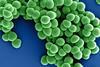
Researchers have developed a novel class of biomass-derived carbon dots that selectively eradicate Staphylococcus aureus in water, using corn straw to synthesize amine-modified nanomaterials that act as oxidase mimics, enabling targeted bacterial inactivation without harming beneficial microorganisms.
-
 News
NewsResearchers use robotics to find potential new antibiotic among hundreds of metal complexes
Researchers have used a cutting-edge robotic system capable of synthesising hundreds of metal complexes to develop a possible antibiotic candidate - offering fresh hope in the global fight against drug-resistant infections.
-
 News
NewsNew findings on Candida auris open up potential targets for future therapies
A study shows for the first time that Candida auris uses a CO₂-based metabolic strategy to survive in the nutrient-poor conditions of the skin and to better tolerate antifungal therapies – especially amphotericin B.
-
 News
NewsLivestock-induced changes in soil properties and microbial dominance determine soil microbial diversity in a conifer forest
In the critical habitat of the giant panda, livestock grazing is reshaping the invisible yet vital world of soil microbes in an unexpected way. A new study reveals that while grazing alters soil properties, it paradoxically leads to an increase in soil bacterial diversity.
-
 News
NewsStage-specific microbial dynamics underpin ecosystem restoration on tropical coral islands
Facilitating the establishment of self-sustaining plant communities has become a crucial scientific and technological issue that urgently needs to be addressed in advancing marine ecological civilization and maintaining ecological safety on tropical coral islands.
-
 News
NewsBeing infected or vaccinated first influences COVID-19 immunity
A new study analysing the immune response to COVID-19 sheds light on an important question: does it matter whether a person was first infected or first vaccinated? According to the results, the order of the events does alter the outcome.
-
 News
NewsFungal denitrification dominates soil N2O emissions after vegetation restoration in the Karst region
A new study demonstrates that soil fungal nirK-derived N2O in the karst region are significantly distinct between cropland and forest, soil NO3‒-N and sand are important drivers of the soil N2O emissions variation, especially after vegetation restoration.
-
 News
NewsScientists identify potential therapy and diagnostic markers for cerebral malaria
Researchers examined whether methylene blue could mitigate brain injury during severe malaria, and whether a practical set of blood biomarkers could help clinicians identify cerebral malaria early and track how patients respond to treatment.
-
 News
NewsGeneral intelligence framework to predict virus adaptation based on a genome language model
Researchers have developed a viral risk prediction framework named GIVAL based on the pre-trained viral protein language model vBERT.
-
 News
NewsAntibiotic resistance is ancient, ecological, and deeply connected to human activity, new review shows
Antibiotic resistance genes are often portrayed as a modern medical problem driven by the overuse of antibiotics in hospitals and farms. A new comprehensive review published in Biocontaminant reveals a much deeper and more complex story. Antibiotic resistance is an ancient feature of microbial life, shaped by millions of years ...