
More USA & Canada News – Page 10
-
 News
NewsStudy links multiple sclerosis with distinct oral microbiome
Researchers have produced the most comprehensive genetic and metabolic analysis to date of the oral microbiome associated with multiple sclerosis (MS). They found that people with MS have a distinct oral microbiome compared to healthy individuals.
-
 News
NewsSpectral signatures reveal hidden pine defenses: New tech enhances fusiform rust Resistance screening
A research team has developed a novel way to detect disease resistance in loblolly pine (Pinus taeda L.) using near-infrared (NIR) spectroscopy, offering a faster and more objective alternative to traditional visual inspection.
-
 News
NewsFeeding off spent battery waste, a novel bacterium signals a new method for self-sufficient battery recycling
A unique bacterium that thrives in highly acidic environments feeds on spent battery “waste”, making it a promising new method for self-sufficient battery recycling. Acidithiobacillus ferrooxidans (Atf) has a natural metabolic cycle that produces protons capable of leaching electrode materials from spent batteries.
-
 News
NewsAI tool beats humans at detecting parasites in stool samples, study finds
Scientists have developed an artificial intelligence (AI) tool that detects intestinal parasites in stool samples more quickly and accurately than traditional methods, potentially transforming how labs diagnose parasitic infections around the world.
-
 News
NewsGut parasites identified from feces of ancient Mexican people
DNA within dried feces dating from more than 1,000 years ago provides valuable insights into the pathogens that plagued ancient Mexican peoples. A study identified genetic signatures of a diverse array of gut parasites, many of which have never before been detected in ancient feces.
-
 News
NewsDangerous E. coli strain blocks gut’s defense mechanism to spread infection
When harmful bacteria invade through the digestive tract, gut cells usually fight back by pushing infected cells out of the body to stop the infection from spreading. Scientists have discovered that a dangerous strain of E. coli can block gut this defense, allowing the bacteria to spread more easily.
-
 News
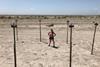
NewsDusty air is rewriting your lung microbiome
Dust from California’s drying Salton Sea doesn’t just smell bad. Scientists found that inhalation of airborne dust collected close to the shallow, landlocked lake alters both the microbial landscape and immune responses in mice that were otherwise healthy.
-
 News
NewsHow a pyrite-oxidizing microbe helps preserve atmospheric oxygen in sulfate
Research shows that O₂ in sulfate deposits, coupled with geochemical clues, could help identify microbial activity in Earth’s rock record and even in Martian sediments.
-
 News
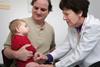
NewsReport explores health, economic, and societal benefits of vaccination
A new report provides evidence on the advantages of immunization for individual and population health, economic outcomes, and societal well-being. Studies show that every $1 spent on childhood vaccines saves about $11 in avoided medical costs and preserved productivity.
-
 News
NewsScientists develop a way to track donor bacteria after fecal microbiota transplants
Researchers have developed a new technology to track beneficial bacteria for up to 5 years after fecal microbiota transplants (FMT). The method allows scientists to distinguish even closely related bacterial strains and identify each one’s unique genetic “fingerprint.”
-
 News
NewsNew hope for cats with eye infections: Study finds common cold sore cream safe and effective for feline use
A common human cold sore cream may soon help cats with painful eye infections: researchers found that 1% penciclovir cream (Fenlips®), when applied to cats’ eyes, was safe, well-tolerated, and maintained antiviral levels for over eight hours.
-
 News
NewsHow to hack your microbiome for lifelong health
A new book, The Microbiome Master Key, dissects the latest microbiome research, dispels common myths and provides simple, science-backed tips on how to leverage your microbiome to promote healthy living and aging.
-
 News
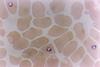
NewsNew insights into malaria could reshape treatment
A sodium pump essential to the malaria parasite’s survival, PfATP4, has emerged as one of the most attractive drug targets. A new study presents the first high-resolution 3D structure of PfATP4 and identifies a previously unknown but essential binding partner.
-
 News
NewsUS funding cuts could result in nearly 9 million child tuberculosis cases, 1.5 million child deaths
A new study projects that US funding cuts to global health aid will have a catastrophic effect on pediatric TB, with children in Sub-Saharan Africa and Southeast Asia likely to experience a spike in preventable cases and deaths over the next decade.
-
 News
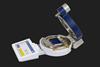
NewsBruker announces FDA Clearance of Claims 7 and 8 for the MALDI Biotyper® CA System
Bruker has announced FDA clearance of Claim 7 and Claim 8 for its MALDI Biotyper® CA System, marking a significant advancement in clinical microbial identification capabilities.
-
 News
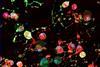
News’Footprint of Death’ gives new clues to cell life, spread of disease
Scientists at La Trobe University have discovered a previously unknown way viruses could spread around the body, potentially paving the way for more effective drug development. Source: La Trobe University Dead cells after the self-destruction and fragmentation process. The large green areas are the “eat me” signals ...
-
 News
NewsAre there living microbes on Mars? Check the ice, researchers say
By recreating Mars-like conditions in the lab, researchers demonstrated that fragments of the molecules that make up proteins in E. coli bacteria, if present in Mars’ permafrost and ice caps, could remain intact for over 50 million years.
-
 News
NewsSurprising bacteria discovery links Hawaiʻi’s groundwater to the ocean
A new species of bacteria has been discovered off the coast of Oʻahu, shedding light on how unseen microbial life connects Hawaiʻi’s land and sea ecosystems.
-
 News
NewsMiniature noses to help prevent infections and promote nasal health
To better understand how different bacteria interact with the lining of the human nose, researchers used a miniature model of the human nose to study how bacteria can live in nasal passages.
-
 News
NewsEngineers solve the sticky-cell problem in bioreactors and other industries
Their system uses electrochemically generated bubbles to detach cells from surfaces, which could accelerate the growth of carbon-absorbing algae and lifesaving cell therapies.