
More USA & Canada News – Page 77
-
 News
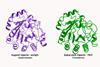
NewsNext time you beat a virus, thank your microbial ancestors
When you get infected with a virus, some of the first weapons your body deploys to fight it were passed down to us from our microbial ancestors. Two key elements of our innate immune system came from a group of microbes called Asgard archaea.
-
 News
NewsHoney bees may play key role in spreading viruses to wild bumble bees
Honey bees may play a role in increasing virus levels in wild bumble bees each spring, according to researchers who analyzed seasonal trends of parasite and virus transmission in bees.
-
 News
NewsFungal discovery changes the way we understand Charles Darwin’s most beloved plant – the sundew
A new study has uncovered a symbiotic relationship that has evolved between Darwin’s favourite carnivorous plant and a specific type of fungus which lives inside it and helps it digest its prey.
-
 News
NewsThe banana apocalypse is near, but biologists might have found a key to their survival
Fusarium wilt of banana is decimating the Cavendish banana—the world’s most popular commercially available banana. New research reveals that this strain did not evolve from the strain that wiped out commercial banana crops in the 1950s.
-
 News
NewsSurprise find in study of environmental bacteria could advance search for better antibiotics
In what they labeled a “surprising” finding, researchers studying bacteria from freshwater lakes and soil say they have determined a protein’s essential role in maintaining the germ’s shape.
-
 News
NewsScientists map DNA of Lyme disease bacteria
Scientists have produced a genetic analysis of Lyme disease bacteria that may pave the way for improved diagnosis, treatment, and prevention of the tick-borne ailment.
-
 News
NewsScientists to investigate why men and women are hit by the flu differently
Turns out that there is a biological reason why women and men suffer viral infections like influenza differently – and a team of scientists are extending their research to better understand why and how to design better, possible sex-specific treatments.
-
 News
NewsCould manure and compost act like probiotics, reducing antibiotic resistance in urban soils?
Urban soils often contain chemical contaminants or trace amounts of antibiotics, along with higher levels of antibiotic-resistant bacteria. New research suggests that boosting urban soil health with compost and treated manure may reduce the amount of ’bad’ bacteria.
-
 News
NewsNew high-throughput method reveals the mysteries within microbial genomes
A new technique developed at Lawrence Berkeley National Laboratory (Berkeley Lab) will make it much easier for researchers to discover the traits or activities encoded by genes of unknown function in microbes, a key step toward understanding the roles and impact of individual species. Source: CDC/ Dr. V. ...
-
 News
NewsMulti-disciplinary team awarded $3.9 million to study mixed fungal-bacterial infections
A multi-disciplinary team was recently awarded $3.9 million from the National Institute of Allergy and Infectious Diseases for a project aimed at unravelling intricate mysteries surrounding complex fungal-bacterial infections.
-
 News
NewsHydrometeorology and location affect hospitalizations for waterborne infectious diseases in the US
An analysis of 12 years of data collected from over 500 hospitals in 25 different states shows that weather, geographic location, and urban or rural location all appear to influence hospitalizations for waterborne infectious diseases.
-
 News
NewsEarly life exposure to common chemical permanently disrupts gut microbiome
A study in mice finds that by significantly disrupting the gut microbiome, early life exposure to persistent organic pollutants influenced the development of metabolic disorder in adult mice.
-
 News
NewsStudy finds shingles increased risk of subsequent cognitive decline
A new study has found that an episode of shingles is associated with about a 20 per cent higher long-term risk of subjective cognitive decline, providing support for getting the shingles vaccine to decrease risk of developing shingles.
-
 News
NewsNew evidence for a connection between antibiotic use and autoimmune diseases
A new connection has been revealed between depletion of gut bacteria caused by antibiotics and development of autoimmune diseases. Clearance of dead cells involves not only local signals from within a tissue but also distant signals from other parts of the body.
-
 News
NewsNew genetic editing technique could modify wild populations with less risk
A new technique developed by researchers from Macquarie University and the California Institute of Technology described in Nature Communications on 13 August could allow scientists to more simply and controllably alter the genetic makeup of wild populations than with the use of gene-drives. Coral in Nagoya Aquarium Japan. ...
-
 News
NewsNanoparticle platform offers step toward more effective Covid and HIV vaccines
Researchers have developed a nanoparticle platform that could make existing vaccines more effective, including those for influenza, COVID-19, and HIV.
-
 News
NewsNew study looks at drug exposures of COVID-19 therapy for pregnant women
A new study provides important insights into the pharmacokinetics and safety of intravenous remdesivir in treating the SARS-CoV-2 coronavirus in pregnant women.
-
 News
NewsHospital awarded $12m to study best approach to treat mild pneumonia in young children
Ann & Robert H. Lurie Children’s Hospital of Chicago, in partnership with University of Utah Health, has been approved for $12 million in research funding for a study that will compare two ways to use antibiotics in young children with mild pneumonia.
-
 News
NewsLargest study of its kind finds common lab tests aren’t reliable for diagnosing Long COVID
A new study found that most routine laboratory tests are not reliable for diagnosing Long Covid, also known as Post-Acute Sequelae of SARS-CoV-2 infection (PASC).
-
 News
NewsStudy reveals oleoyl-ACP-hydrolase underpins lethal respiratory viral disease
Respiratory infections can be severe, even deadly, in some individuals, but not in others. Scientists have gained new understanding of why this is the case by uncovering an early molecular driver that underpins fatal disease.