
More USA & Canada News – Page 88
-
 News
NewsCaffeine-degrading microbes could tackle coffee pollution - and produce valuable pharmaceutical compounds
Caffeine-degrading microbes could offer vital bioremediation services as well as upcycling coffee waste into valuable pharmaceutical compounds, a new review suggests.
-
 News
NewsResearchers discover ‘trojan horse’ virus hiding in human parasite
An international team led by researchers at the University of Toronto has found a new RNA virus that they believe is hitching a ride with a common human parasite.
-
 News
NewsNewly isolated antibodies may aid effort to fight influenza B
Researchers have isolated human monoclonal antibodies against influenza B, a significant public health threat that disproportionately affects children, the elderly and other immunocompromised individuals.
-
 News
NewsScientists develop new nanoscale way to see viruses in action
A new, nano-scale look at how the SARS-CoV-2 virus replicates in cells may offer greater precision in drug development, scientists report.
-
 News
NewsScientists invent ‘living bioelectronics’ that can sense and heal skin
Scientists have created a prototype for ’living bioelectronics’: a combination of living cells, gel, and electronics that can integrate with living tissue. The patches are made of sensors, bacterial cells, and a gel made from starch and gelatin.
-
 News
NewsScientists develop new coral disease forecasting system
Research has led to a new tool for forecasting coral disease that could help conservationists step in at the right times with key interventions. It can help end users detect early changes in the environment and better protect coral reef ecosystems.
-
 News
NewsMicrobes pave way to functional dairy products - and convincing plant-based cheese
Even though cheese has been around for thousands of years, researchers continue to move forward with intriguing new approaches, says the American Chemical Society as it marks National Dairy Month in June.
-
 News
NewsNovel vaccine concept generates immune responses that could produce multiple types of HIV broadly neutralizing antibodies
Using a combination of cutting-edge immunologic technologies, researchers have successfully stimulated animals’ immune systems to induce rare precursor B cells of a class of HIV broadly neutralizing antibodies (bNAbs). The findings, published in Nature Immunology, are an encouraging, incremental step in developing a preventive HIV vaccine. ...
-
 News
NewsResearchers identify factors that heighten risk for catheter-associated urinary tract infections and sepsis
Fibrinolytic deficiencies, or conditions that cause overactivation of the protein fibrin, can increase the risk of developing severe and persistent CAUTIs, a new study finds.
-
 News
NewsHuman cervix modeled in microfluidic organ chip helps target bacterial vaginosis
Engineered cervix with in vivo-like mucus production, hormone sensitivity, and associated microbiome creates novel testbed for bacterial vaginosis therapeutics and other treatments.
-
 News
NewsKnowledge is a factor in closing black-white COVID-19 vaccination gap
Early in the Covid-19 pandemic, Black Americans were more hesitant to take the Covid-19 vaccine than were White Americans. As the pandemic went on, however, the disparity in vaccination rates between Black and White adults declined. Source: Baltimore County Government People queueing to be vaccinated, 23 December 2020 ...
-
 News
NewsNovel virus identified in zebrafish from the pet trade causes disease in laboratory fish
Zebrafish in the pet trade are asymptomatic carriers of previously undescribed microbes, including a novel virus that causes hemorrhaging in infected laboratory fish, new research has revealed.
-
 News
NewsLiving bioelectronic device monitors and manages psoriasis in mice
Coupling skin bacteria-laden hydrogel and electronics, researchers have introduced a bioelectronics system that can deliver management and adaptive treatment of skin inflammation. They test this approach in a mouse model of psoriasis.
-
 News
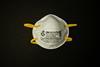
NewsStudy shows N95 masks near-perfect at blocking escape of airborne COVID-19
In a head-to-head comparison of masks worn by people with active COVID-19, the inexpensive ‘duckbill’ N95 came out on top, stopping 98% of COVID-19 particles in the breath of infected people from escaping into the air.
-
 News
NewsResearchers expose new symbiosis origin theories, identify experimental systems for plant life
A Mississippi State faculty member’s work on symbiosis is pushing back against the newer theory of a ‘single origin’ of root nodule symbiosis (RNS)—that all symbiosis between plant root nodules and nitrogen-fixing bacteria stems from one point—instead suggesting a ‘multiple-origin’ theory of symbiosis which opens a better understanding of genetically ...
-
 News
NewsLung microbiomes predict mortality in children following bone marrow transplant
Using a method that identifies all potentially pathogenic organisms present in the lungs, scientists have discovered links between certain microbial communities and the relative risk of mortality in children who undergo bone marrow transplants.
-
 News
NewsEffectiveness of updated COVID-19 vaccines wanes moderately over time, is lower against currently circulating variants
New research shows boosters targeting omicron subvariants of SARS-CoV-2 are still providing reasonably durable protection against infection, hospitalization and death from COVID-19, but are less protective against the JN.1 strain.
-
 News
NewsResearchers take step toward development of universal COVID-19 antibodies
Scientists have developed a promising new human monoclonal antibody that appears a step closer to a universal antibody cocktail that works against all strains of SARS-CoV-2.
-
 News
NewsRisk of death from COVID-19 lessens, but infection still can cause issues 3 years later
A new study also shows that patients hospitalized within 30 days after infection face a 29% higher death risk in the third year compared with those not infected.
-
 News
NewsNew antibiotic kills pathogenic bacteria, but spares healthy gut microbes
Researchers have developed a new antibiotic that reduced or eliminated drug-resistant bacterial infections in mouse models of acute pneumonia and sepsis while sparing healthy microbes in the mouse gut.