
Researchers at Eurac Research have obtained a detailed picture of the microbial community associated with the Iceman mummy Ötzi. The study provides insights into a complex microbiome, ranging from the gut flora of a Copper Age human to cold-adapted yeasts.
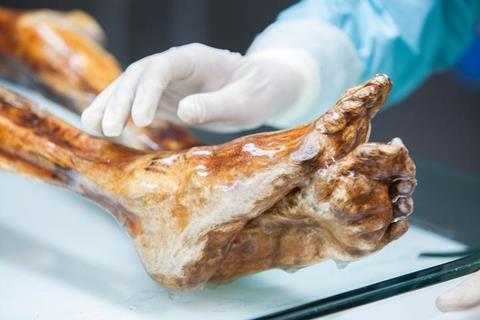
Ötzi was discovered in September 1991 in the Ötztal Alps at the border between Austria and Italy and is Europe’s oldest known natural human mummy, offering an unprecedented view of Chalcolithic (Copper Age) Europeans.
Using a variety of samples and methods, the researchers were able to differentiate which microorganisms were already present in the body during his lifetime and which only colonized it after his death – both during the time in the glacier and over three decades of preservation.
In samples of internal tissue, the researchers were able to detect genetic material from bacteria belonging to Ötzi’s original gut flora. A surprising finding is the presence of cold-adapted yeast species, likely originating from the glacial environment, that have persisted on Ötzi’s body to the present day. These cold-tolerant yeasts may also hold potential for industrial applications. The study was published in Microbiome journal.
Extensive investigation
It was an extensive investigation, in which the research team analyzed ice from the surface as well as meltwater from inside the mummy and collected numerous samples by swab. Data from intestinal tissue and stomach contents were available from previous studies.
A soil sample from the discovery site, collected and frozen during Ötzi’s recovery in 1991, was also analyzed to trace environmental influences. Researchers also identified genetic material from the original gut microbiome in the intestinal tract and stomach content.
This microbiome, first described in a 2019 study conducted with Eurac Research, closely resembles the few known examples of gut flora from early human populations – such bacteria are rarely found in the intestines of modern humans living in industrialized societies. Ötzi therefore offers a rare glimpse into humanity’s microbial past.
Cold-adapted yeasts
The newly discovered yeasts were isolated from skin samples, meltwater from inside the mummy, and samples of stomach content. Such highly specialized species have adapted to cold temperatures. Genetic analyses revealed a relationship with strains from extremely cold regions such as Antarctica. This suggests that the yeasts originate from the glacial environment and may have been associated with the mummy for thousands of years.
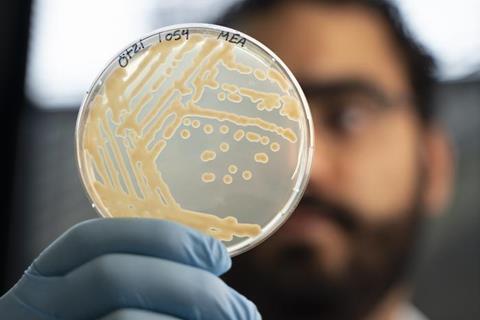
The researchers found both heavily degraded (ancient) and well-preserved (modern) DNA. This indicates that these microorganisms are not merely relics of the past but continue to exist under today’s preservation conditions at minus six degrees Celsius and with high humidity—possibly in a dormant state.
“We see continuity here,” explains Frank Maixner, director of the Institute for Mummy Studies at Eurac Research: “These yeasts have accompanied Ötzi on his long journey through the millennia.” According to Maixner, this shows that the mummy is “not a static relic, but a dynamic biological system.”
Effect of conservation measures
The study also shows that earlier conservation measures may have unintentionally favored certain microorganisms: three of the four yeasts possess the genetic capacity to break down phenol—an active ingredient used after Ötzi’s recovery to rid the mummy’s surface of fungal growth which the yeasts may have been able to use as a food source.
“A mummy’s microbiome is unique because we are dealing with microbes that are over 5,000 years old and, at the same time, with modern microbes that have been introduced since the discovery,” says microbiologist and lead author Mohamed S. Sarhan.
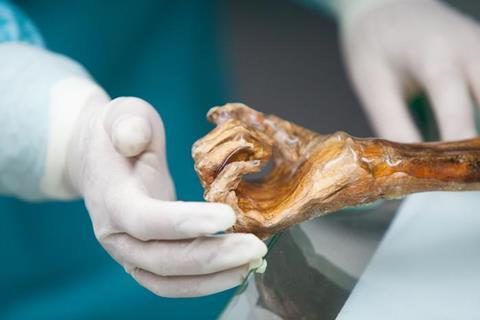
“The mummy’s conservation conditions are very stable today,” comments Elisabeth Vallazza, director of the South Tyrol Museum of Archaeology that oversees the mummy’s conservation. “Close microbiological monitoring ensures that the mummy suffers no damage. But further research and full conservation efforts are certainly needed to preserve it for many more generations.”
Conservation expert and co-author Marco Samadelli emphasizes: ’The conditions under which glacial mummies are preserved are not yet fully understood. This study expands our knowledge in this area.”
In addition to the significance for the preservation of the mummy, the findings also open new avenues for research: cold-adapted microorganisms could, for example, be used in energy-efficient industrial processes, such as low-temperature fermentation.
Topics
- Chalcolithic Europeans
- cold-adapted yeasts
- Ecology & Evolution
- Elisabeth Vallazza
- Eurac Research
- Extremophiles
- Frank Maixner
- Fungi
- Gut Microbiome
- Healthy Land
- Iceman
- Marco Samadelli
- Microbes and Culture
- Microbes of the Earth
- Mohamed S. Sarhan
- Ötzi
- phenol
- Research News
- South Tyrol Museum of Archaeology
- UK & Rest of Europe





No comments yet