
Applied Microbiology International is celebrating after being shortlisted in the 2026 Memcom Excellence Awards.
Our Letters in Applied Microbiology Early Career Academic Editor Training Programme made the finalists in the “Best Education Initiative” category of the annual awards.
The 2026 Memcom Excellence Awards shortlist was announced at the Awards Shortlist Party on 8th July 2026 held at the Barbican Conservatory. The winners from the 2026 Memcom Excellence Awards will be announced at a lavish dinner at the InterContinental London Park Lane.
The awards are open to all professional bodies, trade associations, membership charities, trade unions and the wider not-for-profit membership sector. They highlight everything from strategy to leadership, engagement to publications and individual and team achievements, celebrating the innovation, dedication and impact that drive success and inspire excellence across the sector.
Unique training scheme
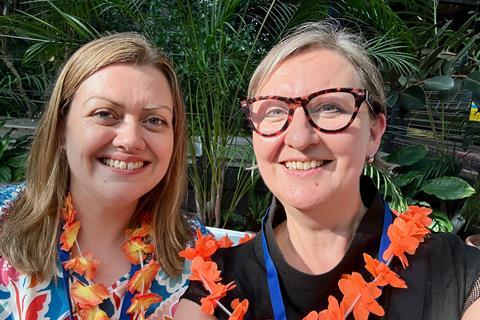
Lindsay Flook, Journal Development Manager at AMI, reflects: “We are delighted that this unique training scheme has been recognised by being shortlisted at the Memcom Awards. It has been a truly rewarding experience working with our cohorts of Junior Editors and Junior Reviewers.
”Alongside our Publishers Oxford University Press, the AMI Publishing team have provided education around key aspects of journal publishing, such as journal performance monitoring, journal development and publishing ethics. We are so proud of the graduates from our first cohort and are already very impressed with the engagement of the second cohort. This training programme reflects AMI’s mission to provide opportunities for Early Career individuals.”
MICROBIOLOGY NEWS: Register with The Microbiologist for more free articles
The LAM initiative came about after AMI developed one of its journals into a vehicle for training diverse young editors with a new mission: ‘Letters in Applied Microbiology is an inclusive and accessible journal that supports and develops the next generation of applied microbiologists.’
The programme was intended to provide excellent editorial training for global early career researchers; develop the next generation of academic editors in applied microbiology; address the lack of diversity on academic editorial boards; and provide opportunities for talented mid-career researchers in editorial leadership roles.
Impact for early career researchers
For the first cohort we received 150 applications from 100 countries and appointed 14 Junior Editors and 13 Junior Reviewers, 15 female, 12 male, representing 14 countries. We are now into our second cohort.
Feedback from participants has been overwhelmingly positive, and from 2023 to 2025, overall publishing times have reduced by nearly 3 weeks.
Our Junior Editors went on to form the first international session of the LAM ECS Early Career Symposium, and some have already taken on other roles:
· One Junior Reviewer is an Advisory Group Member
· One Junior Editor is programme chair for the ECS Early Career Symposium
· Two Junior Editors appointed Associate Editors on Sustainable Microbiology.
· Three Junior Reviewers promoted to Junior Editor for the second cohort.
Tremendously rewarding
Editor-in-Chief Marcela Hernández, University of East Anglia, UK, comments: “The Junior Editor mentoring programme has been a tremendously rewarding experience in my role as Chief Editor for LAM. Together with AMI and OUP team, we have worked very closely ensuring that we provide clear training to our early-career researchers (ECRs).
“The first cohort was a group of outstanding ECRs all highly committed to the editorial process. Working alongside the Senior Editorial team, they have contributed significantly to improving both the quality and breadth of the journal.
“This initiative has improved gender balance to 55% female representation, and 64% of our editorial board are ECRs (measured from cohort 1). In parallel, the mean time from submission to first decision dropped from 58 days in 2021 to 25 days in 2025.
“These outcomes show that supporting ECRs not only promotes diversity and inclusion but also enhances editorial efficiency and quality.”
Unexpected doors
Thomas Thompson, Queen’s University Belfast, a Junior Editor in the first cohort, said: “It’s opened up several unexpected doors. First, the editorial experience has refined my critical thinking in ways that have improved both my writing and my approach to lab work.
“I’ve also built connections with experts across microbiology and adjacent fields, which has been invaluable for potential future collaborations. Perhaps most importantly, it’s given me confidence in navigating the intersection of research and publishing, which is vital for advancing any scientific career.”
MICROBIOLOGY ON TAP: Get full access to all The Microbiologist articles from just £2.17 a month
Romy Moukarzel, Lincoln University, New Zealand, commented: “This role has provided valuable networking opportunities, allowing me to collaborate with senior editors and researchers, expanding my professional circle both within and beyond academia. It has also offered me the opportunity to meet my fellow editors in person at the board meeting and present my research at the Letters in Applied Microbiology Early Career Scientist Research Symposium in Bristol, UK.”
Why to apply
Rahul Jain, University of Amsterdam, The Netherlands, added: “Being part of the first cohort of Junior Editors has been a truly rewarding experience.
“I’ve learned a great deal about managing article submissions, overseeing peer review processes, and handling manuscripts. This opportunity provided invaluable insight into the full editorial workflow and the decision-making process behind scientific publishing. As a Junior Editor, you’ll work closely with the Chief Editor and Senior Editors, gaining mentorship and experience that is hard to find elsewhere.”
“If you’re an early career researcher looking to give back to the scientific community and help shape the future of other emerging scientists, I strongly encourage you to apply for these roles. It’s a unique chance to contribute meaningfully to the editorial landscape of the Applied Microbiology International (AMI) Society and AMI Journals.”
Applied Microbiology International is now on a shortlist that includes: the Chartered Institute of Patent Attorneys; Logistics UK; Royal Aeronautical Society; and World Hepatitis Alliance.




No comments yet