
Symbiotic ammonia-oxidizing archaea in marine sponges are not strict specialists, but true “flexitarians”. A team led by microbiologists Bettina Glasl and Katharina Kitzinger from the University of Vienna, in collaboration with partners from Australia, has shown that these microbes dine not only on ammonia but also on amino acids such as valine, leucine, and isoleucine - and presumably do that to communicate with their animal host.
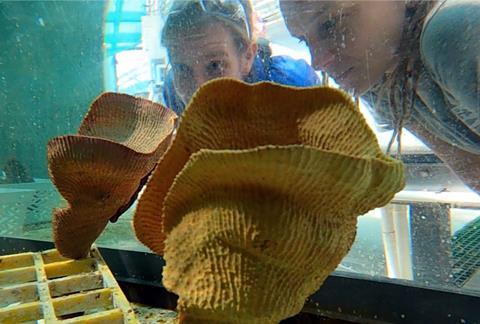
The findings shed new light on one of the oldest animal-microbe symbiotic relationships on Earth and point to a previously underestimated role played by archaea. The study was published in the prestigious journal Science Advances.
For decades, scientists assumed that ammonia-oxidizing archaea had a strict diet, feeding exclusively on ammonia, and to some extent, on the simple nitrogenous compounds cyanate and urea, to fix CO2.
A new study led by researchers from the Centre for Microbiology and Environmental Systems Science (CeMESS) at the University of Vienna, in collaboration with the Australian Institute of Marine Science (AIMS), shows that symbiotic ammonia-oxidizing archaea, unlike their free-living relatives studied thus far, are actually “flexitarians”. They use amino acids, such as valine, leucine and isoleucine, as additional food sources. This finding also suggests that these symbiotic microbes may have an unknown ability to communicate with their animal hosts.
An ancient symbiosis
Marine sponges are among the oldest animals. Their simple bodies are teeming with microbes. This partnership, also called symbiosis, is vital for the sponge’s survival in the oceans. Ammonia-oxidizing archaea are key symbionts in marine sponges. They are renowned as the sponge’s microscopically sized sanitation crew as they remove toxic ammonia, a metabolic waste product.
Until now, it was assumed that they are strict “chemolithoautotrophs”: They derive energy from inorganic compounds, in this case ammonia, and use CO2 as their carbon source.Hints that symbiotic ammonia-oxidizing archaea might be more flexible came from their genomes. Unlike many free-living ammonia-oxidizing archaea, they carry genes encoding transporters for branched-chain amino acids.
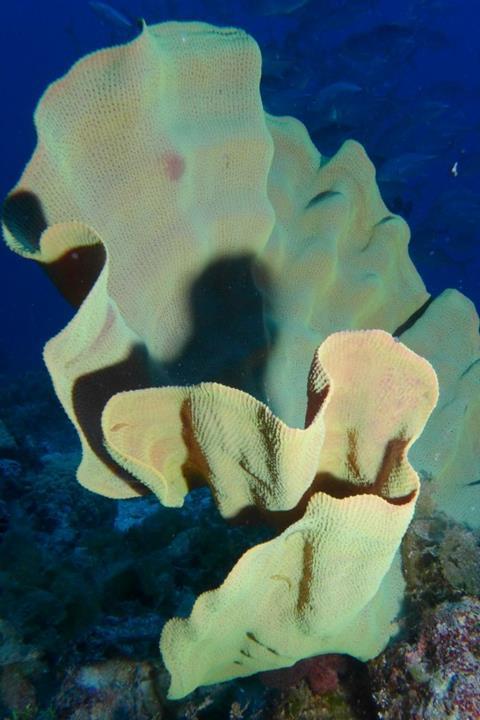
The new study provides the first direct experimental evidence that symbiotic ammonia-oxidizing archaea actually are mixotrophs, capable of using CO2 and amino acids as a carbon source.
Zooming in on individual microbes’ activity
The researchers studied the coral reef sponge Ianthella basta, also called elephant ear sponge, and its ammonia-oxidizing archaeal symbiont Nitrosospongia ianthellae.
Using a cutting-edge combination of advanced chemical and microscopic imaging techniques, including NanoSIMS, they were able to watch the dietary habits of individual symbiont cells in their sponge host.
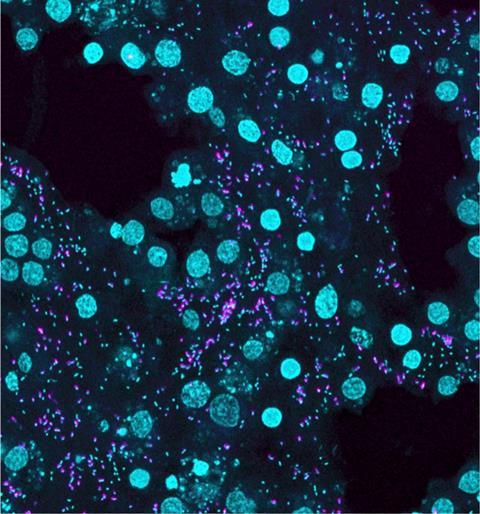
“The real challenge was to prove which specific cells were consuming the amino acids within the sponge,” says Katharina Kitzinger, co-lead author and specialist in single-cell analysis. “We could literally see the labeled amino acids being incorporated into individual symbiont cells, linking a cell’s identity to its function rather than relying on genome predictions alone.”
Potential signalling molecules
The discovery has implications beyond the microbes’ diet. As they can both consume and produce branched-chain amino acids, symbiotic ammonia-oxidising archaea may influence the availability of these essential amino acids within their ancient animal host.
“We used to think of these symbionts primarily as a waste disposal service for the sponge,” says Bettina Glasl, co-lead author and expert in sponge–microbiome interactions. “By producing and consuming these amino acids, the symbionts can potentially modulate important signalling molecules for the sponge. This could be a form of communication between microbes and animal hosts with deep evolutionary roots.”
MICROBIOLOGY NEWS: Register with The Microbiologist for more free articles
The researchers propose that this metabolic activity could even influence the mTOR signaling pathway, a conserved regulator of cell growth and metabolism that responds to branched-chain amino acid availability.
“This work would not have been possible without the tight collaboration of many people in Austria and Australia, and the generous support from the FWF for the Cluster of Excellence ‘Microbiomes drive planetary health’,” says Michael Wagner, head of the FWF-Cluster and last author of the study.




No comments yet