
Wheat powdery mildew, a prevalent foliar disease, severely threatens wheat yield and quality. Cultivating resistant wheat varieties is an effective way to control this disease.
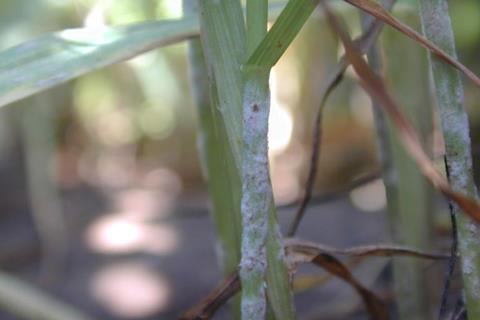
Wild einkorn wheat (Triticum boeoticum) is a diploid species containing Ab genome close to the A genome of modern wheat. Wild einkorn has abundant genetic diversity and possesses effective resistance to several wheat diseases, such as rusts and powdery mildew. Recently, researchers from Jiangsu University have identified a new powdery mildew resistance gene, Pm72, from wild einkorn that will be a useful gene resource for wheat breeding. They published their findings in The Crop Journal.
MICROBIOLOGY NEWS: Register with The Microbiologist for more free articles
The researchers investigated a panel of wild einkorn accessions provided by international germplasm institutions and found that the Iraqi accession PI 427741 has effective resistance to wheat powdery mildew. Genetic analysis based on a bi-parent population suggested that PI 427741 has two dominant resistance genes.
“We found that PI 427741 possesses the powdery mildew resistance gene PmNCA6. To that end, we developed a diagnostic PmNCA6 marker to detect the F2 plants,” shares Professor Huagang He, corresponding author of the study. “We then used a segregating F3 family without PmNCA6 to map the unknown resistance gene in PI 427741.”
Pinpointing the gene
The team adopted bulked segregant exome capture sequencing (BSE-Seq) and molecular marker technologies to determine the chromosome position of the unknown resistance gene.
MICROBIOLOGY ON TAP: Get full access to all The Microbiologist articles from just £2.17 a month
“The gene, officially cataloged as Pm72 now, was mapped to a 1.28-cM genetic interval on the long arm of chromosome 6A,” says first author Siyuan Zhou. “This region corresponds to a 940-kb physical region of the TA299 reference genome, where contains 21 NLR (nucleotide-binding leucine-rich repeat receptor)-like disease resistance genes — it poses a great challenge to clone Pm72.”
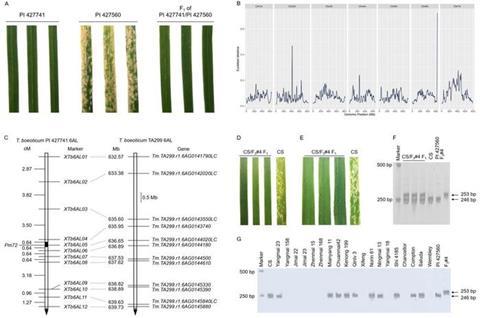
To assess the utilization value of Pm72, the team investigated its resistance spectrum. They found that Pm72 is resistant to all the ten pathogen isolates tested. “Through interspecific hybridization, we found that Pm72 confers effective powdery mildew resistance in the hexaploid wheat background. It means that this new gene has potential breeding value,” adds He. “Furthermore, the 253-bp bands generated by the co-segregating marker XTb6AL05 are highly specific to the Pm72 in wheat background.”
The researchers postulated this marker to be a powerful tool for marker-assisted selection of Pm72 in breeding programs.






No comments yet