
Tiny particles released as vehicle tires wear down may do more than pollute urban air, water, and soil. A new perspective article suggests that tire microplastics could create environmental hotspots that help antibiotic resistance genes persist, move between bacteria, and spread through cities.
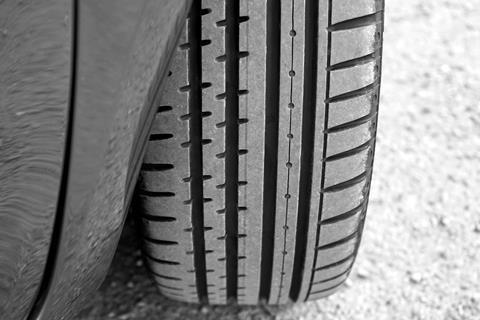
The article, published in Biocontaminant, examines growing evidence linking tire microplastics with antimicrobial resistance, a major One Health challenge affecting people, animals, and ecosystems. Tire particles are continuously generated by friction between tires and road surfaces. They can then enter the air, wash into stormwater systems, accumulate in rivers and sediments, or settle in urban soils.
“Tire microplastics should not be viewed simply as passive particles that carry pollutants from one place to another,” said corresponding author Yuyi Yang of Wuhan Institute of Technology. “Their surfaces, chemical additives, and aging processes may work together to create conditions that favor the persistence and transfer of antibiotic resistance genes.”
Three pathways
The researchers identify three main pathways through which tire microplastics may amplify antibiotic resistance risks.
First, tire particles can develop dense microbial biofilms known as the tire plastisphere. These biofilms bring bacterial cells into close contact, potentially making it easier for resistance genes to move between microorganisms through horizontal gene transfer.
Second, tire particles can release complex mixtures of chemicals, including metals, antioxidants, benzothiazoles, and other organic compounds. Some of these substances may place bacteria under selective pressure, allowing resistant microorganisms and their genes to survive or spread more effectively.
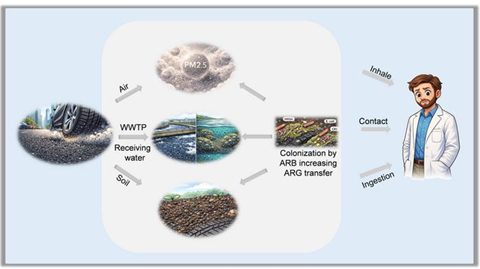
Third, weathering and aging can make tire particles more chemically reactive. Sunlight, oxidation, and environmental exposure may generate reactive oxygen species and persistent free radicals. At certain levels, these stressors may increase cell membrane permeability, biofilm formation, and gene transfer. However, very strong oxidative stress could also damage bacteria or genetic material, meaning the effects may vary with environmental conditions.
Lack of evidence
The authors emphasize that current evidence remains limited. Their review identified only seven studies directly examining tire particles or tire-derived chemicals in relation to antibiotic resistance genes, resistant bacteria, or gene transfer.
MICROBIOLOGY NEWS: Register with The Microbiologist for more free articles
To determine which chemicals are most influential, the team proposes adapting a toxicity identification evaluation framework. This approach would separate tire leachates into different chemical fractions and measure how each fraction affects plasmid transfer between bacteria.
The findings highlight the need to reduce tire particle pollution at its source and intercept it before it reaches urban waterways. Potential measures include stormwater filtration, roadside capture systems, green infrastructure, and nature-based treatment technologies. The authors also call for coordinated monitoring that connects environmental management with public health and antimicrobial resistance control.






No comments yet