
All Parasites articles – Page 9
-
 News
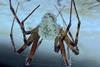
NewsNew fungal species named in honour of Sir David Attenborough making zombies of cave spiders
A study to investigate the identity of a fungus found on a spider during filming of the BBC Winterwatch series in Northern Ireland has confirmed it as a novel species that manipulates its host by compelling it to migrate and die in exposed situations.
-
 News
NewsWHO verifies Niger as the first country in the African Region to eliminate onchocerciasis
Niger has met the criteria for onchocerciasis elimination, making it the fifth country globally and the first country in Africa to be acknowledged by WHO for interrupting transmission of the parasite Onchocerca volvulus.
-
 News
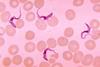
NewsGuinea eliminates human African trypanosomiasis as a public health problem
The World Health Organization (WHO) has congratulated Guinea for eliminating the gambiense form of human African trypanosomiasis as a public health problem. This is the first neglected tropical disease to be eliminated in the country.
-
 News
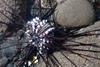
NewsThe deadly pathogen that decimated sea urchins in Eilat has now spread to the Indian Ocean
The pathogen responsible for the mass deaths of sea urchins along the Red Sea coast is the same one responsible for mass mortality events among sea urchins off the coast of Réunion Island in the Indian Ocean.
-
 News
NewsHigh uric acid levels - and harmful gut bacteria - linked to deadly outcomes in children with severe malaria
Researchers have uncovered a significant connection between elevated uric acid levels and life-threatening outcomes in children with severe malaria. The study identified hyperuricemia as a potential contributor to increased mortality and long-term neurodevelopmental challenges in children with severe malaria.
-
 News
NewsGeorgia certified malaria-free by WHO
After 9 years of declaration for zero indigenous cases of malaria and being recognised by the WHO, Georgia has finally been certified malaria-free and is willing to commit to remain the current status.
-
 News
NewsStructural insights reveal potential drug target in trypanosome parasites
A research group has recently characterised the structural differences between human and trypanosomal nuclear cap-binding complex, a key player in cellular RNA metabolism, for future drug development of trypanosomal diseases.
-
 News
NewsIn the US Northeast, 50% of adult ticks carry Lyme disease carrying bacteria
A new study finds that 50% of adult blacklegged ticks in the US Northeast carry the bacteria that causes Lyme disease while 20% to 25% of the younger (nymph) blacklegged ticks carry the bacteria.
-
 News
NewsReview offers guidance to clinicians on animal-borne infections in the Canadian Arctic
A new review on zoonotic infections in the Canadian Arctic provides timely guidance to clinicians as the region experiences heightened global interest as well as climate change, which threatens the region and increases risk of disease transmission.
-
 News
NewsChimpanzees are genetically adapted to local habitats and infections such as malaria
Chimpanzees bear genetic adaptations that help them thrive in their different forest and savannah habitats, some of which may protect against malaria, according to a study by an international team.
-
 News
NewsCompound derived from Brazilian plant acts against parasite that causes visceral leishmaniasis
A compound derived from Nectandra leucantha, a tree native to southern Brazil (local names canela-seca or canela-branca), has the potential to be used to treat visceral leishmaniasis, a neglected tropical disease.
-
 News
NewsParasite ‘matchmakers’ genetically alter plant cells to attract insects
Researchers have revealed how parasitic phytoplasmas manipulate plant biology to act as matchmakers, boosting male insect appeal by modulating hosts to attract more reproductive females.
-
 News
NewsResearch points the way to lifesaving antiparasitic drugs while unlocking a scientific mystery
A breakthrough in understanding how a single-cell parasite makes ergosterol (its version of cholesterol) could lead to more effective drugs for human leishmaniasis, a parasitic disease that kills about 30,000 people around the world every year.
-
 News
NewsResearchers discover novel class of anti-malaria antibodies
A novel class of antibodies that binds to a previously untargeted portion of the malaria parasite could lead to new prevention methods. The most potent of the new antibodies was found to provide protection against malaria parasites in an animal model.
-
 News
NewsNew discovery provides hope in fighting drug-resistant malaria
Researchers have described how they may have found a new target in Plasmodium falciparum, the deadliest malaria parasite: a cholesterol-managing protein called PfNCR1.
-
 News
NewsGlobal research uncovers critical weakness in malaria parasite
Scientists exploring how immunity develops against Plasmodium falciparum found that broadly reactive antibodies from various individuals consistently bound to the same site on a key virulence protein of the malaria parasite.
-
 News
NewsStudy shows how genetic defects in Toxoplasma are rescued by co-infection
Toxoplasma gondii parasites can use secreted factors to compensate for genetic defects in neighbouring parasites, highlighting a limitation of pooled CRISPR screens.
-
 News
NewsToxoplasma gondii parasite uses unconventional method to make proteins for evasion of drug treatment
A new study sheds new light on how Toxoplasma gondii parasites make the proteins they need to enter a dormant stage that allows them to escape drug treatment.
-
 News
NewsBacterial ‘biopesticide’ against malaria mosquitoes successful in early field tests
An experimental bacteria-derived biopesticide is highly effective in killing malaria-carrying mosquitoes, including those that have developed resistance to chemical pesticides, according to initial field tests.
-
 News
NewsA new approach to predicting malaria drug resistance
Researchers analyzed the genomes of hundreds of malaria parasites to determine which genetic variants are most likely to confer drug resistance.