
All plasmodium articles
-
 News
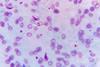
NewsScientists identify key protein that stops malaria parasite growth
An international team of scientists have identified a unique protein essential for the malaria parasite’s survival and transmission. Aurora-related kinase 1 (ARK1) acts as a ‘traffic controller’ during the parasite’s unusual cell division and growth process.
-
 News
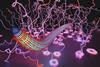
NewsMalaria parasites move on right-handed helices
After penetrating the skin, the malaria parasite moves with helical trajectories, almost always turning toward the right. Researchers demonstrated that the pathogen uses these right-handed helices to control its motion as it transitions from one tissue compartment to another.
-
 News
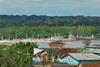
NewsMalaria risk in the Amazon is higher in regions with intermediate forest degradation
Research shows that areas with 50% deforestation near residential areas or fragmented vegetation allow greater contact between mosquitoes and humans. The study helps us understand the link between forest destruction and the spread of the disease.
-
 News
NewsNew strategy developed to engineer high-affinity receptor-containing antibodies against malaria
Researchers have introduced an innovative approach to developing high-affinity receptor-containing antibodies in vitro, offering a promising strategy to combat malaria.
-
 News
NewsNew study sheds light on the causes of fevers of unknown origin in sub-Saharan Africa
By conducting a retrospective observational study, the causes of fevers of unknown origin (FUO) in sub-Saharan Africa were investigated using conventional diagnostic methods, highlighting the appropriate needs of point-of-care testing in the regions.
-
 News
NewsScientists uncover structure of hemezoin crystals crafted by malaria parasite
A new study reveals in unprecedented detail the structure of crystals that the malaria parasite builds in order to survive. The new findings could lead to improved antimalarial medications.
-
 News
NewsMosquitoes carrying Plasmodium and imported through parcels and luggage causing Odyssean malaria in Europe
Malaria cases resulting from bites of mosquitoes transported into Europe by aircraft from areas where it is common have increased, according to a number of studies.
-
 News
NewsStudy reveals how parasites thrive by balancing specialisation with exploiting diverse species communities
A new study reveals that the prevalence of malaria-like blood parasites in birds increases with the number of species present in local bird communities. The findings indicate that parasites thrive when they can exploit a wide range of different bird species.
-
 News
NewsStudy of mosquito spit could lead to therapies for viruses like West Nile and yellow fever
Researchers are analyzing samples of noninfectious mosquito saliva in the fight against arboviruses — viruses spread by arthropods like mosquitoes.
-
 News
NewsMaking transfusion-transmitted malaria in Europe a thing of the past
The current strategy used in Europe to mitigate malaria transfusion risk is efficient with just 10 reported cases over the past 20 years, but current serological tests used to identify “at risk” donors are not sensitive enough to completely eliminate the risk.
-
 News
NewsNew study explores malaria invasion to help develop life-saving vaccine
An innovative project investigates the progression of malaria infection and the role of the parasite to better aid the development of an effective malaria vaccine and significantly reduce rates of deaths from the disease.
-
 News
NewsInflammation slows malaria parasite growth and reproduction in the body
Researchers have found that inflammation in the body can slow down the development of malaria parasites in the bloodstream.
-
 News
NewsBreakthrough harnesses mRNA technology to develop malaria vaccine
A new mRNA vaccine targeting immune cells in the liver could be the key to tackling malaria, a disease that causes over half a million deaths each year, yet has no effective long-lasting vaccine.
-
 News
NewsMolecule can block invasion of blood cells by malaria parasite
For the first time ever, a molecule able to prevent the invasion of blood cells by parasites of the genus Plasmodium, responsible for malaria, has been identified and described by scientists.
-
 News
NewsDisabling sensor halts malaria parasite in its tracks
UNIGE scientists have identified a new type of molecular sensor that enables the malaria parasite to infect human cells or mosquitoes at just the right moment
-
 News
NewsResearcher receives €1.5m from ERC to probe insecticide resistance in malaria transmission
Dr Victoria Ingham, a scientist at Heidelberg Medical Faculty and the German Center for Infection Research (DZIF), has been awarded an ERC Starting Grant of €1.5 million for her research on the infectious disease malaria.