
All Research News articles – Page 150
-
 News
NewsElectricity-generating bacteria may power future innovations
Scientists have discovered how certain bacteria breathe by generating electricity, using a natural process that pushes electrons into their surroundings instead of breathing on oxygen.
-
 News
NewsConsumption of ultra-processed foods by children up to one year old favors harmful bacteria in the gut
Analysis of the gut microbiota of more than 700 babies also showed that breastfeeding was a protective factor, mitigating the problem in those who consumed industrialized products. The study underscores the importance of breastfeeding.
-
 News
NewsUrban rats spread deadly bacteria as they migrate, study finds
Urban rats spread deadly bacteria as they migrate within cities that can be the source of a potentially life-threatening disease in humans, according to a six-year study that also discovered a novel technique for testing rat kidneys.
-
 News
NewsScientists introduce new engineered drug candidate for Mycobacterium abscessus to save lives
Scientists have introduced a promising drug candidate engineered to target a deadly and emerging infection. They took a hyper-detailed look into the problem of Mycobacterium abscessus, and chemically re-engineered a widely-used rifamycin antibiotic.
-
 News
NewsThe solution for microbial communities to survive environmental stress is self-sufficiency
Researchers have shown, based on an experimental system that reproduces a mutualistic microbial community, that the most common evolutionary solution for two co-dependent organisms to survive extreme environmental change could be to become self-sufficient.
-
 News
NewsResearch advances on ‘displacing’ antibiotic resistance gene from bacteria
Scientists have identified essential genetic code for a method called plasmid curing, which aims to ‘displace’ antibiotic resistance genes from bacteria.
-
 News
NewsUltimate self-sacrifice: Bacteria activate unusual defense to evade viral attack
Scientists discover that the restriction modification system in some bacteria can kill the cell as a last resort if viruses try to thwart it. They trigger their own death using components of the very same systems that the phages were trying to inhibit.
-
 News
NewsAntibodies that recognize lipids: A new path for HIV vaccines and autoimmune disease treatments
Scientists have used computer modeling to illustrate how a specific class of antibodies actually use lipids to recognize the HIV virus. The work highlights antibody features that could help people design better vaccines for HIV and autoimmune diseases.
-
 News
NewsScientists uncover the link between ‘good’ gut bacteria and rheumatoid arthritis
After spending years tracing the origin and migration pattern of an unusual type of immune cell in mice, researchers have shown how activity of “good” microbes in the gut is linked to rheumatoid arthritis and, potentially, other autoimmune diseases.
-
 News
NewsMonoclonal antibody nirsevimab provides strong protection against severe RSV in infants
Nirsevimab, a monoclonal antibody, is highly effective in real-world conditions at preventing severe respiratory syncytial virus (RSV) infections in infants, suggests a meta-analysis.
-
 News
NewsA symbiotic gut fungus wards off liver disease in mice
Researchers have found a new ally in the fight against a serious liver disease: a symbiotic gut-dwelling fungus that produces a molecule shown to be capable of reversing disease progression in mice.
-
 News
NewsDesigner microbe shows promise for reducing mercury absorption from seafood
Scientists who inserted DNA-encoding methylmercury detoxification enzymes into the genome of an abundant human gut bacterium found it detoxified methylmercury in the gut of mice and dramatically reduced the amount that reached other tissues.
-
 News
NewsStudy of facial bacteria could lead to probiotics that promote healthy skin
Researchers have revealed the dynamics of interactions between two dominant skin bacterial species in more detail than previously possible, shedding light on when and how new bacterial strains emerge on the skin of the face.
-
 News
NewsBacterial villain behind Lake Erie’s ‘potent toxin’ unveiled by study
In Lake Erie, cyanobacteria can proliferate out of control, creating algal blooms that produce toxins that can harm wildlife and human health. Researchers have IDed the organism responsible for the toxins: a cyanobacteria called Dolichospermum.
-
 News
NewsProtein sources change the gut microbiome – some drastically
A new study shows that protein sources in an animal’s diet can have major effects on both the population and function of the gut microbiome. The two largest effects of dietary protein were on amino acid metabolism and complex sugar degradation.
-
 News
NewsBacteria deployed as living test tubes to study human gene mutations
Bioengineers have developed a new simple approach to rapidly check on human gene changes and also screen chemicals as potential drugs by turning everyday bacteria into living test tubes.
-
 News
NewsNew AI technique can uncover antiviral compounds using limited data
Artificial intelligence algorithms have been combined with traditional laboratory methods to uncover promising drug leads against human enterovirus 71 (EV71), the pathogen behind most cases of hand, foot and mouth disease.
-
 News
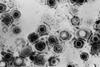
NewsHerpesvirus protein mimics host enzyme to balance infection and latency
Researchers have uncovered a novel regulatory mechanism of CDK mimicry that may help herpesviruses coexist and expand within host cells while balancing host survival with viral persistence throughout the host’s lifespan.
-
 News
NewsLong COVID biomarkers found – associated with respiratory problems
Researchers have identified biomarkers in the blood associated with symptoms of long COVID, particularly severe respiratory disorders. The discovery can pave the way for future diagnosis and treatment.
-
 News
NewssiRNA plus nanovaccine yields stable functional cure for chronic hepatitis B
Researchers have developed an innovative therapy for chronic hepatitis B, synergistically combining their proprietary ferritin nanoparticle-preS1 (Ferritin-NP-preS1) therapeutic vaccine with a preclinically validated HBV-specific siRNA.