
All Soil & Plant Science articles – Page 12
-
 News
NewsScientists identify new Fusarium species behind wheat disease outbreak in Ethiopia
New research provides new insights into the severe 2022 outbreak of Fusarium head blight in Ethiopia and identifies emerging fungal pathogens that could have broader implications for global wheat production.
-
 News
NewsLong-term field study shows biochar delivers dual benefits for soil health and climate mitigation
A 14-year field study has provided compelling evidence that biochar can simultaneously reduce heavy metal risks in agricultural soils while enhancing carbon storage, offering a powerful strategy for sustainable farming and climate mitigation.
-
 News
NewsPork bones to the rescue: Healing arsenic-poisoned rice paddies with engineered char
A newly published paper explores exactly what happens when agricultural lands are treated with micro- and nano-scale bone char (MNBC). It proves that adding just a small amount of this specially processed biochar triggers a massive biological revival in toxic soil.
-
 News
NewsUnlocking the phosphorus puzzle: How microplastics and hydrochar change the way rice paddies feed
A fresh look at the soil microbiome reveals that the key to freeing up phosphorus locked away in the ground relies heavily on the type of carbon we add, whether that is treated animal waste or, surprisingly, synthetic plastic pollution.
-
 News
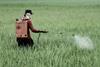
NewsUse of controversial weedkiller inadvertently selects for drug-resistant bacteria that can spread to hospitals
Scientists have found evidence that the spread of AMR isn’t always driven by bacteria evolving to resist the antibiotics themselves: rather, certain weedkillers can have the same effect.
-
 News
NewsBiosensor detects early fungal outbreaks, advances plant biotechnology
A new biosensor detects the emerging presence of fungus on plants at the molecular level, paving the way for next-generation crop protection and the development of stress-tolerant plants.
-
 News
NewsSelenium nanoparticles and glutathione synergistically enhance soybean salt tolerance by activating the JA pathway and arbutin-mediated rhizosphere microbiota
Researchers addressing soil salinity have developed a novel nano-biostimulant, a synergistic composite offering a new paradigm for enhancing salt tolerance by coordinating the plant’s endogenous signaling pathways with the functions of its rhizosphere microbial community.
-
 News
NewsEngineered biochar and beneficial bacteria team up to boost crop growth
Researchers have developed a specially engineered biochar made from sewage sludge that, when combined with beneficial bacteria, significantly enhances plant growth by improving how crops absorb nitrogen.
-
 News
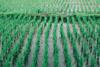
NewsBiochar’s climate promise depends on soil type: Cuts N₂O in dry fields but boosts it in rice paddies
By tracing the exact microbial pathways responsible for N₂O production, the scientists reveal why the same soil amendment produces opposite climate outcomes under different land uses.
-
 News
NewsBiochar particle size found to shape disease control in crops
Researchers have discovered that the particle size of biochar determines how effectively and how long it can suppress soil-borne pathogens, offering new insights for sustainable agriculture.
-
 News
NewsBiochar’s climate benefits may reverse over time in acidic soils, new study finds
A study reveals that biochar can both decrease and increase emissions of nitrous oxide, a potent greenhouse gas, depending on how long it has been in the soil. The findings highlight the importance of considering long-term impacts when evaluating climate solutions.
-
 News
NewsA newly identified disease of corn and sorghum may be mistaken for iron deficiency
A newly identified bacterial disease affecting corn and sorghum can closely resemble iron deficiency, potentially leading farmers to apply costly nutrient treatments that do not address the underlying problem.
-
 News
NewsLong-term biochar use reshapes soil carbon storage through microbial pathways
A new long-term study reveals that biochar, a carbon-rich material derived from crop residues, can significantly enhance soil carbon storage, but its effectiveness depends strongly on land use and soil type.
-
 News
NewsEngineered yeast gives the US a green edge in the critical minerals market
A new, U.S.-based, environmentally friendly method for mining rare-earth elements used in consumer electronics, clean energy, defense and biomedical imaging uses oxalic acid made by sugar-eating engineered yeast, extracting almost all the rare-earth elements from low-grade ore.
-
 News
NewsStudy identifies causes of potato dry rot in Colorado
Researchers have identified multiple fungal species causing dry rot in Colorado. By analyzing structural and molecular features, plant pathologists identified four Fusarium species associated with potato dry rot – including one that hadn’t previously been found in the U.S.
-
 News
NewsOcean bacteria team up to break down biodegradable plastic
Researchers uncovered the role of individual ocean bacteria in the breakdown of a widely used biodegradable plastic. They also showed the complementary processes microbes use to fully consume the plastic, with one microbe cleaving the plastic into its component chemicals and others consuming each chemical.
-
 News
NewsWhen waste becomes fertilizer: Can sludge-derived liquids reshape aquatic life in farmlands?
Hydrothermal carbonization has been proposed as a soil amendment to reduce synthetic fertilizer inputs and enhance crop productivity. Research finds it reshapes community assembly, trophic interactions, and functional expression in periphyton, with network integrity emerging as the primary driver of ecosystem functioning.
-
 News
NewsCorpses leave microbial fingerprints behind in the soil long after they’re gone
Researchers have found that trace elements of a cadaver linger at an original dump site even after an extensive amount of time. These elements can provide insights into postmortem processes, helping forensic investigators uncover clandestine burials and relocate the remains of murder victims.
-
 News
NewsMachine learning reveals when biochar helps or harms soil life
Researchers have shown that biochar can either help or harm soil organisms depending on how it is produced and applied. The research analyzed results from dozens of previous experiments to better understand how biochar affects plants, microbes, and soil animals.
-
 News
NewsScientists trace crop viruses back to the last Ice Age
Long before humans cultivated crops or sailed between continents, a group of plant viruses was already evolving among wild plants in Eurasia. Tthe ancestors of modern tymoviruses likely emerged before the last Ice Age, a new study reveals.