
All Soil & Plant Science articles – Page 7
-
 News
NewsMethane emissions maximised by global warming
A new study explains how increases in natural methane emissions will be maximised under future climate warming. It showed that while methane consuming microbes do work harder under warmer conditions, they cannot fully check the extra methane being produced with warming.
-
 News
NewsBiochar can reshape how soils respond to warming, but the effect depends on the soil
A new study shows that biochar can change how strongly soil nitrous oxide emissions respond to rising temperatures. But the effect is not one-size-fits-all. The study found that nitrous oxide emissions increased with warming in both agricultural soil and forest soil, but forest soil was more temperature-sensitive than agricultural soil.
-
 News
NewsArctic river deltas at risk from mounting pressures
Researchers have performed a detailed calculation of the amount of carbon stored in permafrost in Arctic river deltas. In a new study, they point out the risks endangering the storage function of these highly sensitive landscapes due to rapid climate change.
-
 News
NewsIron-modified biochar turns soil oxygen into a cleaner for antibiotic pollution
Antibiotic residues in agricultural soils are an emerging environmental concern, with potential impacts on soil health, crop safety, and the spread of antimicrobial resistance. A new study reports on an iron-modified biochar that helps soil use its own oxygen and iron chemistry to break down sulfamethoxazole.
-
 News
NewsLong-term biochar use can help cropland soils store more microbial carbon, but depth matters
A 12-year field study shows that biochar boosts stable microbial carbon in topsoil while reducing it in deeper soil layers, highlighting the need for depth-specific carbon management.
-
 News
NewsThe right heat makes biochar a better helper for food waste composting
A new study finds that hardwood biochar made at 400 °C best protects nitrogen during food waste digestate composting, offering a practical route to cleaner and higher-quality compost.
-
 News
NewsMagnetic biochar gel helps keep arsenic and antimony out of rice
A new study reports a promising strategy for mining-impacted regions: a magnetic silicon-enriched biochar gel that can immobilize both arsenic and antimony in contaminated paddy soil and reduce their accumulation in rice grains.
-
 News
NewsHow Chinese cabbage fights downy mildew
Researchers focusing on the Brassica rapa–Hyaloperonospora parasitica pathosystem identifies DM459 as an Arg–x–Leu–Arg (RXLR) effector that interacts with BraATG8i, activates autophagy, stimulates salicylic acid (SA) signaling, and enhances resistance to downy mildew.
-
 News
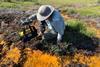
NewsNew study uncovers why the Arctic’s rivers are rusting
Scientists have identified the two biggest reasons that once-pristine rivers across the Arctic are growing cloudy with toxic orange iron particles that smother insects and suffocate fish. As the climate warms, a layer of Arctic soil that had been frozen for millennia has begun to thaw.
-
 News
NewsBiochar could help make tea farming cleaner, safer, and more climate resilient
A new review examines how biochar, a carbon-rich material produced by heating biomass under limited oxygen, could become a practical tool for more sustainable tea cultivation. It focuses on five connected areas: soil properties, microbial communities, nutrient cycling, tea productivity and quality, and heavy metal detoxification.
-
 News
NewsSaltier soils may help biochar last longer, new study finds
Researchers found that higher soil salinity can slow the aging of biochar, helping it retain more carbon-rich, aromatic structures while reducing microbial colonization, especially by fungi.
-
 Long Reads
Losing the Earth’s bounty
Farmland degradation and soil erosion have caused food shortages and the collapse of civilizations throughout human history. Today, soil degradation is a growing driver of global threats such as climate change, biodiversity loss, and food insecurity. Loss of soil, the resource that supports production of 95% of the food supply, ...
-
 News
NewsResearch shows plants such as canola, tomatoes and rice reduce iron uptake when stressed by drought
New research has found that plants, ranging from canola to rice to tomatoes, actively shut down their own ability to take up iron when they experience drought. The study questions whether plants send out a ‘cry for help’ when they are stressed by drought to recruit beneficial soil microbes in their roots.
-
 News
NewsProtective soybean seed fungicide treatment may not increase profitability
Researchers analyzed how seed treatments affect yield and profitability in soybean farms in the Midwest and found that yield gains were modest and often did not offset the added cost of the treatment. Additionally, financial benefit was likely only when seed treatment costs were low and soybean prices were high.
-
 News
NewsSoil scientist awarded $1.6 million NSF grant to study ‘living skin’ of arid ecosystems
A soil scientist has received a $1.6 million, five-year grant from the U.S. National Science Foundation (NSF) to fund her team’s study of how increasing temperature fluctuations impact the biocrust microbiome — the complex, thin-layer microbe community that stabilizes soil, fixes nitrogen and drives nutrient cycling in drylands.
-
 News
NewsNot all biochar is equal: New perspective calls for clearer claims in carbon removal and soil health
A new perspective warns that biochar’s long-term carbon storage potential and its soil improvement benefits should not be treated as the same thing. Clearer communication is urgently needed as biochar becomes a major player in voluntary carbon markets and climate mitigation strategies.
-
 News
NewsRecent study reveals how bacteria capture a rare type of sugar molecule
Researchers have identified a novel transport protein that binds cyclic β-1,2-glucans, revealing unexpected diversity in bacterial sugar uptake mechanisms.
-
 News
NewsResearchers transfer nitrogen-harvesting genes into new bacteria
New research has identified a key cluster of genes that can be moved from rhizobia bacteria that harvest nitrogen into bacteria that don’t — raising the possibility that microbes that dwell in cereal crops could eventually be engineered to atmospherically harvest nitrogen as well.
-
 News
NewsBiochar and Bacillus team up to help greenhouse cherry tomatoes grow more fruit
A new study shows that pairing biochar with beneficial Bacillus bacteria can unlock soil phosphorus, improve root growth, and increase cherry tomato yield by 23.53% under greenhouse cultivation.
-
 News
NewsResearchers link specific microbiomes to archaeological bone degradation
Well-preserved archaeological bone samples have different microbial communities than heavily degraded bone samples, providing a new understanding of how microbes contribute to bone degradation, according to a study.