
The UK’s wheat is under threat from a newly identified strain of the yellow rust pathogen, prompting an urgent mobilisation of research institutes to protect harvests. The new strain, identified in 2025, has overcome a key resistance gene that was protecting many major UK wheat varieties from yellow rust infection.
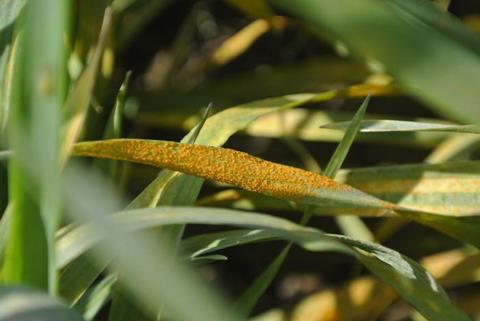
The breakdown of this resistance gene, Yr15, leaves more than 50% of the UK’s wheat acreage vulnerable to infection from the fungal pathogen. This includes the top three selling varieties which alone account for a third of the UK wheat market. The race is now on to find new resistance genes to breed into modern wheat varieties.
To meet this threat, the UK Research and Innovation (UKRI) and the Department for Environment, Food and Rural Affairs (Defra), have announced the award of a Rapid Response grant to a research collaboration, co-ordinated by the John Innes Centre.
This new research leverages hidden diversity in the heritage Watkins collection of wheat landraces to identify new resistance genes urgently needed to protect UK farmers. Researchers at the John Innes Centre, have already shown that this collection contains genetics that can confer resistance to this new yellow rust strain. This project will harness the latest genomic tools to unlock these resistance sources for breeders to incorporate into modern wheat varieties.
Large-scale breakdown
Professor Diane Saunders, Group Leader at the John Innes Centre and lead of the project, said: “Witnessing such a large-scale breakdown in yellow rust resistance in 2025 was unprecedented. However, the recently unlocked diversity in ancient wheat landraces provides us, the research community, with a fantastic resource of unutilised genetic disease resistance that can be rapidly mobilised to respond to this emergent threat and ultimately, protect the UK’s wheat harvest.”
The new Rapid Response project brings together rust pathology and wheat genetic and genomic expertise of the John Innes Centre, the long-standing wheat disease monitoring capability of Niab, and importantly stakeholder engagement through the Defra Wheat Genetic Improvement Network led by Rothamsted Research.
Emerging threat
Professor Cristóbal Uauy, Director of the John Innes Centre, said: “Responding to this emerging threat demands that we work collaboratively, and with agility. The John Innes Centre is proud to coordinate this project, working hand-in-hand with Rothamsted Research and Niab, to support the UK’s ability to protect harvests. This project exemplifies how the UK’s scientists, plant breeders and industry can mobilize, collaborate and react rapidly to respond to a shared challenge.”
READ MORE: Harnessing the power beneath our feet
READ MORE: Professor Cristobal Uauy appointed as Director of the John Innes Centre
Once genes are identified in the heritage Watkins collection, this information will be used to enhance modern varieties of wheat and increase the resilience of the UK’s wheat crops. Working closely with crop breeders to ensure rapid deployment across wheat varieties used by farmers. Without this intervention the UK’s wheat harvest will become heavily dependent on the application of fungicide to control the disease.
Two key areas
Dr Kostya Kanyuka, Head of Pathology at Niab said: “Niab will use its experience and strength in two key areas: finding new yellow rust resistance genes in wild relatives of wheat and monitoring the UK yellow rust population for early signs of fungicide resistance. This collaboration will help us respond more quickly to new rust races and support the long-term resilience of UK wheat.”
Beyond the UK, the project links to the International Maize and Wheat Improvement Center (CIMMYT) will ensure new sources of yellow rust resistance can also be incorporated into international breeding programmes as these strains continue to spread further around the world.
Professor Diane Saunders said: “By teaming up with international breeding programmes through our strategic partnership with CIMMYT, we can ensure these UK innovations not only help better protect future UK harvests but also help protect farmers globally.”
Yellow rust factfile
Yellow rust is caused by a wind-borne fungus, which quickly spreads during the wheat growing season. Infection can severely impact wheat harvests for susceptible varieties. The best defence against yellow rust infection is to grow wheat varieties containing genes that provide innate genetic resistance to the fungus.
However, like all pathogens, the yellow rust fungus is always evolving, with new strains emerging that can overcome the resistance we introduce into our crops.
Watkins Wheat Collection
This vast collection of wheat seeds is the result of the gathering of over 1,000 landraces in the early 20th century from 32 countries by AE Watkins in the 1920s and 1930s.
There is a rich genetic, geographic and phenotypic diversity within the A.E. Watkins landrace collection of bread wheat (the Watkins collection), which now comprises 827 landraces or locally adapted lines collected from European, Asian, and North African countries.
Over the last 100 years this resource has been stored, preserved, and developed, and is found in the John Innes Centre’s Germplasm Resource Unit on the Norwich Research Park where it is expertly cared for to ensure that it can be used to benefit humanity now and into the future.
Based on genetic variation data, a core set of 119 lines was selected for more in-depth studies, this set is called the Watkins diversity panel.





No comments yet