
In the lush landscapes of tropical agriculture, two waste products—oyster shells from the sea and coconut shells from the trees—are being combined to solve a major headache for farmers: how to turn animal manure into high-quality compost faster and more effectively.
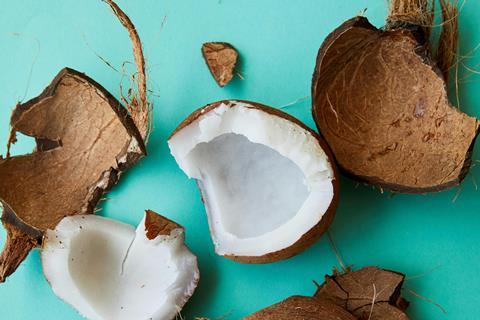
A study recently published in Carbon Research reveals that a unique “Ca-modified biochar” can act as a powerful catalyst for the composting process. Developed by a research team at Hainan University, this new material helps transform pig manure and rice straw into stable, nutrient-rich humus, significantly boosting the quality of the final fertilizer.
The research was spearheaded by corresponding authors Shanshuai Chen and Pingshan Fan. Their work bridges the College of Tropical Agriculture and Forestry and the School of Breeding and Multiplication (Sanya Institute of Breeding and Multiplication) at Hainan University. By utilizing local agricultural and fishery byproducts, the team has created a circular economy solution that is both practical and environmentally friendly.
READ MORE: Biochar boosts hydrogen and methane yield in next-generation food-waste-to-energy systems
READ MORE: Biochar and hydrochar show contrasting climate effects in boreal grasslands
“Composting is nature’s way of recycling, but it can be slow and inefficient,” explain the researchers. “By adding biochar modified with oyster shells, we are essentially giving the beneficial microbes a high-performance workspace. This leads to more stable organic matter and a product that is much safer and more beneficial for plants.”
The driver of humification
- The Perfect Blend: The team pyrolyzed coconut shells and oyster shells together at 600 °C. This process allowed calcium from the shells to bond with the carbon structure, creating a material rich in carboxyl and carbonyl groups that help hold the compost together.
- Better for Seeds: Compost treated with this modified biochar saw a nearly 19% increase in the Seed Germination Index (GI). This means the resulting compost is less toxic to young plants and more effective at supporting growth.
- Microbial Super-Boost: The addition of the modified biochar led to a 107% increase in specific bacteria like Proteobacteria and Bacteroidetes. These “specialized microbial communities” are experts at breaking down tough materials like lignin and converting them into stable humus.
- Chemical Transformation: Spectroscopy and matrix analysis showed that the biochar helped shift protein-like molecules into stable humic acids, increasing the overall humification of organic matter by about 5% compared to standard composting.
Raw waste to soil organic matter
This innovation from Hainan University is particularly significant for tropical regions where agricultural waste management is a priority. By improving the “humification” process—the conversion of raw waste into stable soil organic matter—this research helps prevent nitrogen loss and reduces the environmental footprint of livestock farming.
The findings provide a scalable and sustainable blueprint for industrial-scale composting facilities. As the world moves toward greener farming practices, the work of Shanshuai Chen, Pingshan Fan, and their colleagues at Hainan University demonstrates that the best solutions for the land often come from a creative mix of the land and the sea.
No comments yet