
All USA & Canada articles – Page 104
-
 News
NewsTinkering with the ‘clockwork’ mechanisms of life
Scientists have successfully recreated and validated two distinct mechanisms that can program both the activation and deactivation rates of nanomachines in living organisms across multiple timescales.
-
 News
NewsNature’s instructions: How fungi make a key medicinal molecule
Scientists outline how they deciphered nature’s own instructions — namely, the genes of the mold Penicillium citrinum — to discover a previously unreported enzyme that catalyzes the creation of cyclopentachromone-containing compounds.
-
 News
News‘Unbreakable’ Lassa vaccine shows promising results
A live-attenuated vaccine candidate against Lassa virus completely protected guinea pigs exposed to an otherwise lethal dose of the virus, researchers have reported.
-
 News
NewsDiarrheal diseases remain a leading killer for children under 5, adults 70+
A new global study reports a 60% drop in global mortality from diarrheal diseases, but children and the elderly still have the highest death rates, particularly in sub-Saharan Africa and South Asia.
-
 News
NewsLiving in the deep, dark, slow lane: first global appraisal of microbiomes in earth’s subsurface environments
A new study reveals astonishingly high microbial diversity in some of the Earth’s deepest, darkest subsurface environments, including gold mines, in aquifers and deep boreholes in the seafloor.
-
 News
NewsNew discovery provides hope in fighting drug-resistant malaria
Researchers have described how they may have found a new target in Plasmodium falciparum, the deadliest malaria parasite: a cholesterol-managing protein called PfNCR1.
-
 News
NewsOcean microbe’s unusual pair of enzymes may boost carbon storage, study suggests
Scientists have discovered multiple forms of a ubiquitous enzyme in microbes that thrive in low-oxygen zones off the coasts of Central and South America.
-
 News
NewsGiant virus encodes key piece of protein-making machinery of cellular life
Researchers recently discovered that a virus, FloV-SA2, encodes one of the proteins needed to make ribosomes, the central engines in all cells that translate genetic information into proteins. This is the first eukaryotic virus found to encode such a protein.
-
 News
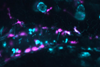
NewsBad bacteria can trigger painful gut contractions; new research shows how
After a meal of questionable seafood or a few sips of contaminated water, bad bacteria can send your digestive tract into overdrive. Your intestines spasm and contract, efficiently expelling everything in the gut. Source: Parthasarathy Lab and Guillemin Lab Immune cells (magenta) and cells expressing a reporter of ...
-
 News
NewsCases of whooping cough growing, but knowledge about it is lacking
Many in the public are not familiar with symptoms of whooping cough. Almost a third of respondents (30%) are not sure if pertussis is the same as whooping cough and not sure (30%) whether a vaccine exists to prevent it.
-
 News
NewsStudy shows drop in use of antiviral medications in young children with influenza
Despite national medical guidelines supporting the use of antiviral medications in young children diagnosed with influenza, a recent study reports an underuse of the treatment.
-
 News
NewsWhat a century-old grapevine reveals about a disease that plagues wine country
Researchers used bacterial DNA from a 120-year-old herbarium specimen to reconstruct the history of Pierce’s disease in California.
-
 News
NewsResearchers find previously unknown links between microbial bile acids and the risk of colon cancer
Microbes living in our guts help us digest food by reshaping the bile acids that our livers produce for breaking down fats. It turns out that two of these microbially-modified bile acids may affect our risk — in opposite directions — for developing colon cancer. Source: Photo by ...
-
 News
NewsStudy assesses virulence of Cryptococcus strains, laying groundwork for improved treatment
A research group has just completed a six-year study to examine the virulence of 38 clinical isolates from various strains of Cryptococcus, taking us a step closer towards improved treatment of the fungal pathogen.
-
 News
NewsStaphylococcus aureus thwarts vaccines by turning on a protein that halts immune response
Approximately 30 clinical trials to date have failed to result in an effective human vaccine for Staphylococcus aureus but researchers have now identified a key reason for these failures, indicating that it may be possible to modify the vaccines to work in humans.
-
 News
NewsScientists collect ‘microbial fingerprints’ found in household plumbing
Scientists sampled faucets in eight homes for seven days to see the flow and change of different bacteria populations. They found that, though houses generally shared major categories of bacteria, down to the species level, there was wide variation from house to house.
-
 News
NewsFlu virus remains infectious in refrigerated raw milk
Influenza or flu virus can remain infectious in refrigerated raw milk for up to five days, a new study reveals. The findings come at a time when outbreaks of bird flu in dairy cattle have raised concerns about the potential for a new pandemic.
-
 News
NewsMicrobial oxidation in glacial rivers and lakes could help mitigate methane emissions
A new study suggests microbes in glacial rivers and lakes may play a crucial role in mitigating the effects of methane, a powerful greenhouse gas that recent studies have shown emerging as glaciers melt in warming global temperatures.
-
 News
NewsA dial for tuning the immune system: Discovery sheds light on why COVID makes some sicker than others
A new study identifies an “immune system tuning dial,” which originated as a bug in the genetic code tens of millions of years ago. When this signaling goes awry and leads the body to under or overreact, people are more likely to develop severe or Long COVID.
-
 News
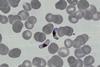
NewsGlobal research uncovers critical weakness in malaria parasite
Scientists exploring how immunity develops against Plasmodium falciparum found that broadly reactive antibodies from various individuals consistently bound to the same site on a key virulence protein of the malaria parasite.