
All Veterinary Medicine & Zoonoses articles – Page 19
-
 News
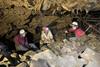
NewsAncient remains reveal how a pathogen began to use lice – not ticks – to infect humans
Researchers have analysed ancient DNA from Borrelia recurrentis, a type of bacteria that causes relapsing fever, pinpointing when it evolved to spread through lice rather than ticks, and how it gained and lost genes in the process.
-
 News
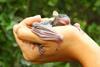
NewsOrganoids reveal the secrets of bat immunity
Researchers successfully infected both bat organoids and human airway organoids with the Marburg virus. Compared to the human models, bat organoids exhibited a significantly higher baseline antiviral immune activity even before infection.
-
 News
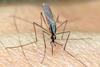
NewsNew malaria control strategy efficiently kills parasites in the mosquito
A potent combination of antimalarial compounds added to bed nets blocked parasite transmission in mosquitoes while circumventing insecticide resistance, according to a new study.
-
 News
NewsScientists uncover key clues to how a viral infection can lead to arthritis-like disease
By studying Chikungunya virus, scientists have shed light on how immune responses to viral infections may lead to persistent symptoms of autoimmune disease.
-
 News
NewsGenomic data shows widespread mpox transmission in West Africa prior to 2022 global outbreak
Mpox was transmitted among humans in Nigeria for eight years before sparking the international outbreak in 2022. Using genomic tracing, the researchers estimate that the virus’s ancestor first emerged in southern Nigeria in August 2014.
-
 News
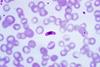
NewsNovel molecular maneuver helps malaria parasite dodge the immune system
Researchers have discovered how a parasite that causes malaria when transmitted through a mosquito bite can hide from the body’s immune system. Plasmodium falciparum can shut down a key set of genes, rendering itself “immunologically invisible.”
-
 News
NewsFamily of parasite proteins presents new potential malaria treatment target
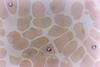
Researchers from the Francis Crick Institute and the Gulbenkian Institute for Molecular Medicine (GIMM) have shown that the evolution of a family of exported proteins in the malaria-causing parasite Plasmodium falciparum enabled it to infect humans. Source: Ernst Hempelmann Ring stage of Plasmodium falciparum in human red blood ...
-
 News
NewsWorld’s largest bat organoid platform paves the way for pandemic preparedness
Researchers have created the world’s most comprehensive bat organoid platform. These ’mini-organs’ are grown from five common bat species found across Asia and Europe and represent four different organs—airway, lungs, kidneys, and small intestine.
-
 News
NewsChimpanzees use medicinal leaves to clean and treat their wounds
Scientists studying chimpanzees in Budongo Forest, Uganda, have observed that these primates don’t just treat their own injuries, but care for others, too — information which could shed light on how our ancestors first began treating wounds and using medicines.
-
 News
NewsEchidna microbiome changes while mums nurse puggle
Research shows microbial communities in echidna pseudo-pouches undergo dramatic changes while the animal is lactating, which could help in creating an environment for their young, known as puggles, to thrive.
-
 News
NewsNew vaccine protects against swine, human and bird flu
Annual flu shots could become a thing of the past under a new vaccine strategy. A new study describes a vaccine that protects against H1N1 swine flu and can also protect against influenza in humans and birds.
-
 News
NewsActivating ‘jumping genes’ speeds up bacterial evolution from decades to weeks
Scientists have developed a system to control and accelerate the evolution of changes in the bacterial genome structure, targeting small ‘jumping genes’, or DNA sequences known as insertion sequences.
-
 News
NewsNew film series ‘The Deadly Five’ highlights global animal infectious diseases
The EU-funded WiLiMan-ID project is excited to announce the launch of a brand-new short film series, The Deadly Five. This series is aimed at raising awareness of five critical animal infectious diseases, classified as high priority.
-
 News
NewsScientists uncover secrets of cryo-EM structures of Nipah virus polymerase complex
A new investigation into the cryo-EM structures of Nipah virus polymerase complex reveals highly varied interactions between L and P proteins among paramyxoviruses.
-
 News
NewsGlobal Virus Network meeting unites Caribbean and Latin America to tackle emerging viral threats
A two-day summit focused on collaborative strategies to bolster viral surveillance, diagnostics, vaccine research, and pandemic preparedness across Latin America and the Caribbean, challenges intensified by climate change and globalization.
-
 News
NewsGlobal review of bird flu in cats points to risk of another pandemic
Bird flu (H5N1) is rapidly evolving into the possibility of a human pandemic, say researchers who have been documenting research on bird flu in cats and calling for urgent surveillance of cats to help avoid human-to-human transmission.
-
 News
NewsResearch collaboration takes ‘one health’ approach to study Chagas disease
Researchers have received more than $4 million from federal and non-governmental organizations to support research on Chagas disease prevalence, diagnostics and treatment to benefit both dogs and humans.
-
 News
NewsViruses under the super microscope: How influenza viruses communicate with cells
Scientists have characterized a new model of influenza A infection: binding to MHC class II complexes as an alternative receptor and the associated dynamic reorganization of the cell surface.
-
 News
NewsBat virus evolution suggests wildlife trade sparked COVID-19 virus emergence in humans
The ancestor of the virus that causes COVID-19 left its point of origin in Western China or Northern Laos just several years before the disease first emerged in humans up to 2,700 kilometers away in Central China, suggesting the wildlife trade played a role.
-
 News
NewsInvasive rats and rainforest mammals are sharing gut microbes as urban areas grow
As urban development continues to creep further into Earth’s oldest and most diverse rainforests, a study reveals native and invasive small mammals aren’t just adapting to their changing habitats—they may also be sharing their microbes.