
All The Microbiologist articles in Web Issue – Page 297
-
 News
NewsScientists revive almost forgotten Balkan yoghurt recipe that deploys bacteria, acids - and ants
Researchers recreated a nearly forgotten yogurt recipe that was once was once common across the Balkans and Turkey—using ants. The team shows that bacteria, acids, and enzymes in ants can kickstart the fermentation process that turns milk into yogurt.
-
 News
NewsSummer studentship: Shen explores how a novel peptide can destabilise the outer membrane of E. coli
Li Shen reports back on his AMI-sponsored summer studentship which investigated a novel antibiotic adjuvant at the Centre for Bacterial Resistance Biology, Imperial College London.
-
 News
NewsHeart rhythm disorder POTS common in patients with long COVID
A new study shows that an unusual heart rhythm disorder, POTS, is particularly common in people with long COVID. The majority of those affected are middle-aged women.
-
 News
NewsLong-term biochar use boosts soil health and soybean yields, study finds
A decade-long field study has revealed that biochar can significantly improve soil quality and boost soybean production in continuous cropping systems. The findings provide new evidence that biochar could be a powerful tool for making agriculture more sustainable.
-
 News
NewsSome human GII.4 norovirus are better than others at infecting cells; researchers have found out why
A study reveals that human GII.4 noroviruses have evolved a uniquely potent entry mechanism with clear strain-specific differences. The findings open new possibilities for identifying the elusive human norovirus receptor as well as developing vaccines and treatments.
-
 News
NewsAI can be valuable tool to strengthen pandemic preparedness
Artificial intelligence could be a valuable tool for detecting emerging diseases earlier, researchers from five European universities and research institutes argue.
-
 News
NewsThe RESTART trial: a drug to block a toxic HIV molecule
What if the presence of a well-known but misunderstood viral protein explains why some people living with HIV (PLWH) never recover their health, even with antiretroviral treatment? Researchers will explore this in a groundbreaking clinical trial this fall.
-
 News
NewsResearchers deconstruct chikungunya outbreaks to improve prediction and vaccine development
Researchers analyzed more than 80 outbreaks of chikungunya virus to improve prediction of future outbreaks and inform vaccine trial development.
-
 News
NewsScientists explore how viruses replicate and infect
Herpes viruses cultivated using one kind of host cell – known as a producer cell – exhibited differences from the same virus cultivated with a different producer cell.
-
 News
NewsVolcanic ash may enhance phytoplankton growth in the ocean over 100 km away
A research group has suggested that ash released from volcanic eruptions on Nishinoshima Island led to a temporary surge in phytoplankton levels in the seawater around Mukojima Island, 130 km northeast of Nishinoshima.
-
 News
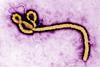
NewsLong Ebola: Sudan virus can persist in survivors for months, study shows
More than half of survivors of the Sudan Ebola virus still suffer serious health problems two years post-infection and the virus can persist in semen and breast milk for months after recovery, according to the first study examining the virus’s long-term effects.
-
 News
NewsThe essential role of the urban tree microbiome: A key to city health
Researchers studied the difference in microbial communities of street trees and non-urban forest trees. By analyzing fungal and bacterial diversity, tree size, and soil properties, their research shows the impacts of urban environmental stressors upon city tree microbiomes.
-
 News
NewsResearch reveals fetuses exposed to Zika virus have long-term immune challenges
Researchers discovered that when a pregnant mother is infected with Zika virus, the resulting inflammatory response in the placenta permanently changes how the offspring’s immune system develops - even if the infection is mild or asymptomatic in the mother.
-
 News
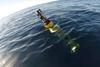
NewsMarine heatwaves have hidden impacts on ocean food webs and carbon cycling
A new study analyzing data from robotic floats and plankton records reveals how marine heatwaves reshape ocean food webs and slow transport of carbon to the deep sea.
-
 News
NewsResearchers wake up microbes trapped in permafrost for thousands of years
In a new study, a team of geologists and biologists resurrected ancient microbes that had been trapped in ice—in some cases for around 40,000 years.
-
 News
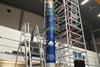
NewsRocket test proves bacteria survive space launch and re-entry unharmed
A world-first study has proven microbes essential for human health can survive the extreme forces of space launch. The study found the spores of Bacilus subtilis, a bacterium essential for human health, can survive rapid acceleration, short-duration microgravity and rapid deceleration.
-
 News
NewsAntibody discovered that blocks almost all known HIV variants in neutralization assays
An international research team has discovered an antibody that could advance the fight against HIV. The newly identified antibody 04_A06 proved to be particularly effective in laboratory tests. It was able to neutralize 98.5 percent of more than 300 different HIV strains, making it one of the broadest antibodies against HIV identified.
-
 News
NewsMap of bacterial gene interactions reveals potential drug targets
Researchers have developed a new technique called Dual transposon sequencing (Dual Tn-seq), which allows for rapid identification of genetic interactions. It maps how bacterial genes work together, revealing vulnerabilities that could be targeted by future antibiotics.
-
 News
NewsFinal Call: Submit your breakthrough for the 2025 ISM × RIKEN Microbiota Innovation Awards in Tokyo
Yakult, Meiji, Morinaga, Metagen and other industry pioneers join global scientists at Happo-en to celebrate microbiota-driven discoveries; nominations close October 7, 2025
-
 News
NewsExperimental mapping of bacterial growth reveals evolutionary and ecological patterns
A research team has proposed a new approach to reveal ecological niches (positions within ecosystems) and evolutionary relationships in nature through large-scale growth analysis of bacteria in strictly regulated laboratory settings.